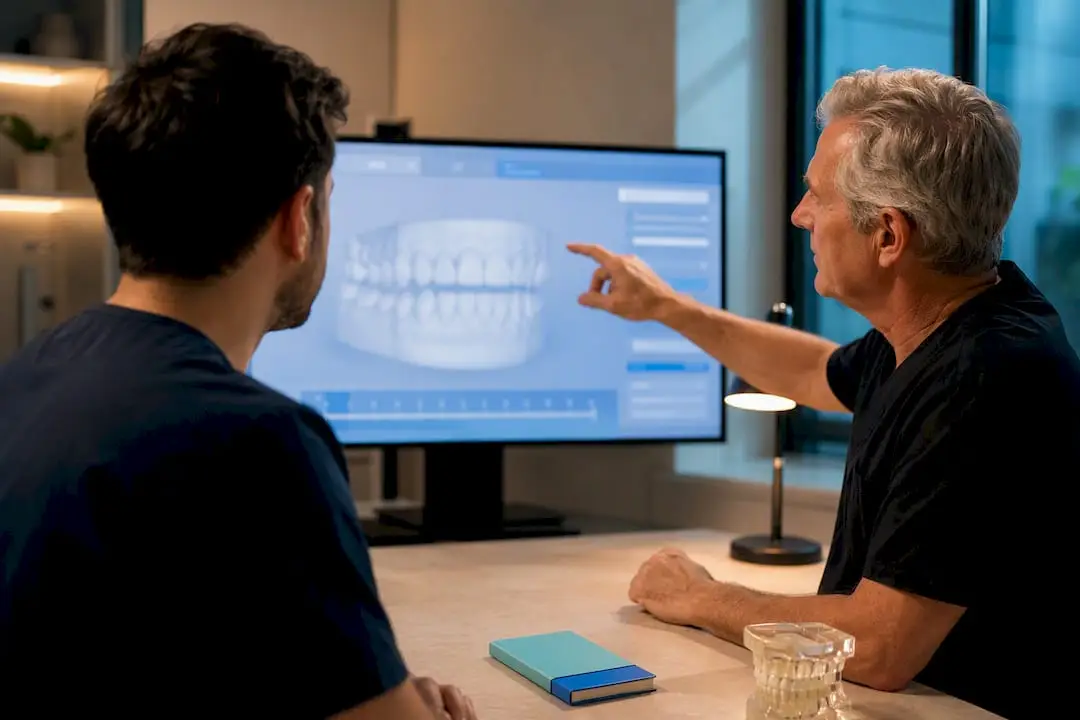
Clear aligners are not categorically contraindicated for patients with temporomandibular disorder. Proceed with a targeted DC/TMD screening, stabilize any active pain before starting orthodontic movement, and document informed consent covering transient soreness and tray-failure risk. The evidence base is real but still thin, so treat this as a workflow to manage risk, not a green light to skip assessment.
What Does the Evidence Say About TMD and Clear Aligners?
Systematic reviews on aligners and the TMJ converge on a surprisingly unglamorous finding: for most adult Class I and Class II non-extraction cases, condylar position and joint space stay essentially unchanged over the course of treatment. That is reassuring, but the certainty behind it is low to very low, largely because the underlying studies vary wildly in how they measure joint position, which imaging modality they use, and how long they follow patients.
That gap between “probably fine” and “proven fine” matters clinically. A clinician reading only the abstract of a favorable study might assume aligners are TMJ-neutral across the board. The reviews themselves are more cautious, flagging small sample sizes, inconsistent outcome measures, and a near-total absence of long-term follow-up past active treatment.
Cohort and pilot data tell a messier but informative story. One cohort of 100 patients treated with clear aligners reported statistically significant reductions in self-reported clenching and grinding sensations, along with drops in TMJ pain scores, at both the three-month and six-month marks. That is a genuinely encouraging signal for symptomatic patients. But the same study carries design limits common to this literature: no control group matched for natural symptom fluctuation, self-reported outcome measures, and a follow-up window too short to speak to relapse.
Other pilot work describes the opposite pattern in a subset of patients: transient muscle soreness in the first days of a new tray, occasionally persisting into mild TMJ discomfort before settling. Heterogeneity, not consensus, is the honest summary of where the research stands.
Two structural issues explain most of the disagreement between studies:
- Outcome measurement varies. Some studies use validated pain scales and the Diagnostic Criteria for TMD (DC/TMD); others rely on ad hoc questionnaires that make cross-study comparison unreliable.
- Risk of bias runs moderate to high in a large share of the included trials, driven by small cohorts, lack of blinding, and short observation periods.
- Baseline TMD status is inconsistently reported, so it is often unclear whether “TMJ symptom improvement” reflects a true treatment effect or simple regression to the mean in patients who started with mild, self-limiting pain.
The practical takeaway is not “wait for better evidence.” It is to standardize your own measurement. Using DC/TMD criteria and a validated bruxism questionnaire at intake and at set intervals turns your own case series into usable clinical data, and gives you a defensible record if a patient’s symptoms shift mid-treatment.
How Do Clear Aligners Interact With Jaw Muscles and Joints?
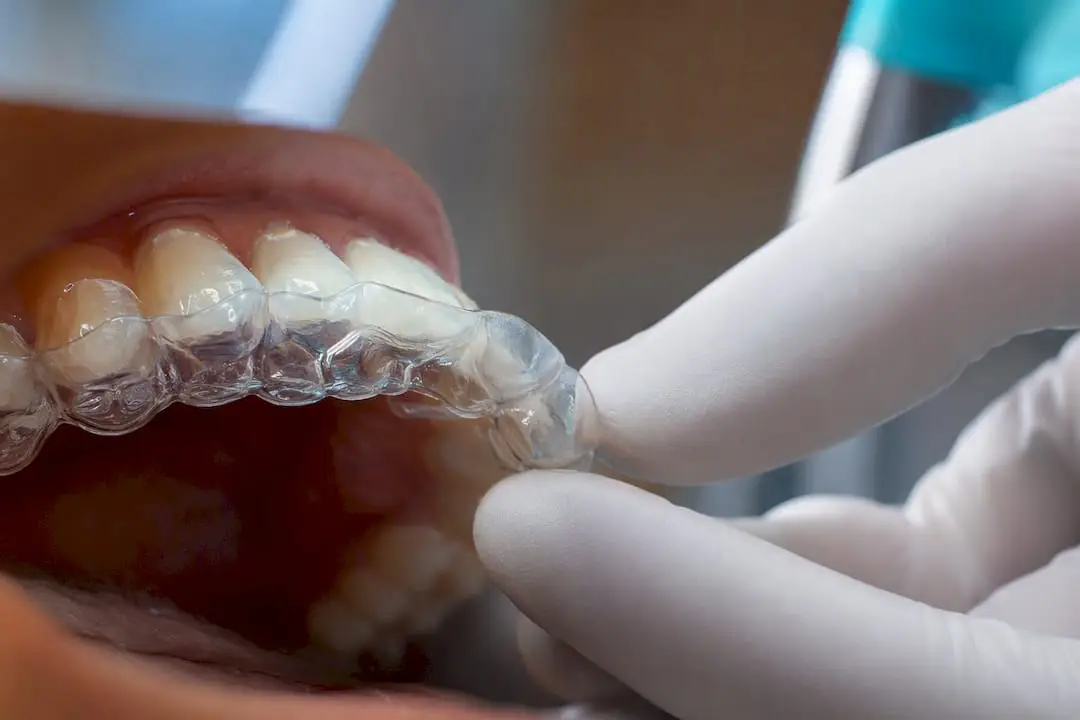
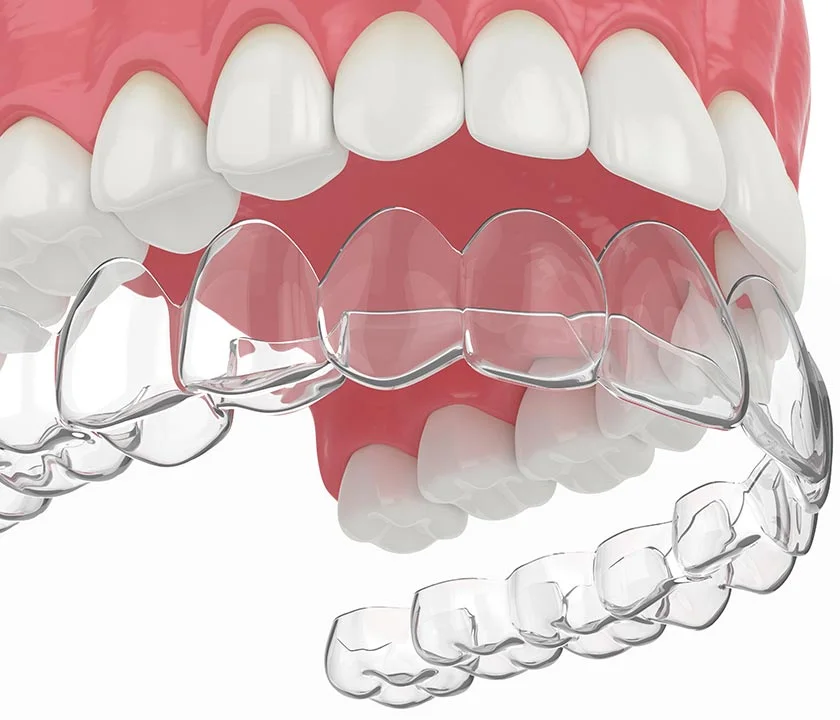
Occlusal coverage is the mechanical fact that separates aligners from fixed appliances, and it cuts both ways. A full-coverage tray redistributes occlusal contacts more evenly across the arch, which in many patients reduces peak loading on any single tooth or joint segment. In the first days of wearing a new tray, though, that same coverage often triggers what patients describe as an “urge to clench,” a heightened awareness of the bite that can translate into more parafunctional activity before it settles.
Muscle behavior follows a similar arc. Reports of temporary increases in masseter or temporalis tenderness after a new aligner insertion are common, tied to the muscle adapting to a slightly altered occlusal scheme every one to two weeks as trays change. Most of this normalizes within days. A systematic review of masticatory musculature changes during aligner therapy found this adaptation pattern recurring across studies, without evidence of lasting dysfunction in typical cases.
Material behavior deserves equal attention, especially for anyone treating a known bruxer. Single-layer thermoplastic aligners are cheaper and easier to fabricate but relax their stored force faster under sustained loading. Multi-layer constructions, which combine rigid and more resilient polymer layers, hold force longer and resist fatigue better under repeated cyclic stress, which is exactly the loading pattern a nocturnal bruxer generates night after night.
Three mechanical points shape planning decisions:
- Viscoelastic relaxation means every aligner loses some active force within the first 24 to 48 hours of wear, faster under heavier occlusal loads.
- Fatigue accumulates with each clenching or grinding cycle, so a tray that would track cleanly in a non-bruxer may deform or lose fit early in a parafunctional patient.
- Tracking failures compound, since a tray that stops seating precisely on one tooth often loses control over adjacent movements too.
Pro Tip: Ask new aligner patients to describe any clenching urge at the one-week check, not just at the pain question. Patients rarely volunteer “I feel like I want to bite down harder,” but they will confirm it when asked directly, and it is an early warning sign worth logging.
Do Clear Aligners Cause or Reduce Bruxism?
Most of the current literature points toward a neutral overall effect of aligner therapy on bruxism, not a protective one and not an aggravating one. A systematic review covering eleven studies and 818 patients found occasional reductions in tonic muscle contractions among aligner wearers, but inconsistent effects on phasic (rhythmic grinding) activity, and self-reported symptom improvement that did not reliably match objective measures. GRADE certainty across these findings ranged from moderate down to very low.

That inconsistency traces partly back to how bruxism gets measured. Surface EMG captures objective muscle activity but is expensive, awkward for home use, and prone to noise from non-bruxism jaw movement. Validated questionnaires are cheap and scalable but rely on patient self-report, which underestimates sleep bruxism specifically, since patients are, by definition, asleep while it happens. Studies that use one method often disagree with studies that use the other, which is a large part of why the aligner-bruxism relationship still reads as unsettled rather than resolved.
The clinical consequences are concrete regardless of which theory of causation turns out to be right. A patient who grinds through the night puts far more cyclic load on a tray than one who does not.
That gap, roughly two and a half times more material loss under simulated bruxism loading than under normal functional forces, is not a rounding error. It shows up clinically as trays that lose fit early, attachments that debond sooner, and composite restorations under the aligner that degrade faster than expected.
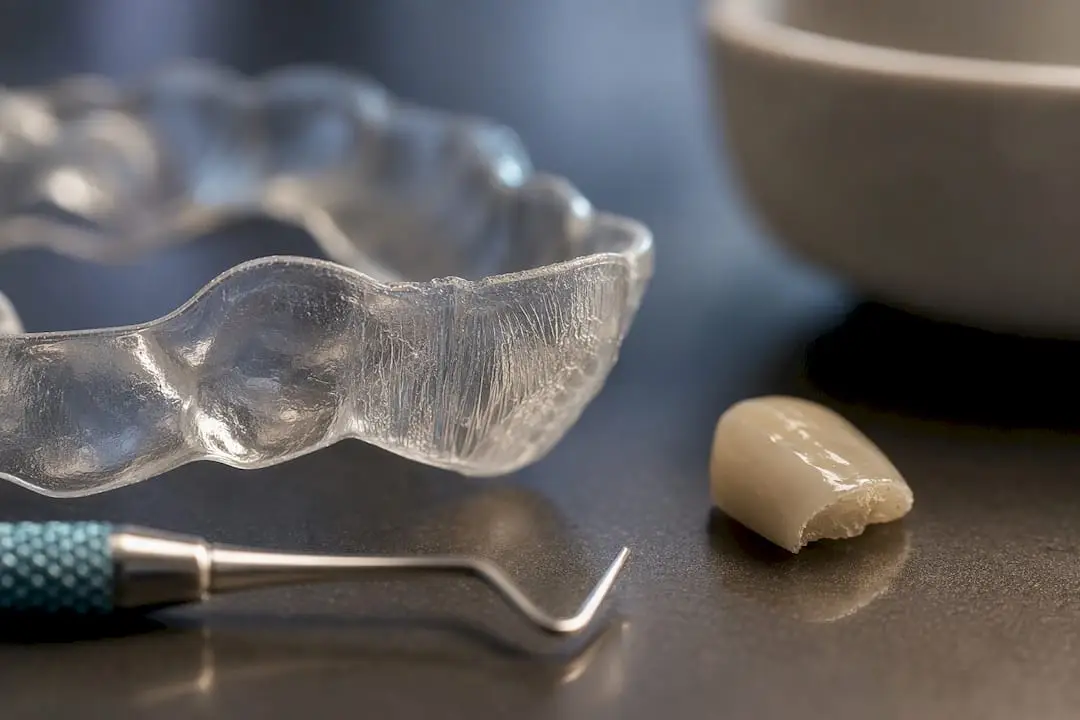
The practical response is straightforward: for any patient flagged as a bruxer at intake, build a shorter inspection interval into the schedule and set expectations that tray replacement may run ahead of the standard protocol. It costs little to plan for and prevents the awkward mid-treatment conversation about why a tray failed early.
Can Elastics Used With Aligners Worsen TMJ Symptoms?
Intermaxillary elastics are one of the few aligner-adjacent interventions with a direct, documented link to TMJ symptom severity, and the direction of that link should change how you prescribe them. A cross-sectional study comparing 40 aligner patients using elastics against 30 non-elastic controls found that Class III elastic users reported significantly higher pain intensity, pain interference, and PHQ-9 psychosocial distress scores than patients not using elastics.
The mechanism is not mysterious. Elastics change the vector and magnitude of interjaw loading, and when that force is misapplied, worn too long, or set at excessive strength, it can transmit strain directly into the joint rather than distributing it harmlessly across the dentition. Class III elastics, which pull the mandible forward against posterior anchorage, appear to concentrate that strain more than other configurations in the available data.
None of this means elastics are off the table for TMD-prone patients. It means they need the same monitoring rigor as any other biomechanical intervention with a known symptom association.
- Record elastic type, force level, and prescribed wear duration at every visit where they are adjusted, not just at the initial prescription.
- Educate patients explicitly on correct wear patterns, since improper use (constant wear beyond prescribed hours, wrong hook placement) amplifies joint strain.
- Pause elastic wear immediately if a patient reports new or worsening TMJ pain, and reassess before resuming rather than assuming the symptom will pass on its own.
- Ask about psychosocial load (stress, sleep quality) alongside physical pain, given the PHQ-9 association found in the elastics cohort.
How Should You Screen and Risk-Stratify TMD Patients Before Aligner Therapy?
A structured pre-treatment workup turns a subjective “does this patient seem okay” judgment call into a defensible clinical record. Build the screening around three components, in this order.
- Run a DC/TMD Axis I/II screening at consultation. Document baseline maximum unassisted opening, joint sounds, palpation tenderness, and pain location using the standardized DC/TMD protocol, and repeat key measures at defined intervals during treatment.
- Assess bruxism with a validated questionnaire, supplemented by a clinical exam for wear facets, restoration fractures, and masseter hypertrophy on palpation. Confirm restorability of any heavily worn teeth before committing to a staging plan built around them.
- Stratify risk and match it to a treatment stance. Low-risk patients (no active pain, mild or well-controlled bruxism) proceed with a standard plan. Moderate-risk patients (mild TMD history, moderate bruxism, no active locking) proceed with a modified plan, reduced staging, closer monitoring. High-risk patients (active painful locking, uncontrolled parafunction, unresolved TMD flare) get deferred and referred for stabilization first.
Written consent should name the specific, realistic risks rather than a generic waiver: temporary muscle soreness in the first days of a new tray, the possibility of accelerated tray wear or early failure in bruxers, the practice’s tray-replacement policy and any associated cost, and the potential need for an adjunct splint if symptoms emerge mid-treatment.
Pro Tip: Keep the risk-stratification note in the chart as a dated, one-line entry, not a mental judgment. “Moderate risk, mild self-reported bruxism, DC/TMD negative for disc displacement, proceeding with modified staging” takes ten seconds to write and becomes invaluable if the case gets complicated six months later.
What Treatment Modifications Help Bruxers and TMD Patients?
Standard aligner staging assumes forces and tracking behavior calibrated for a non-parafunctional patient. Bruxers and TMD patients need the plan adjusted, not abandoned.
Reducing linear and rotational movement increments, commonly to around 75% of the standard per-tray movement, gives each tray a better chance of tracking accurately despite the extra cyclic loading a bruxer generates. Smaller increments mean more trays overall, which is a real cost and time tradeoff worth discussing with the patient up front, but it protects predictability far better than pushing standard-size movements through a mouth that is clenching against them nightly.
Attachment strategy needs the same recalibration. Worn or shortened clinical crowns from years of grinding often cannot retain a standard attachment reliably, so plan composite builds to restore retentive surface area before attachment placement, and favor attachment geometries designed for extra retention over cosmetic ones.
Material choice follows directly from the biomechanics already covered. For confirmed or suspected bruxers, multi-layer aligner materials resist fatigue and hold force longer under cyclic load than single-layer designs, which matters more for this population than for a typical non-parafunctional case.
A few adjunct decisions round out the plan:
- Consider a protective splint for nighttime wear in patients with confirmed sleep bruxism, worn separately from or in coordination with the active aligner, per the treating clinician’s judgment on sequencing.
- Set an explicit tray inspection and replacement policy for bruxers, shorter than your standard interval, so early wear gets caught before it compromises tracking.
- Flag high-load patients for more frequent tray replacement at the outset, rather than waiting for a failed tray to trigger the conversation.
Pro Tip: Photograph each returned aligner at replacement visits for bruxer patients. A quick visual log of wear facets on the tray itself tells you more about grinding intensity over time than any questionnaire, and it is a five-second habit once it is built into the workflow.
How Should You Monitor TMD Symptoms During Active Aligner Treatment?
A fixed monitoring cadence catches problems while they are still cheap to fix. Build it around three simple, repeatable measures rather than an open-ended “how are you feeling” check.
- Track pain on a 0 to 10 VAS scale at every visit, alongside a brief DC/TMD functional check (opening range, joint sounds, palpation tenderness) at intervals no longer than eight to twelve weeks for flagged TMD or bruxism cases.
- Watch for red flags that warrant pausing treatment: new joint locking, pain that escalates rather than plateaus after the first week of a new tray, or restriction in opening beyond what the patient reported at baseline. Any of these justifies stopping active movement until reassessed.
- Step down intervention immediately when a flag appears: reduce daily wear time, switch temporarily to a passive or previous tray rather than progressing, and suspend any elastics in use until symptoms stabilize. Co-manage with a TMD specialist or physical therapist when symptoms persist beyond two to three weeks of conservative management.
This is not overcaution. It is the same logic that governs any orthodontic movement near a compromised structure: move slowly, check often, and stop the moment the signal says stop.
When Should You Delay or Avoid Aligner Therapy Entirely?
Some presentations call for stabilization before any tooth movement starts. Active painful joint locking, an acute TMD flare, or uncontrolled parafunction actively damaging restorations are reasonable grounds to defer, since starting orthodontic forces into an unstable joint or a failing restoration compounds the problem rather than solving it.
Clinical guidelines for chronic TMD recommend treating the joint first, favoring cognitive behavioral therapy, manual therapy, and supervised jaw exercises over irreversible occlusal interventions, and explicitly caution against assuming an occlusion-only cause for TMD symptoms. Resume orthodontic planning once pain has been stable and functional range has normalized for a defined period, typically documented across at least two consecutive follow-up visits before restarting active tooth movement.
How Onewd Training Covers These Clinical Protocols
Applying reduced-staging increments, attachment selection for worn dentition, and material choice for high-load patients takes more than reading a review article. Onewd’s clear aligner course catalog includes modules on aligner fundamentals, staging mechanics, and attachment protocols built around exactly these scenarios. Learning outcomes include reduced-staging workflows for parafunctional patients, criteria for material selection, and consent and patient-communication templates you can adapt directly.
Hands-on mentorship and live-patient modules matter here specifically because bruxer and TMD cases rarely behave like the textbook example. Working through real staging decisions under mentorship is what turns a protocol on paper into a plan you trust chairside.
What Actually Separates Good TMD Management From Guesswork
The biggest mistake in this field is not overtreating or undertreating TMD patients with aligners. It is treating TMD as a purely mechanical, occlusion-driven problem when the evidence increasingly points to a biopsychosocial condition with pain, stress, and behavior all in the mix.
Clinicians who screen with DC/TMD, stabilize active pain before moving teeth, and log outcomes consistently are doing more than protecting one patient. Every standardized case you document adds to a body of evidence that is still, honestly, thinner than most of us would like. Managing patient expectations about the initial “urge to clench” phase costs nothing and prevents most of the panicked phone calls in week one. Treat monitoring as part of the appliance, not an afterthought to it.
— Jake
Build the Hands-On Skills This Protocol Requires
Reading the evidence is the easy part. Applying reduced-staging protocols, choosing the right attachment strategy for a worn dentition, and knowing when to pause treatment for a flaring joint takes practiced judgment, and that judgment is built chairside, not from a review article. Onewd’s clear aligner training courses walk through exactly this workflow, with mentorship and live-patient modules that let you test staging and material decisions under supervision before you carry them into your own operatory.

Course options range from on-demand modules you can work through at your own pace to in-person, hands-on sessions with direct mentor feedback, plus intermediate-level tracks for clinicians ready to refine an existing aligner workflow. None of this replaces your own clinical judgment on a given patient, but it gives you a tested framework to judge from. Check the current course catalog for upcoming sessions and find the format that fits your schedule.
Where to Read the Underlying Research
The clinical picture in this article draws on a handful of sources worth keeping on hand for deeper reading or patient discussions:
Recommended