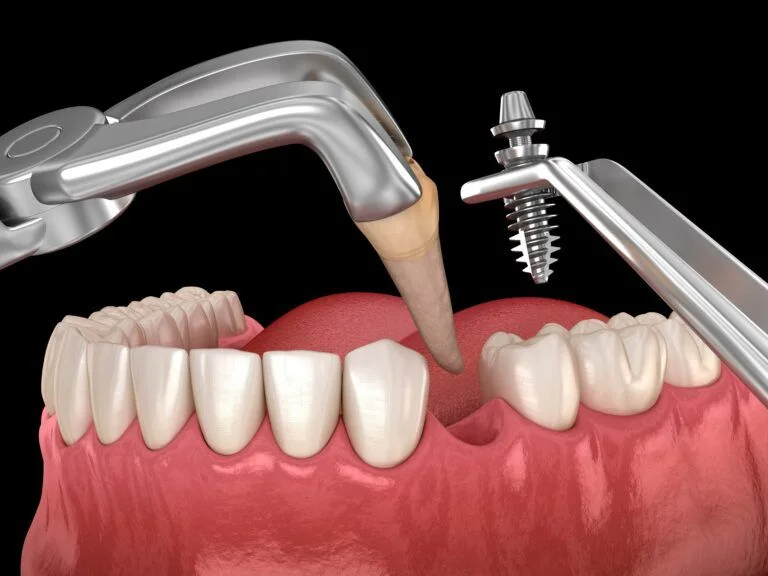
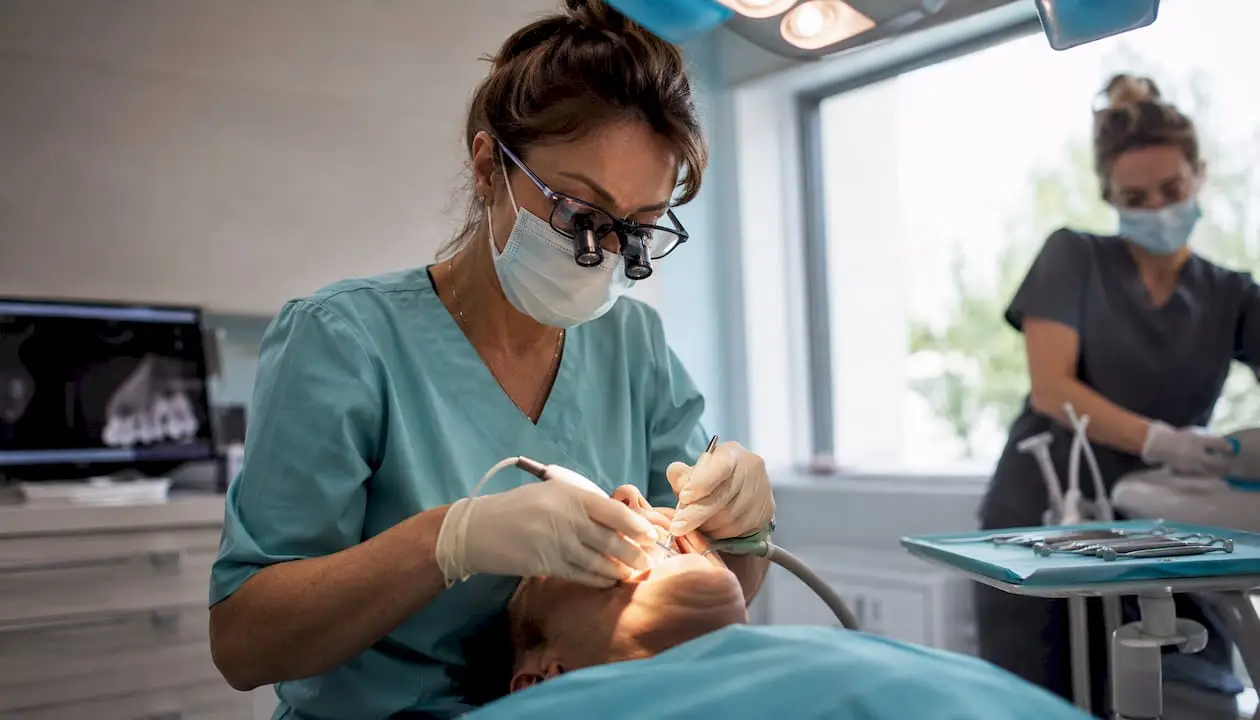
Online dental implant courses are structured continuing education programs that build implantology expertise while meeting the updated 2026 ADA Commission on Continuing Education Provider Recognition (CCEPR) standards. These programs cover everything from implant biology and surgical planning to restoration and patient management, all delivered through digital platforms that fit around a clinical schedule. The ADA CCEPR reduced its recognition criteria from 104 to 17 effective june 1, 2026, reshaping how providers design and dentists evaluate online implant courses. Understanding these changes is now a prerequisite for making smart CE decisions.
What are the prerequisites for online dental implant courses?
Enrolling in online dental implant training requires more than a dental license. Most accredited programs expect you to hold an active dental license in your state and have foundational knowledge in oral surgery, anatomy, and restorative dentistry. Some advanced modules on full-arch implant placement or immediate loading protocols specify prior implant placement experience as a condition of enrollment.
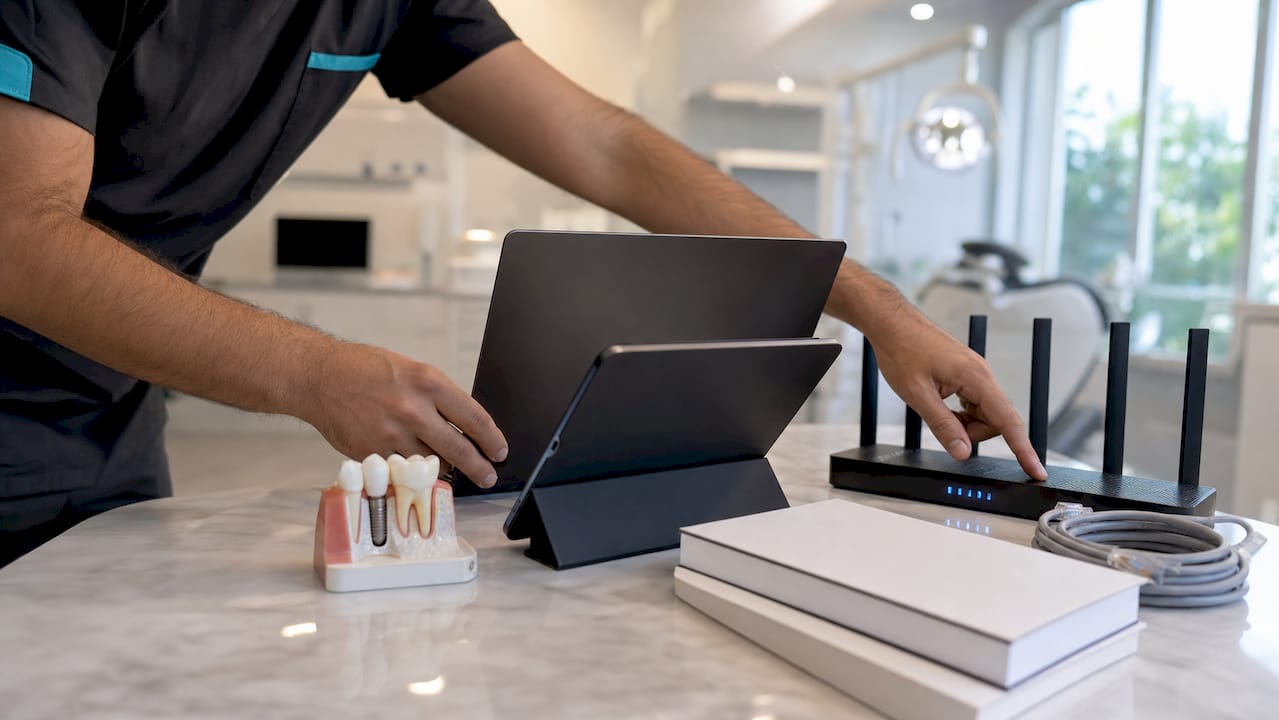
The technical side matters just as much as your clinical background. A stable broadband connection, a modern laptop or desktop with updated browser software, and a display large enough to view surgical video demonstrations clearly are all baseline requirements. Many platforms also require PDF readers and video streaming capability for on-demand lecture content.
Requirement
Details
Professional licensure
Active dental license in your state
Prior knowledge
Oral surgery, anatomy, and restorative dentistry fundamentals
Hardware
Modern computer with updated browser and PDF reader
Internet connection
Reliable broadband for streaming video content
Learning environment
Quiet, distraction-free space with adequate screen size
Your physical learning environment also affects how much you retain. A quiet, dedicated workspace reduces cognitive load during complex surgical demonstrations. Digital literacy, including comfort with learning management systems and video controls, determines how efficiently you move through course material.
How are online implant courses structured to meet 2026 ADA CERP standards?
The 2026 ADA CERP framework shifts the focus from administrative paperwork to educational outcomes. Providers must now demonstrate that their courses improve professional performance, not just document attendance. That shift changes how well-designed online dental implant courses are built from the ground up.
A quality online implant course organizes content into progressive modules:
Implant biology and osseointegration: Covers bone physiology, healing timelines, and the science behind implant stability
Diagnosis and treatment planning: Includes case selection criteria, radiographic interpretation, and risk assessment
Surgical technique and protocols: Addresses implant placement sequences, flap design, and complication management
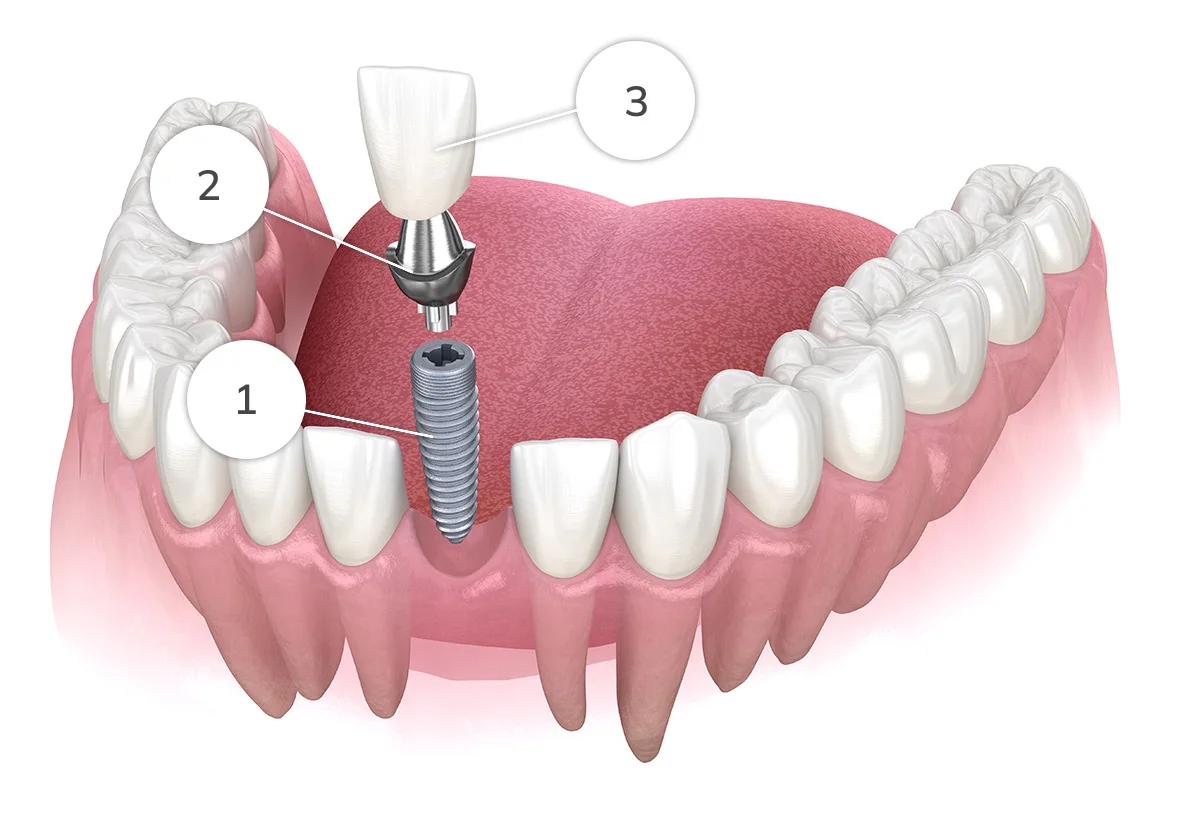
Prosthetic restoration: Covers abutment selection, impression techniques, and occlusal considerations
Patient management: Focuses on informed consent, postoperative care, and managing patient expectations
The new 17-criterion ADA CCEPR framework requires providers to conduct educational needs analyses, demonstrate faculty expertise, manage conflicts of interest, and evaluate activity impact. This means courses built to the 2026 standard are more rigorous than older CE programs that simply logged hours.
State boards add another layer. Many state dental boards cap online CE credits at 50% of total licensure renewal hours. That cap means a dentist completing a full renewal cycle must pair digital coursework with in-person training to satisfy requirements. Nevada, for example, mandates two annual hours specifically for infection control, which online coursework can fulfill if the provider holds state board approval.
Pro Tip:Before purchasing any online implant course, verify that the provider holds ADA CERP recognition and check your specific state board’s approved provider list. Accreditation from ADA CERP does not automatically guarantee acceptance by every state board.
What criteria should dentists use to evaluate course quality?
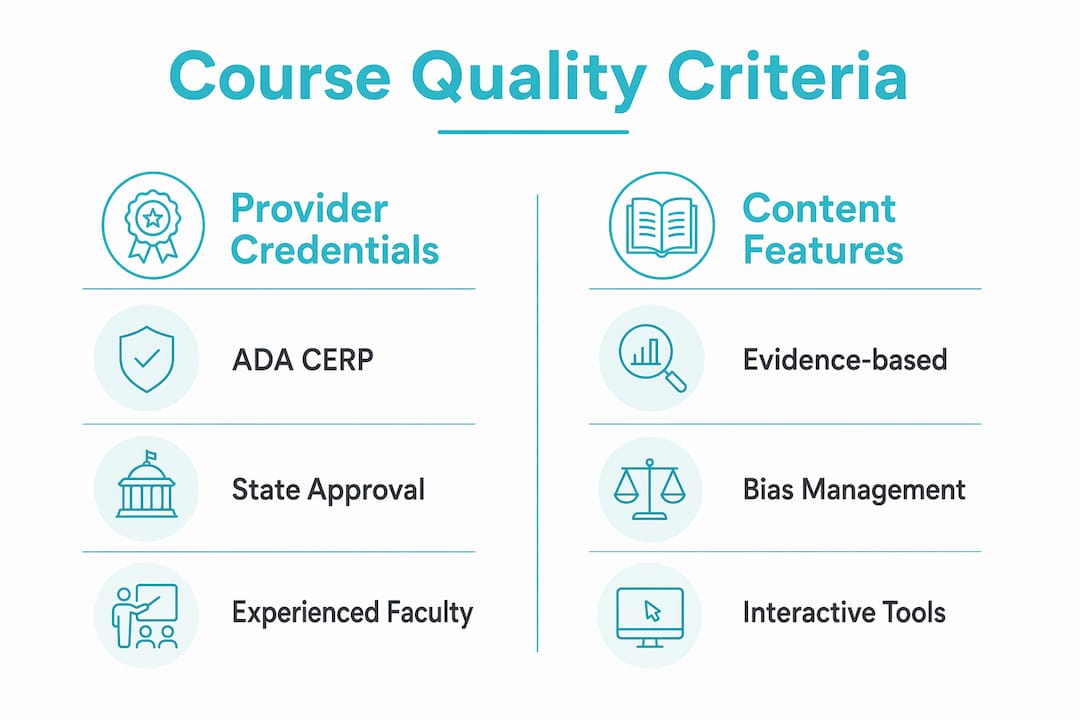
Educational quality is no longer about format but content integrity and impact. That principle from the 2026 standards gives dentists a clear filter for evaluating any online implant course. The delivery method, whether live webinar or on-demand video, matters far less than whether the content is evidence-based, unbiased, and tied to measurable outcomes.
Four criteria separate strong courses from weak ones:
Evidence-based content: Material must reflect current peer-reviewed research, not manufacturer-sponsored talking points
Qualified faculty: Instructors should hold relevant clinical credentials and disclose any financial relationships with implant companies
Measurable learning objectives: Each module should state what you will be able to do clinically after completing it
The new ADA CERP standards emphasize bias management and content relevance as core quality markers. A course funded by a single implant system manufacturer without transparent disclosure fails this standard, regardless of how polished the production quality looks.
Quality indicator
What to look for
Provider accreditation
ADA CERP recognition and state board approval
Faculty credentials
Clinical degrees, board certifications, and disclosed affiliations
Content citations
References to peer-reviewed journals, not product literature
Learning objectives
Specific, measurable, and clinically relevant outcomes
Conflict-of-interest policy
Written disclosures for all faculty and sponsors
Many online implant courses now include interactive case studies, video demonstrations, and AI-driven personalization to meet the engagement and outcomes tracking requirements of the 2026 framework. These features are not just marketing extras. They are indicators that a provider has invested in genuine educational design rather than repurposed slide decks.
Onewd’s introduction to implant placement course is one example of an on-demand program built around clinical case progression rather than passive lecture delivery.
How do you combine online and in-person training for real implant skills?
Online CE excels for theoretical knowledge, but hands-on clinical skills in implant surgery require in-person supervised training for competency. That distinction is not a limitation of online platforms. It reflects the nature of surgical skill acquisition itself. You cannot develop tactile feedback, tissue handling, or real-time decision-making through a screen alone.
A practical hybrid learning path looks like this:
Complete foundational online modules first. Cover implant biology, treatment planning, and prosthetic theory before attending any hands-on workshop. Arriving prepared accelerates what you learn in the operatory.
Attend a supervised hands-on workshop. Work on typodont models or cadaver specimens with an experienced mentor present. Dental implant seminars that include live surgical observation compress the learning curve significantly.
Observe live patient cases. Watching an experienced clinician place implants in real patients, with real anatomy and real complications, teaches things no simulation can replicate.
Place your first cases under mentorship. State boards and most credentialing bodies expect supervised clinical experience before independent practice. Document every case meticulously.
Return to online CE for advanced topics. Once you have clinical experience, advanced online content on full-arch protocols, immediate loading, or bone grafting lands differently. You have a clinical frame of reference.
Dental boards mandate specific clinical training for procedures like laser use, and implant surgery carries similar expectations in many states. Online coursework alone cannot fulfill those clinical hour requirements. Ignoring that distinction creates compliance gaps that surface at license renewal.
“Balanced CE strategies combining online flexibility with in-person skill validation optimize both learning outcomes and regulatory compliance. The dentists who advance fastest are those who treat online and in-person training as complementary tools, not competing options.”
Common pitfalls to avoid:
Completing only online CE and assuming it covers all renewal requirements
Skipping post-course assessments that generate the documentation your state board may request
Failing to retain CE records for at least three years, which most state boards require for audit purposes
Choosing courses based on price or convenience rather than accreditation status
Pro Tip:Map your state’s full CE renewal requirements at the start of each licensing period. Identify which hours must be in-person, which can be online, and which topics are mandated. Then build your course calendar backward from the renewal deadline.
Key Takeaways
Online dental implant courses deliver the most value when paired with in-person clinical training, verified accreditation, and a clear understanding of your state board’s specific CE requirements.
Point
Details
Verify accreditation first
Confirm ADA CERP recognition and state board approval before enrolling in any course.
Online CE has a credit cap
Most states limit online CE to 50% of renewal hours, requiring in-person training for the rest.
2026 standards raised the bar
The new 17-criterion ADA CCEPR framework demands outcome-focused, bias-free course design.
Hybrid learning builds real skills
Online theory combined with supervised hands-on practice produces clinical competency.
Keep records for three years
State boards can audit CE compliance, and documentation gaps create serious renewal risks.
Why the format debate misses the real point
The conversation about online versus in-person dental implant education often gets framed as a quality argument. Online is convenient but shallow. In-person is rigorous but expensive. That framing is outdated and, frankly, unhelpful.
The 2026 ADA CERP overhaul makes the point clearly. A poorly designed live seminar with no learning objectives and a sponsored faculty panel fails the same quality test as a passive online video with no assessment. Format is not the variable. Design is.
What I have seen consistently is that dentists who treat online implant courses as preparation rather than substitution get the most out of both formats. They arrive at hands-on workshops with the vocabulary, the anatomy, and the case logic already internalized. That preparation turns a two-day seminar into genuine skill development instead of an introduction.
The trend worth watching is AI-driven adaptive learning in online CE. Platforms that adjust content difficulty based on your quiz performance and flag knowledge gaps in real time are already appearing. That technology will make online implant training more targeted and more efficient than any fixed-curriculum course. The dentists who adopt it early will have a measurable edge in both clinical confidence and compliance efficiency.
Choose accredited online implant courses with clear learning objectives, qualified faculty, and documented outcomes. Then pair them with supervised clinical experience. That combination is not a compromise. It is the most effective path to implant proficiency available right now.
— Jake
Onewd’s approach to dental implant continuing education
Dental implant training requires a platform that takes both regulatory compliance and clinical outcomes seriously. Onewd offers an accredited course catalog that combines on-demand online lectures with live hands-on training options, giving dental professionals a structured path from foundational theory to advanced surgical technique.
Onewd’s training courses are designed by experienced faculty who disclose affiliations, build content around measurable learning objectives, and meet the 2026 ADA CERP quality standards. Whether you are completing your first implant CE credits or pursuing advanced full-arch protocols, Onewd provides the clinical depth and accreditation documentation your state board requires. Visit Onewd’s course catalog to find current offerings that fit your renewal timeline and career goals.
Educational disclaimer: Requirements differ by state and licensing authority and change over time. Verify current requirements with your licensing board.