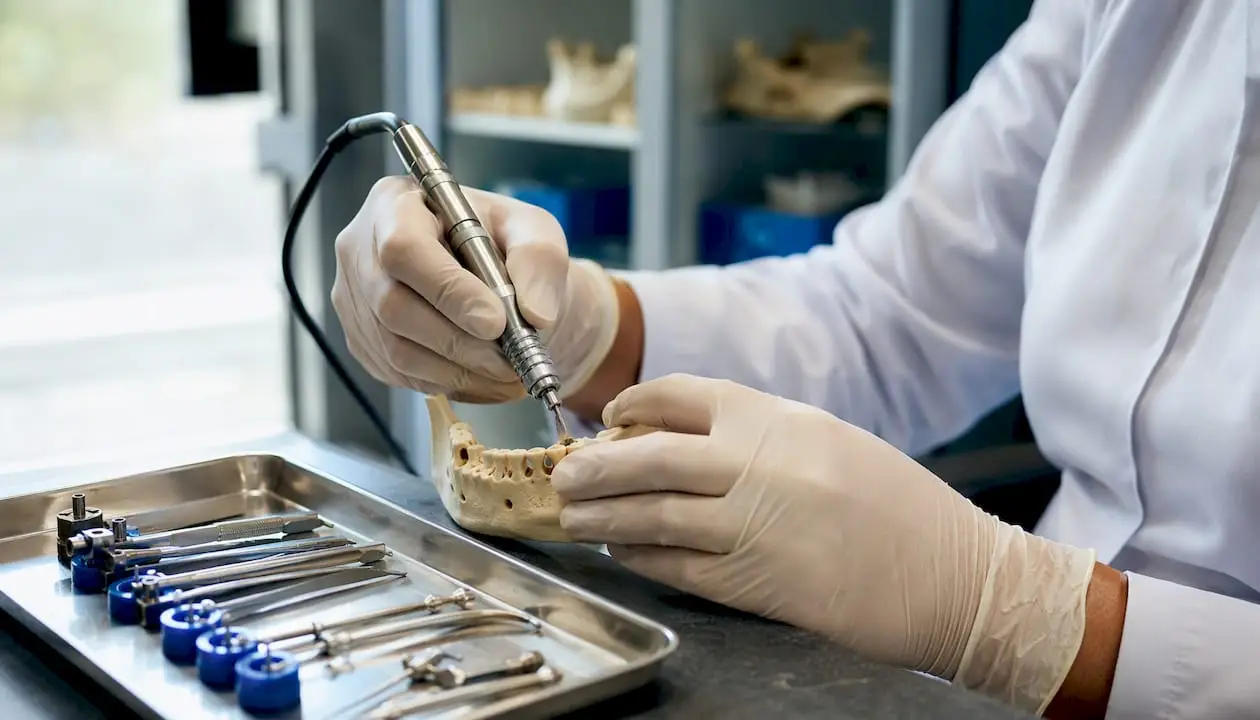
The strongest hands-on dental implant training programs in the US for 2026 combine live patient surgeries, expert mentorship, and structured curricula that take you from foundational anatomy through advanced prosthetic integration. Leading programs include:
Midwest Implant Institute — live surgical training with experienced oral surgeons in a dedicated clinical facility
Nobel Biocare — technology-integrated implant courses covering digital workflows, guided surgery, and current implant systems
Hands-On Implant Institute — small-group, participant-led surgical sessions with direct instructor feedback
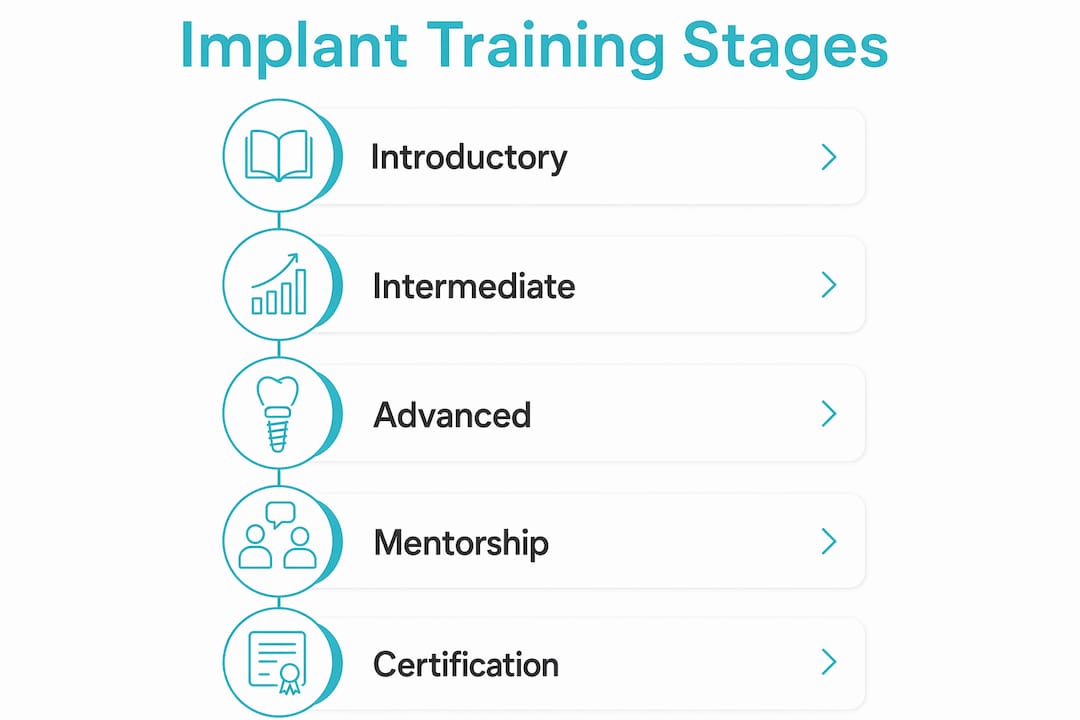
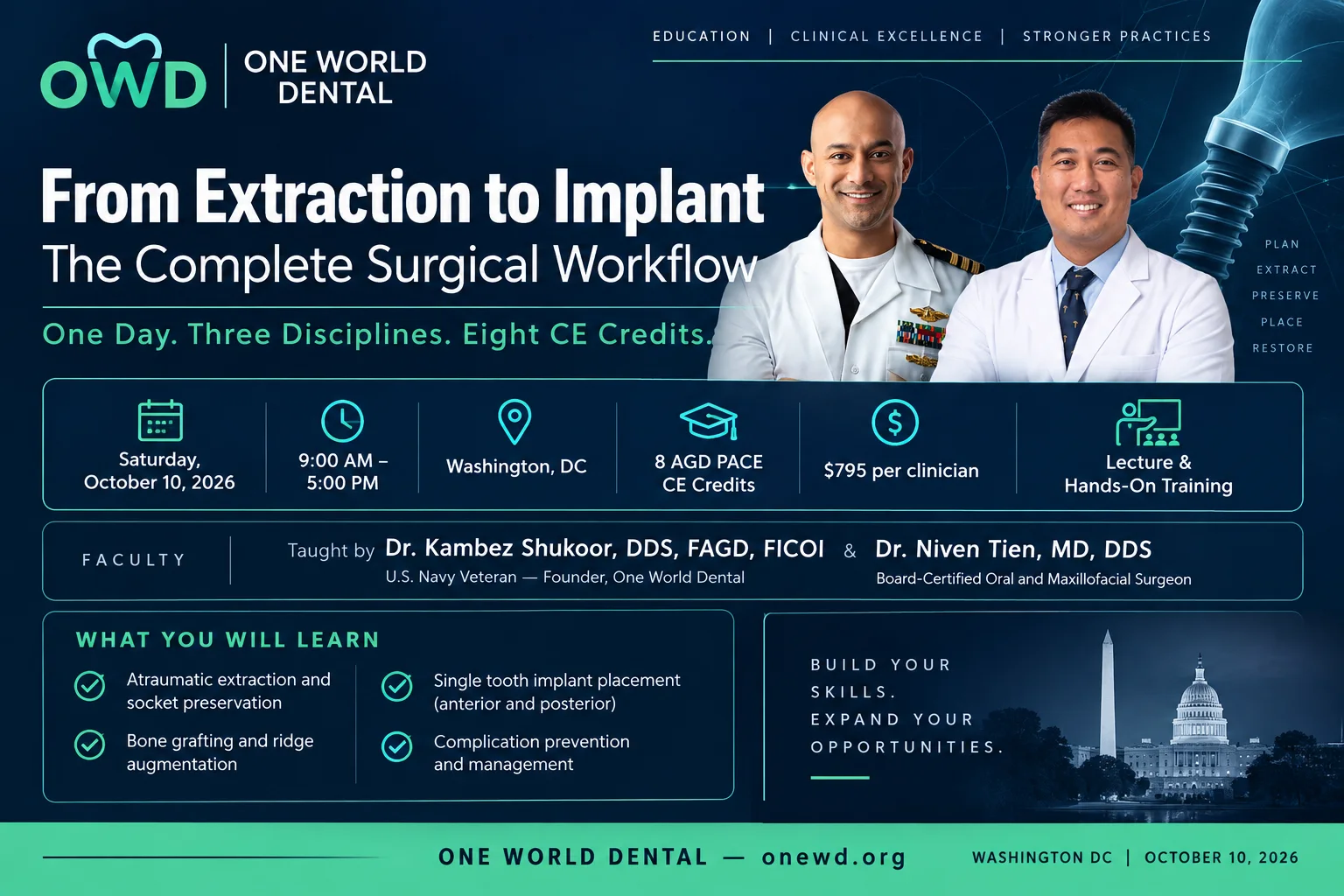
One World Dental (Onewd) — tiered learning paths from introductory to advanced, with live surgery modules, mentorship, and accredited CE credits
Top programs carry accreditation from bodies such as AGD PACE, ADA CERP, or CODA, which matters both for CE credit validity and for meeting tightening state board requirements. For practicing dentists, the core benefits are clear: surgical confidence you can use the week you return, documented training hours for licensure compliance, and a mentorship relationship that extends well past the final session.
What do the best hands-on implant courses actually cover?
Curriculum depth separates a course worth your time from one that fills a weekend and leaves you no more capable. The best programs build through distinct phases rather than dumping everything into a single intensive.
Core curriculum components across leading programs typically include:
Implant anatomy, bone biology, and patient selection criteria
Surgical placement protocols, freehand and guided
Bone grafting and ridge augmentation techniques
Prosthetic workflows: abutment selection, impressions, and final restorations
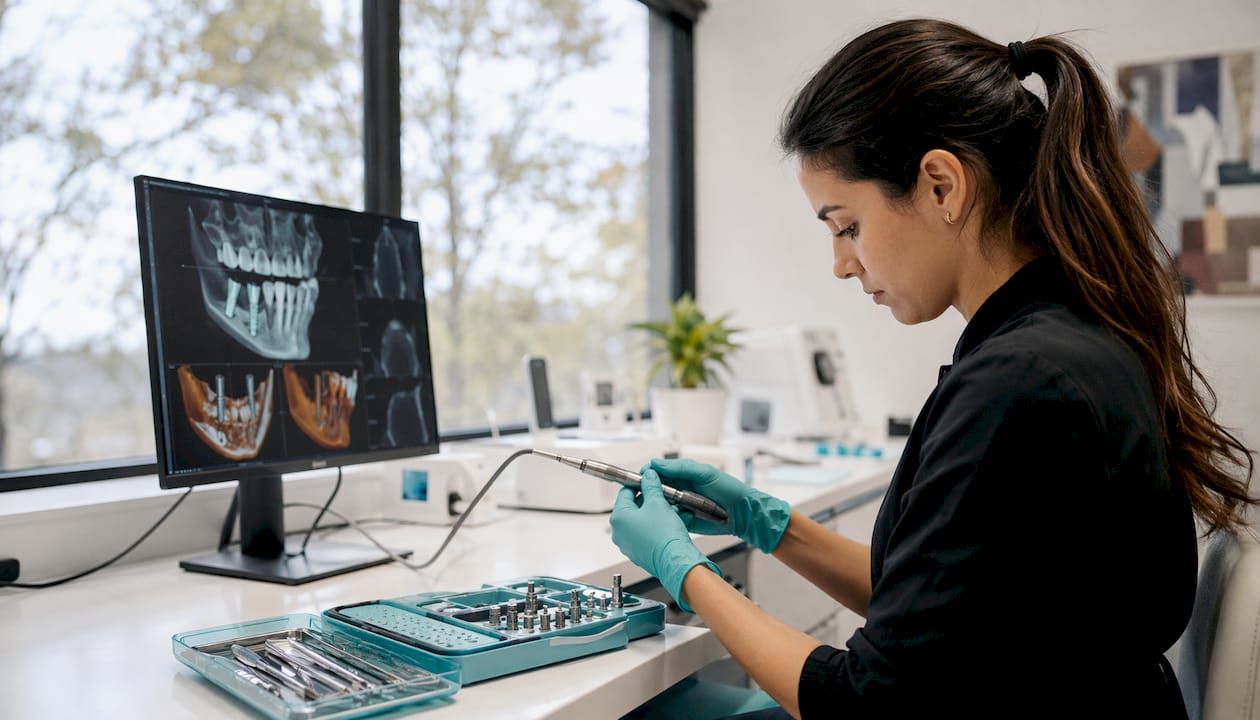
CBCT imaging interpretation and digital surgical guide planning
Complication recognition and management
Mentorship is where programs diverge most sharply. Some offer a faculty email address and call it support. The better ones build in structured post-course check-ins, case review sessions, and direct access to a surgeon-instructor when you hit a difficult clinical situation back in your office. Mentorship beyond course attendance enhances skill retention and helps dentists integrate implant procedures into practice with far less second-guessing.
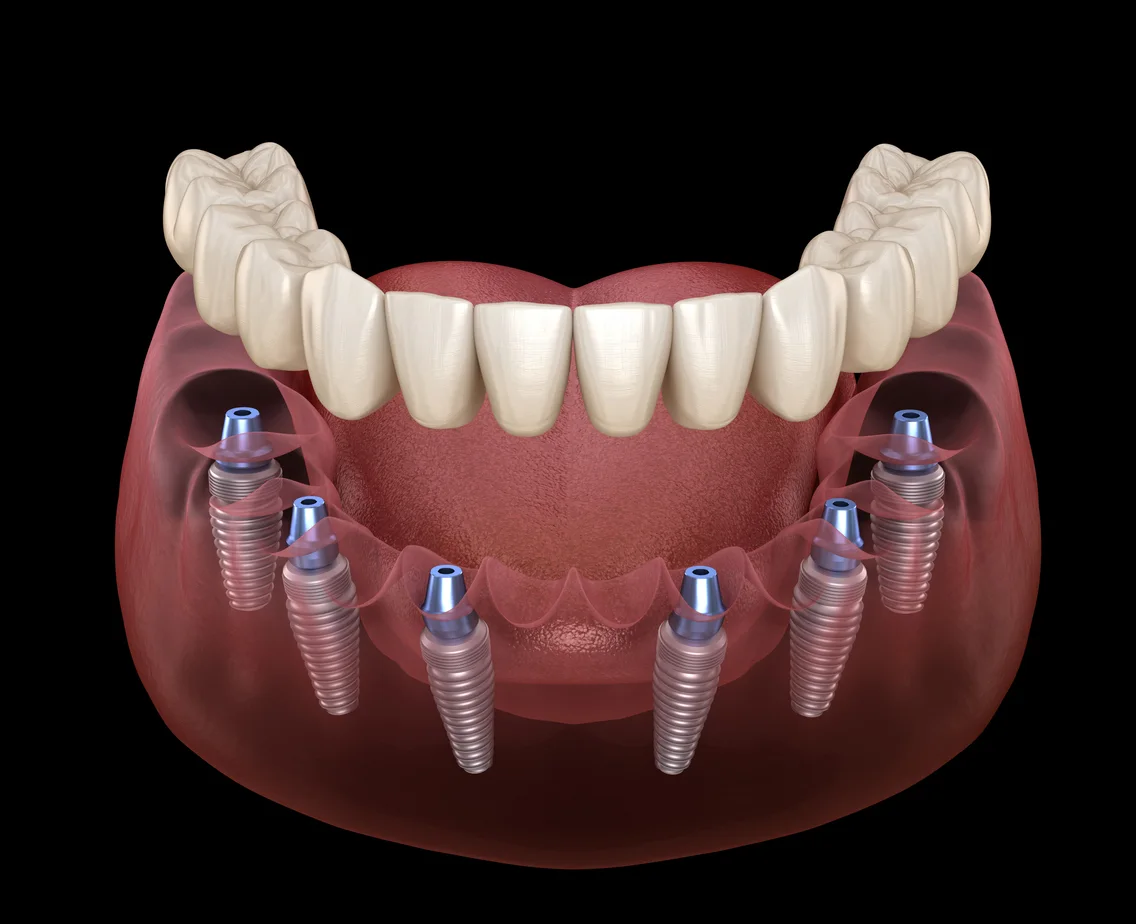
Course levels matter too. An introductory module covers single-tooth placement in straightforward sites. Intermediate sessions add grafting, immediate placement, and more complex anatomy. Advanced tracks address full-arch rehabilitation, All-on-X concepts, and digital prosthetic integration. Jumping straight to advanced content without the foundational reps is one of the most common mistakes dentists make when selecting a program.
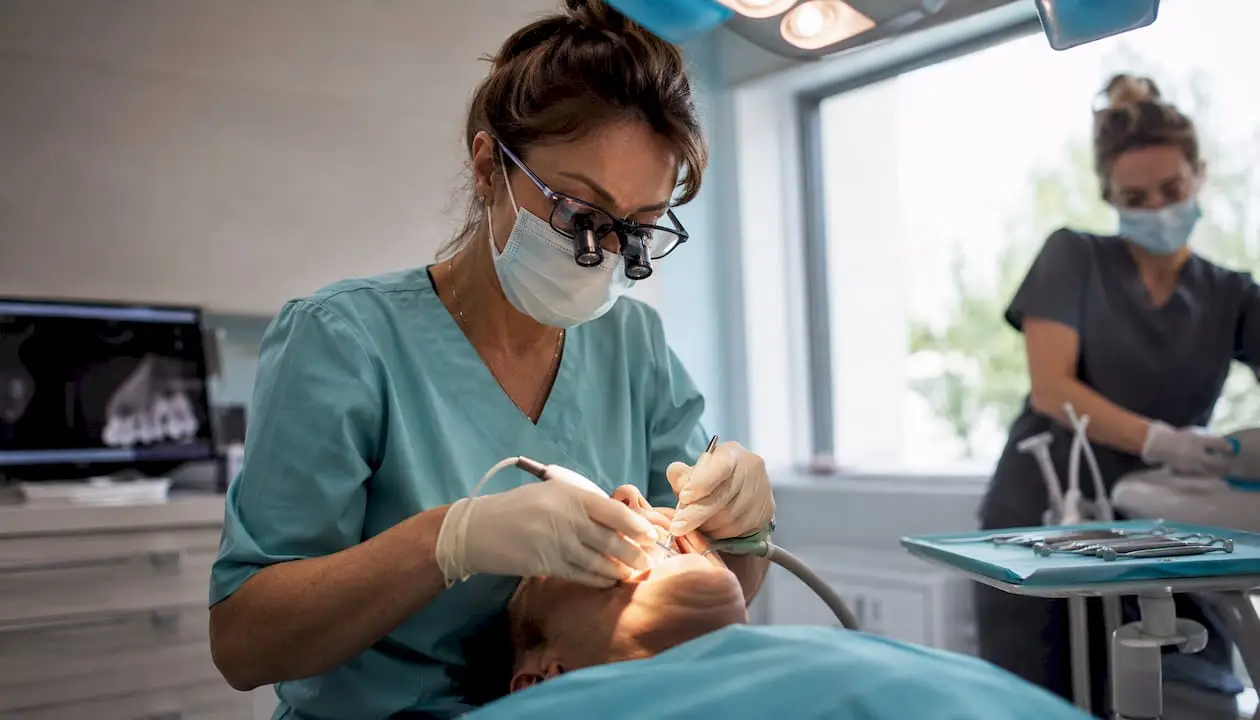
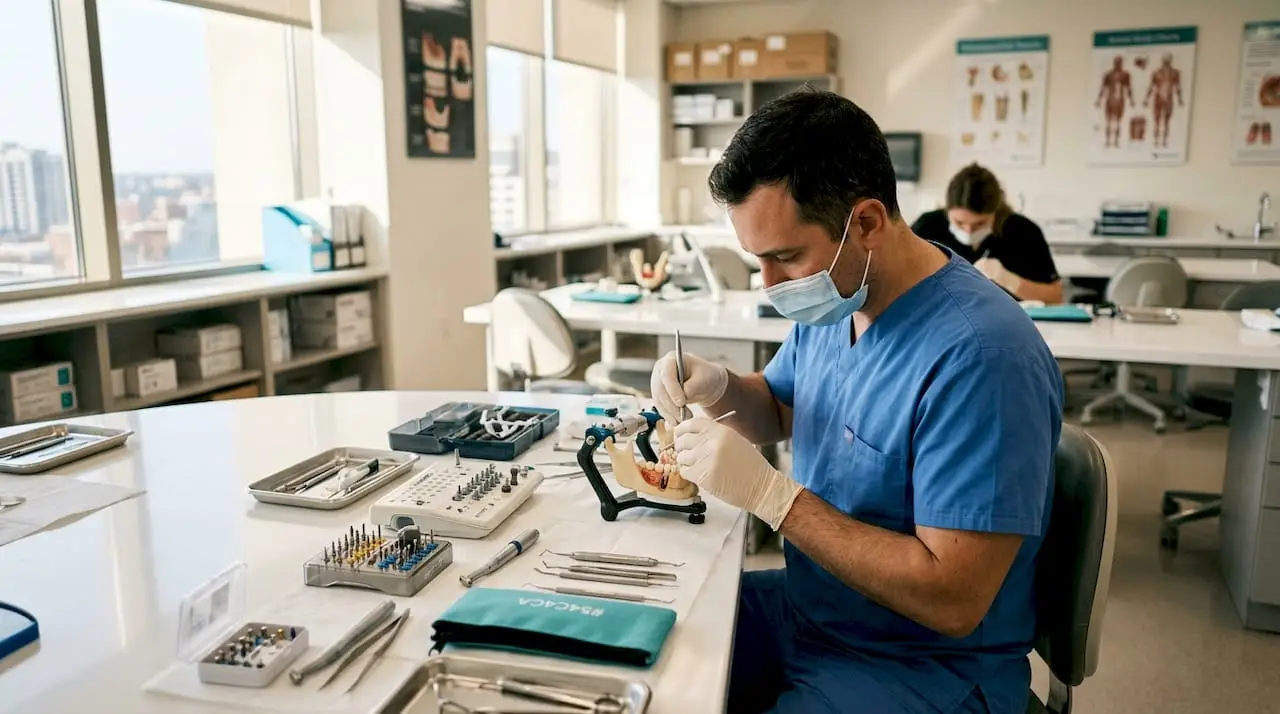
High-quality training facilities use real surgical operatories with CBCT imaging, digital planning software, and current implant systems, not hotel conference rooms with borrowed kits. That environment gap matters more than most dentists realize before they experience it firsthand.
Pro Tip:Before enrolling, ask the program coordinator exactly how many implants you will personally place during the course, not how many will be placed in total. That single number tells you more about the program’s value than any marketing brochure.
How do course schedules, costs, and registration work?
Planning around a training program requires more than picking a date. Format, duration, and eligibility all affect whether a course actually fits your situation.
Common formats and durations:
Weekend workshops (2–3 days): Entry-level exposure; useful for orientation but rarely sufficient for surgical confidence on their own
Multi-day intensives (4–7 days): The most common format for live surgical training; enough time for meaningful repetition
Mini-residencies (multi-session over weeks or months): The gold standard for building durable skill; multiple live patient sessions with increasing complexity
Registration typically opens 60–90 days before a course date. Popular programs fill quickly, particularly live surgery sessions with capped enrollment. Early registration also matters for travel planning if the course is held at a dedicated training center outside your state.
Eligibility criteria across most programs require:
Active dental licensure in your state
Basic familiarity with oral surgery principles (for intermediate and advanced tracks)
Prior completion of foundational implant coursework for advanced-level enrollment
CODA-compliant specialty training may count toward documented clinical hours where state boards recognize it
On cost: live surgical programs with real patients and small class sizes carry higher tuition than lecture-based CE. Payment plans are common, and some programs offer early-registration discounts. Refund policies vary; confirm the cancellation terms before you pay.
State regulatory requirements are tightening. Oregon now mandates 56 hours of hands-on clinical implant training before a dentist may surgically place implants, plus 7 hours of implant-related CE per renewal period. Critically, those 56 hours can be completed cumulatively across multiple approved courses rather than in a single program. Oregon and Oklahoma are early movers, but other state boards are watching closely. Documenting your training hours now, regardless of your state’s current rules, is the low-risk move.
Hybrid formats are increasingly available. Online modules handle anatomy, case planning, and prosthetic concepts, while in-person sessions focus exclusively on surgical execution. That split makes sense: you do not need a surgical operatory to learn how to read a CBCT scan.
What separates real hands-on training from passive observation?
This distinction is worth being blunt about. A surprising number of courses marketed as “hands-on” deliver plastic model exercises and a lot of watching. That is not surgical training.
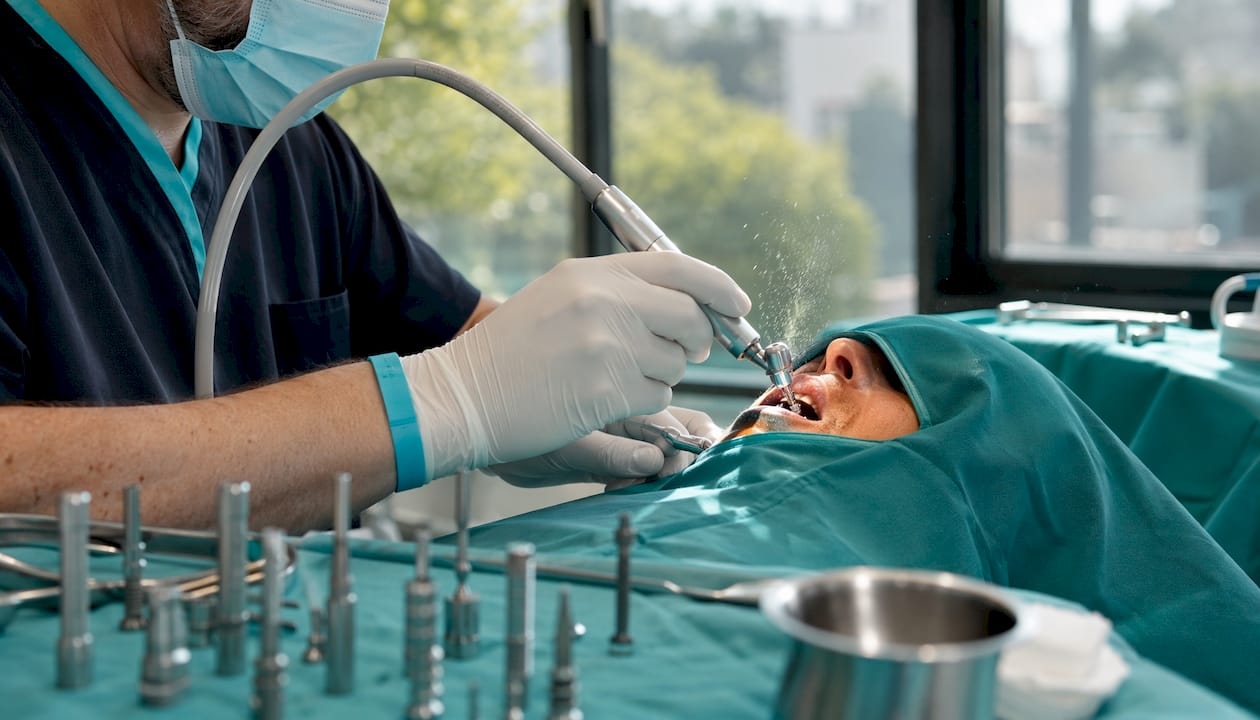
True hands-on implant training requires participants to physically perform the surgical steps: drilling the osteotomy, placing the implant, and suturing the site. Bone-level models and cadavers build initial muscle memory, but live patient surgery is what actually prepares you for Monday morning in your own chair. Working on a real patient under direct supervision teaches anatomical variation management, real soft-tissue behavior, and the kind of clinical decision-making that no simulation replicates.
The “tell, show, do” methodology is the benchmark. Instructors explain the technique, demonstrate it on a patient or model, then step back while you perform it under supervision. If a course skips the “do” step, you leave with knowledge but not competence.
Warning signs that a course is observation-heavy rather than participant-led:
No stated minimum number of implants you will personally place
Class sizes above 10–12 participants per instructor
Training held in conference rooms rather than surgical operatories
Instructors without verifiable surgical credentials or active clinical practice
No live patient component at any point in the curriculum
Repeated clinical exposure is what builds surgical comfort. Dentists who complete a single weekend course and then wait months before placing their first implant in practice often find their confidence has eroded. Mini-residencies address this directly by spacing sessions over time and building complexity gradually.
Small class sizes are not a luxury feature. They are the mechanism by which personalized feedback and meaningful practice time actually happen. A room of 30 dentists watching one surgeon is a lecture with props.
Pro Tip:Ask the program for the names and credentials of the surgeon-instructors before you enroll. A quick search of their clinical background and published cases tells you whether they are active practitioners or primarily educators. You want someone who placed implants last week, not last decade.
One World Dental offers mentorship-driven implant training
Onewd is built around a specific premise: that the gap between a CE certificate and genuine surgical confidence is closed through mentorship and repetition, not lecture hours alone. Its course catalog spans introductory to advanced levels, with both online and in-person formats designed to fit around an active practice schedule.
The flagship live surgical program is a 4-day hands-on implant placement course held in Guadalajara, Mexico, where participants perform real implant surgeries under direct faculty supervision. The international setting keeps costs accessible without compromising clinical standards. Faculty are active oral surgeons, not retired clinicians. Courses carry accredited CE credits, and the tiered curriculum means you can progress from a single anterior placement to full-arch rehabilitation within the same platform rather than piecing together programs from multiple providers.
Post-course mentorship is built into the model. When you return to your practice and encounter a case that pushes your comfort level, that support structure is already in place. For dentists who want to review concepts between sessions, online webinar archives cover prosthetic workflows, case planning, and surgical technique in a format you can revisit at 10 PM on a Tuesday.
Browse the full training course catalog to see current dates, course levels, and registration details.
Key Takeaways
Hands-on dental implant training that builds real surgical competence requires live patient experience, small class sizes, and post-course mentorship, not just documented CE hours.
Point
Details
Live surgery is non-negotiable
Programs where you personally place implants under supervision build the muscle memory and decision-making that models cannot replicate.
State requirements are tightening
Oregon mandates 56 clinical training hours before implant placement; hours can be completed across multiple approved courses.
Format determines outcomes
Multi-day intensives and mini-residencies outperform single weekends for building durable surgical confidence.
Small class sizes matter
Fewer participants per instructor means more personalized feedback and more time at the surgical site.
Onewd offers tiered live training
One World Dental’s courses range from introductory single-tooth placement to full-arch rehabilitation, with mentorship and accredited CE credits.
Educational disclaimer: Requirements differ by state and licensing authority and change over time. Verify current requirements with your licensing board.