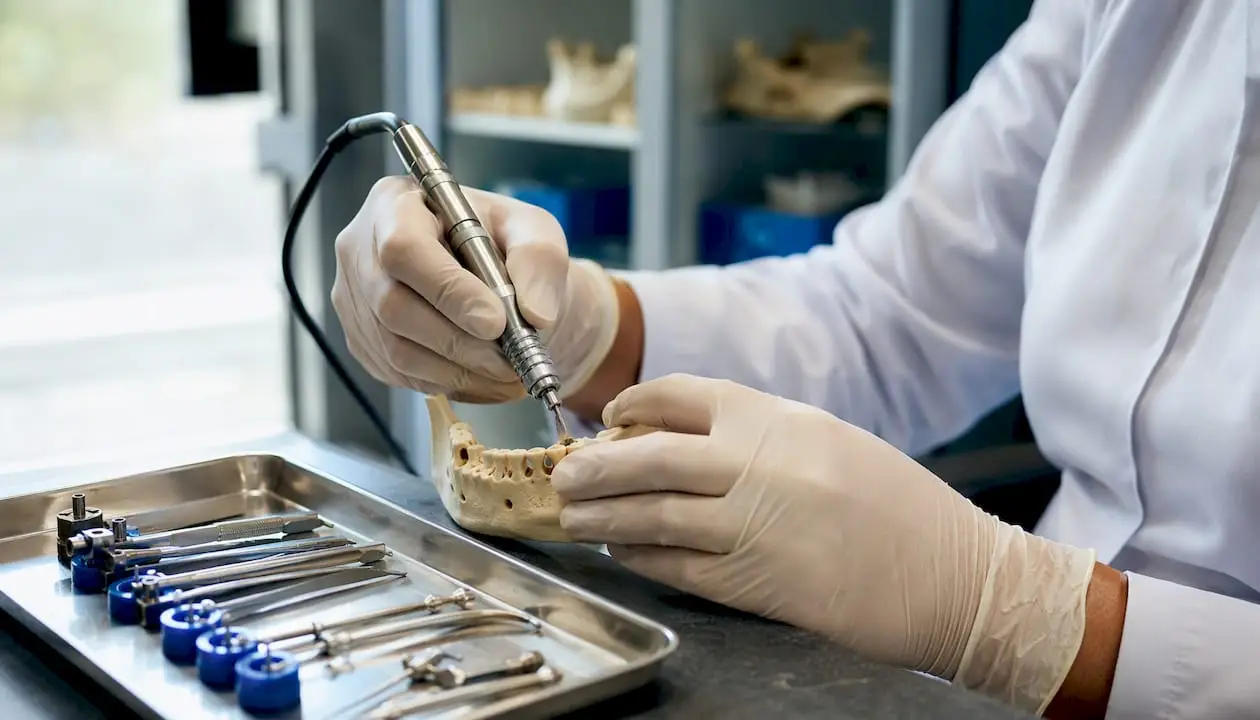
Dental implant seminars are immersive clinical education programs that give dentists and dental students hands-on surgical training, treatment planning experience, and evidence-based implantology skills under direct expert supervision. The American Academy of Implant Dentistry (AAID) recognizes structured, mentorship-driven programs as the standard for developing clinical competence in implant placement. The best programs go far beyond lectures. They combine supervised live surgery, prosthetic planning, and complication management into a single, progressive curriculum. Choosing the right seminar determines how quickly you move from theory to confident, independent practice.
What makes a great dental implant seminar?
The single most important factor in any implant seminar is the student-to-instructor ratio. Low ratios with direct supervision during live surgery correlate directly with clinical readiness and patient safety. A 1:1 mentor-to-learner ratio during live procedures is the benchmark for quality training. Higher ratios often mean passive observation rather than meaningful skill development.

Beyond ratio, the curriculum scope separates good programs from great ones. Effective implant CE covers the entire treatment workflow, from diagnosis and CBCT analysis through surgical placement, restorative integration, and complication management. A seminar that only teaches you to place an implant leaves you unprepared for the clinical decisions that surround that placement.
Key criteria to evaluate before enrolling:
- Hands-on format: Live patient surgery or high-fidelity simulation models, not lecture-only sessions
- Instructor credentials: Board-certified, actively practicing faculty who teach from current clinical experience
- Curriculum breadth: Coverage of diagnosis, treatment planning, surgical placement, and prosthetics
- Case progression: Programs that start with straightforward cases and increase complexity under supervision
- CE credit value: Accredited hours that count toward state licensure requirements
- Location and duration: Multi-day formats with geographic options, including international venues
Pro Tip: Ask the program director for the exact student-to-instructor ratio during live surgery before you register. If they cannot give you a specific number, that tells you something important.
How to evaluate hands-on implant training programs
Not all hands-on dental workshops are built the same. The format of clinical exposure matters as much as the content itself.
Supervised live surgery vs. simulation
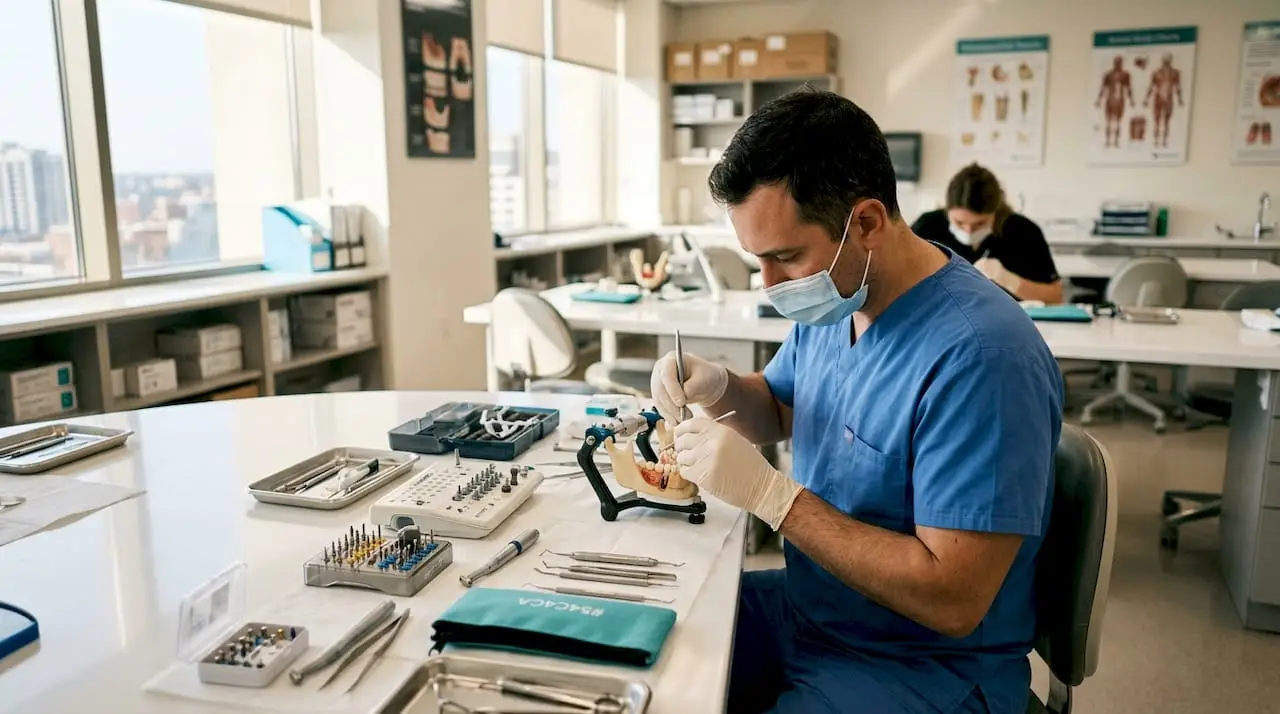
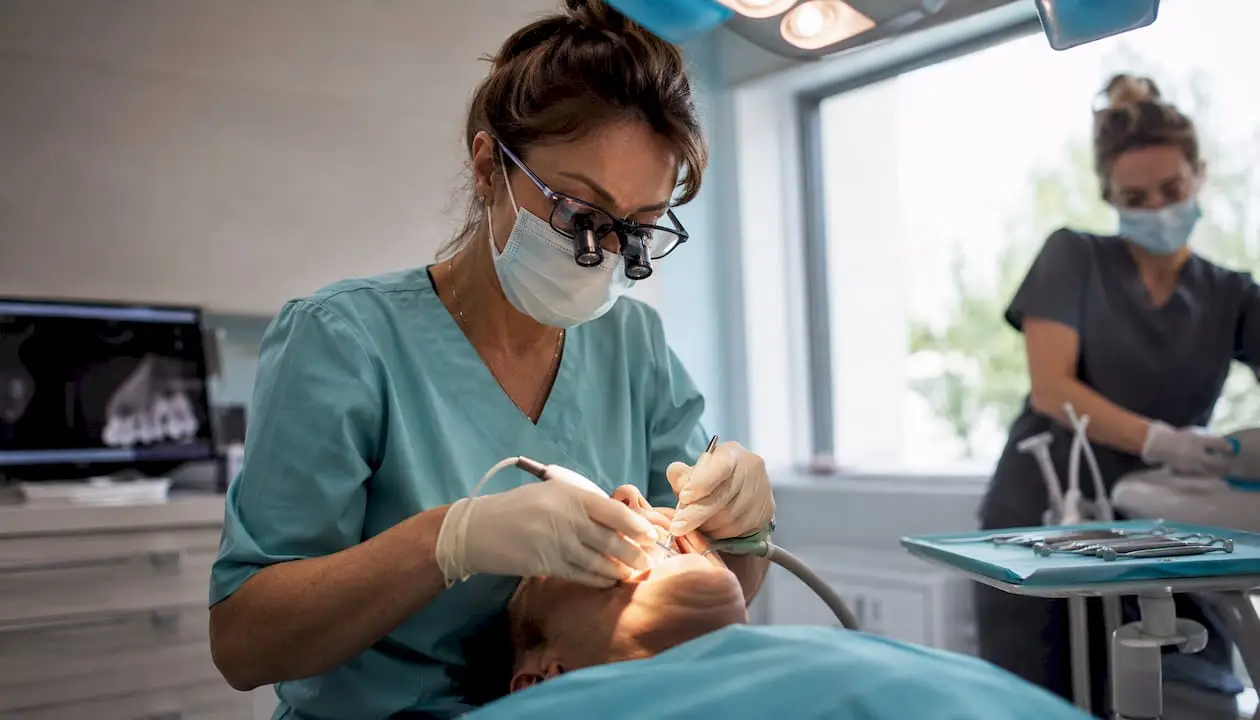
Supervised live patient experience combined with simulation produces dentists ready for independent implant treatment better than either approach alone. Lectures build knowledge, simulation builds skills, but supervision confirms clinical judgment and competence. The best programs use simulation to prepare you, then move you to supervised live cases to confirm what you have learned.
Progressive case complexity
High-quality implant seminars use progressive skill-building where trainees start with simple single-tooth cases and advance to more complex scenarios under expert guidance. This structure builds confidence systematically. Jumping straight to full-arch cases without foundational experience increases risk for both the clinician and the patient.
Faculty who still practice
Evaluating instructor backgrounds is non-negotiable. Board-certified, actively practicing instructors bring current clinical judgment to the teaching environment. An instructor who stopped practicing five years ago cannot teach you how to handle the complications you will face in your clinic next month.
How modern technology improves implant education
The best implant education workshops now integrate digital tools and simulation models that accelerate skill retention in ways traditional lectures cannot.
Multifunctional surgical guide models
Training with multifunctional surgical guide models significantly boosts cognitive and practical skill retention in implant dentistry students. Post-test scores in groups trained with these models were significantly higher than lecture-only groups (p < 0.05). These models let you practice guide positioning, angulation, and depth control before you ever touch a live patient.
CBCT and digital workflow training
CBCT analysis is now a core component of responsible implant planning. Seminars that include digital workflow training, from cone beam imaging through virtual implant placement, prepare you to make better surgical decisions. This is not optional education. It is the standard of care for complex cases.
Online and offline learning modes
Offline clinical training significantly improves academic performance and student engagement compared to lecture-only models. A study of 150 undergraduate dental students across three cohorts showed statistically significant improvement in knowledge and willingness to pursue implantology (p < 0.05). That said, online modules serve a real purpose. They deliver foundational theory efficiently so that in-person time focuses entirely on clinical application.
Pro Tip: Look for programs that use online pre-course modules to front-load the theory. This means your in-person days are spent entirely on surgical technique and case discussion, not sitting through slides.
| Learning mode |
Primary benefit |
Best used for |
| Online lecture |
Efficient theory delivery |
Pre-course preparation |
| Simulation model |
Skill repetition without patient risk |
Technique refinement |
| Supervised live surgery |
Clinical judgment and competence confirmation |
Final skill validation |
| Mentorship follow-up |
Long-term case management support |
Post-seminar growth |
Who should attend implant seminars and when
A CE pathway that progresses from diagnosis through restorative and surgical skills with mentorship at each stage produces safer, more sustainable clinical practice. Where you enter that pathway depends on your current experience.
-
Dental students: Start with foundational implantology lectures and simulation-based workshops before graduation. Building conceptual fluency early makes your first supervised live cases far less stressful.
-
Newly licensed dentists: Enroll in introductory hands-on programs that cover single-tooth anterior and posterior placement. Onewd’s four-day hands-on course in Guadalajara is designed precisely for this entry point, combining didactic instruction with supervised live surgery.
-
General dentists with some implant exposure: Seek programs that add CBCT-guided planning, immediate placement protocols, and soft tissue management to your existing skills. These mid-level seminars fill the gaps that self-taught practice leaves behind.
-
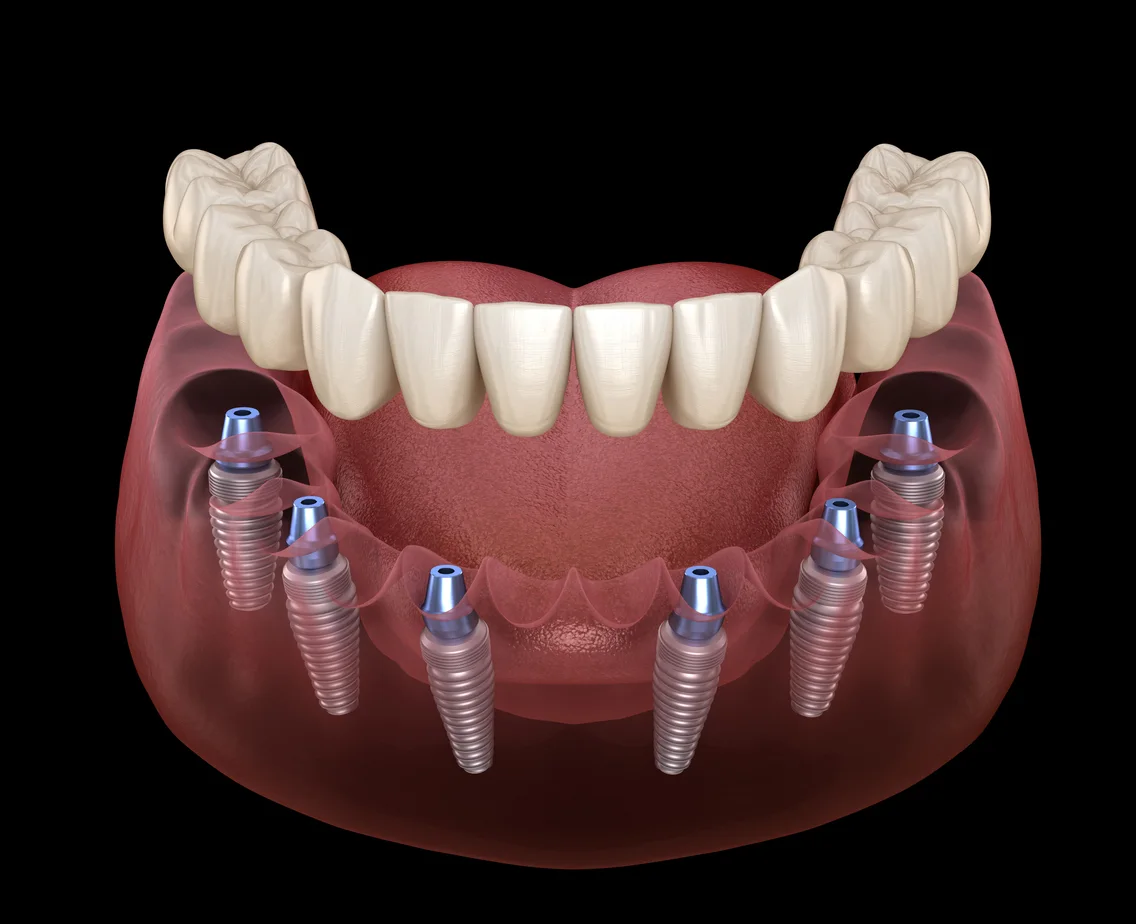
Experienced implantologists: Advanced implant education workshops covering full-arch rehabilitation, bone grafting, and zygomatic implants require a verified case history before enrollment. Programs that skip this vetting are not worth your time.
The most common mistake dentists make is choosing a seminar based on how many implants they will place rather than the quality of the curriculum. Mentorship supports safety, long-term clinical success, and professional growth far beyond what implant count alone can measure. A seminar where you place six implants with minimal supervision teaches you less than one where you place two under a 1:1 mentorship model with full case debrief.
Practical questions to ask before enrolling:
- What is the maximum number of students per instructor during live surgery?
- Does the curriculum include treatment planning, not just surgical placement?
- Are complication management and patient selection covered?
- What follow-up or mentorship support is available after the course ends?
- Is the program accredited for CE credits in your state?
Key Takeaways
The most effective dental implant seminars combine supervised live surgery, a 1:1 mentorship ratio, and a full treatment workflow curriculum to build clinical competence that holds up in independent practice.
| Point |
Details |
| Supervision ratio matters most |
A 1:1 instructor-to-student ratio during live surgery is the benchmark for quality implant training. |
| Curriculum breadth beats implant count |
Programs covering diagnosis, planning, and complication management produce safer, more capable clinicians. |
| Technology accelerates retention |
Multifunctional surgical guide models and CBCT training significantly improve post-training skill scores. |
| Match the seminar to your level |
Entry-level, mid-level, and advanced programs exist; enrolling at the wrong level wastes time and money. |
| Mentorship extends beyond the course |
Post-seminar mentorship support is what separates short-term skill gain from long-term clinical confidence. |
What I have learned from watching dentists choose the wrong seminar
The most consistent mistake I see is dentists treating implant education like a box to check. They find a weekend course, place a handful of implants under loose supervision, and walk away thinking they are ready. They are not.
The programs that actually produce confident, competent implantologists share one trait: they make you uncomfortable in a controlled environment. That means placing your first live implant with an instructor physically beside you, not watching from across the room. It means debriefing every case, including the ones that went exactly as planned, because understanding why something worked is as important as the outcome itself.
The most valuable seminars emphasize case selection and treatment planning via CBCT, not just surgical execution. I have seen dentists complete courses with impressive implant counts who still cannot read a CBCT scan with confidence. That is a curriculum failure, not a student failure.
Implant education is not a one-time event. The dentists I respect most treat it as a continuous pathway. They attend foundational courses, then intermediate programs, then seek mentorship for complex cases. They view each stage as preparation for the next, not as a credential to display. That mindset is what produces predictable outcomes for patients and a sustainable implant practice for the clinician.
— Jake
Onewd’s approach to hands-on implant education
Onewd offers a structured path from foundational implant theory to advanced surgical training, built around the principle that real competence requires real patients and real mentorship.
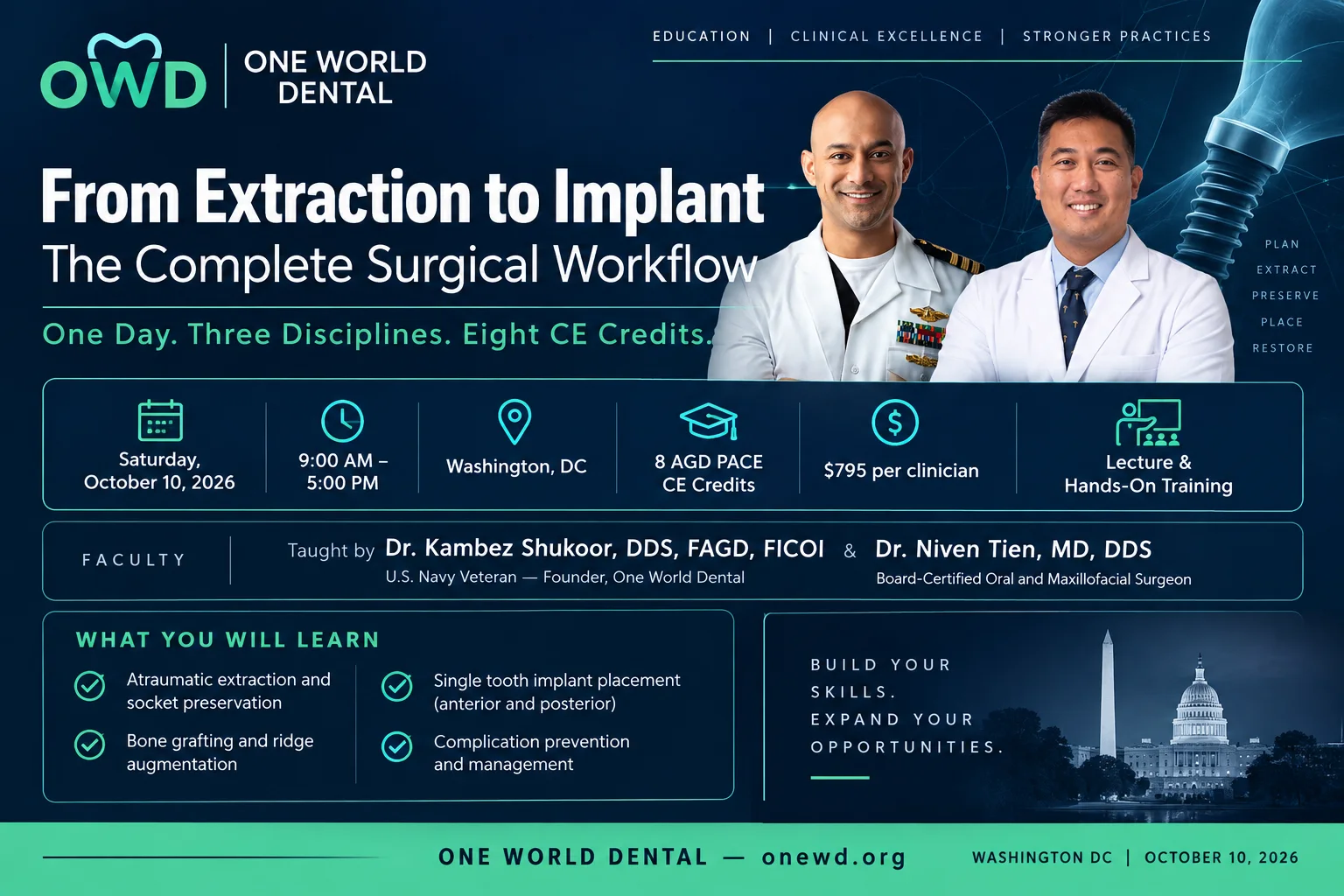
Onewd’s in-person training courses combine expert-led didactic sessions with supervised live surgery, giving you the clinical repetition and case debrief experience that lectures alone cannot provide. Programs range from introductory single-tooth placement to complex multi-unit cases, with online webinar options that let you build foundational knowledge before your in-person days begin. Faculty are actively practicing clinicians, not retired instructors. Every program is structured to match your current experience level and move you forward with confidence.
Recommended