Dental implant courses are specialized training programs that equip licensed dentists and dental students with the surgical skills, clinical judgment, and procedural knowledge needed to safely place and restore dental implants. The American Academy of Implant Dentistry (AAID) and state dental boards set the professional context for this training, though CE requirements vary widely from 8-hour introductory workshops to 670 hours for full diplomate certification. That range reflects a fundamental truth: not all implant dentistry courses are equal, and choosing the right program determines whether you build real surgical confidence or simply collect CE credits. This guide breaks down what separates effective implant training from the rest, so you can invest your time and money wisely.
1. What dental implant courses actually teach
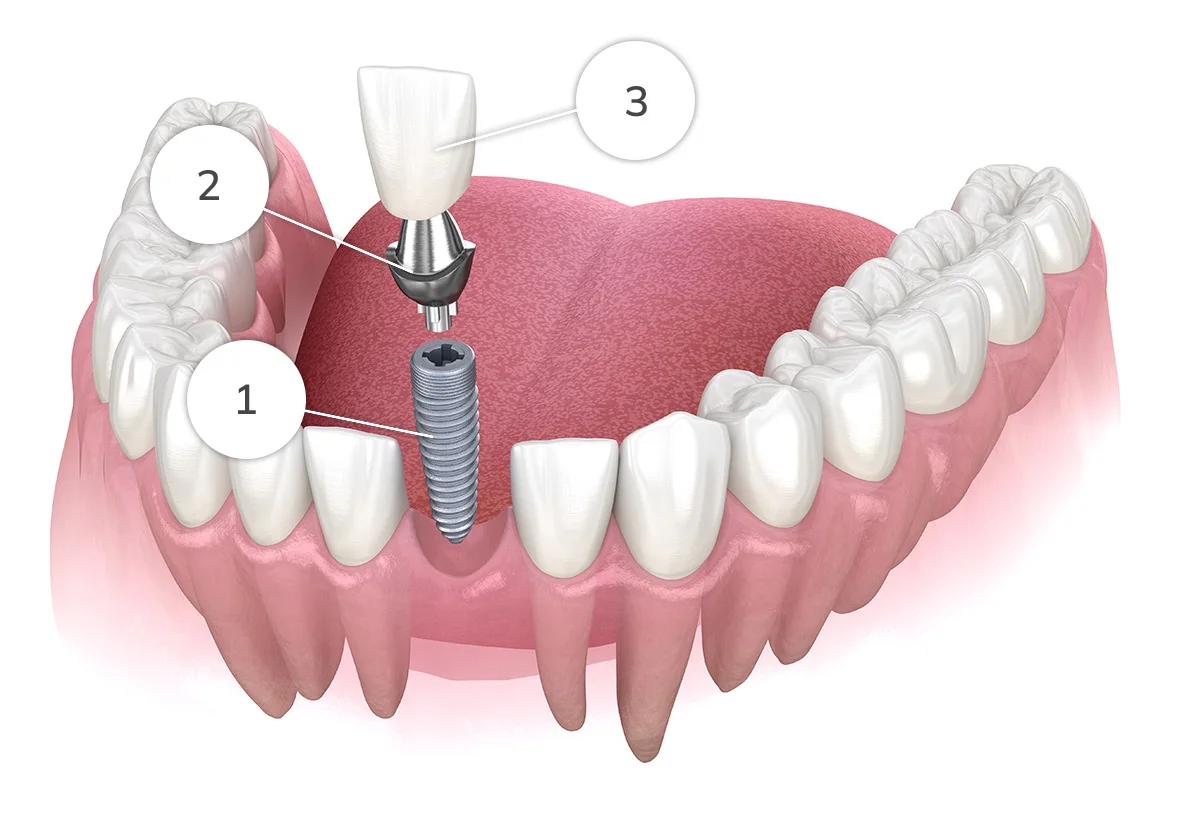
Implant dentistry training covers far more than the mechanics of placing a titanium post. Quality programs address treatment planning, bone assessment, imaging interpretation, soft tissue management, and complication handling. The best courses build these skills in sequence, starting with foundational anatomy and progressing to live surgical cases. Dentists who skip the foundational layer often struggle with case selection, which is where most early complications originate.
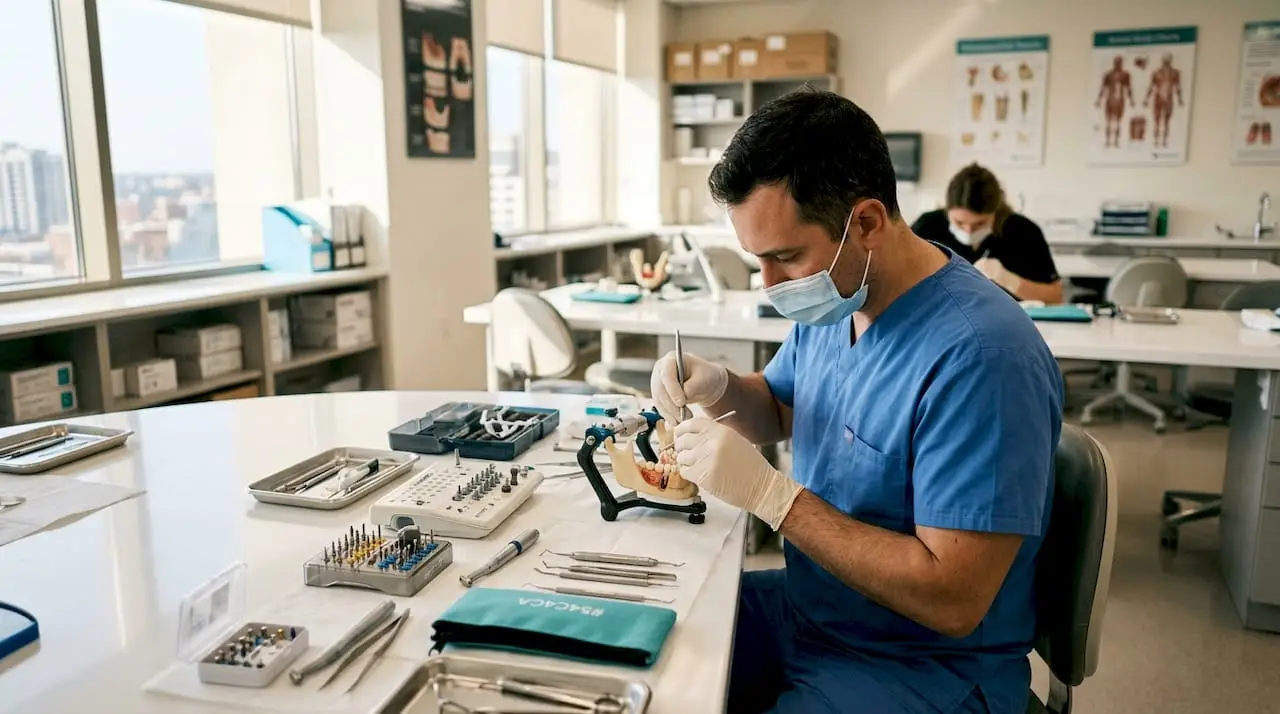
The clinical side of implant education includes single-tooth placement, immediate versus delayed loading protocols, and restorative integration. Hands-on live surgery develops psychomotor skills that no lecture or simulation can fully replicate. Programs that combine didactic content with supervised patient procedures produce dentists who are ready to practice, not just ready to study more.
2. What to look for in quality implant courses
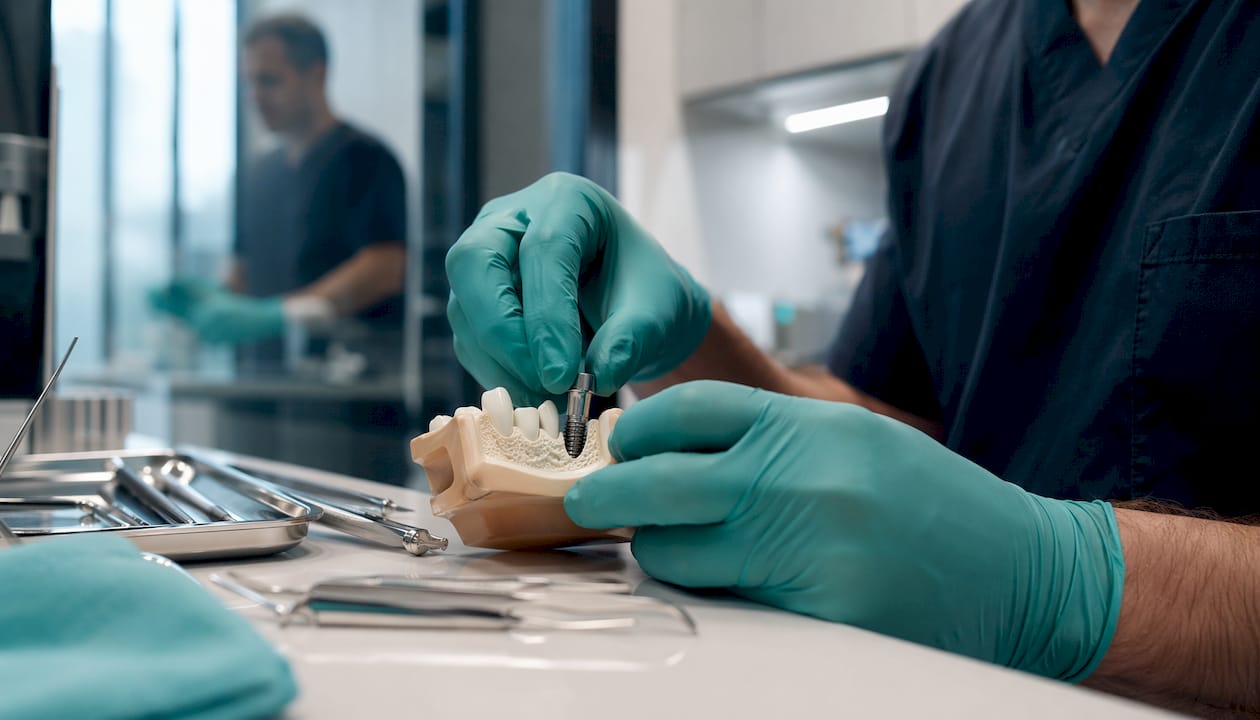
The single most important factor in any implant dentistry course is the quality of supervision during live procedures. Real-time expert feedback prevents complications and builds the kind of surgical judgment that only develops under a skilled mentor’s eye. Low student-to-instructor ratios make that feedback possible. Large group courses with one instructor watching twenty dentists cannot deliver the same result.
Key attributes to evaluate before enrolling:
- Live patient experience: Does the course include supervised surgery on real patients, not just models or cadavers?
- Student-to-instructor ratio: Aim for programs with five or fewer students per instructor during surgical sessions.
- Progressive case complexity: Does the curriculum move from simple single-tooth cases to more demanding scenarios as your skills develop?
- Instructor credentials: Are faculty active clinicians with documented case volume, not just academic lecturers?
- Post-course support: Does the program offer mentorship, case review, or a peer community after you return to your practice?
Pro Tip: Ask any course provider how many live patient procedures you will personally perform, not observe. If the answer is vague or zero, look elsewhere.
Mentorship after the course ends is where most programs fall short. Community and long-term support are what separate dentists who successfully integrate implant services from those who complete training and never place a case. Dr. Jan Bublik has emphasized that isolated lectures, without ongoing support systems, rarely produce confident clinicians.
Implant dental courses come in several formats, each suited to a different stage of your learning and a different budget.
Weekend workshops run 8–16 hours and focus on foundational theory, treatment planning, and basic surgical concepts. They work well as an introduction but rarely include live patient procedures. Short workshops cost roughly $300–$1,000 and are best used as a starting point, not a standalone credential.
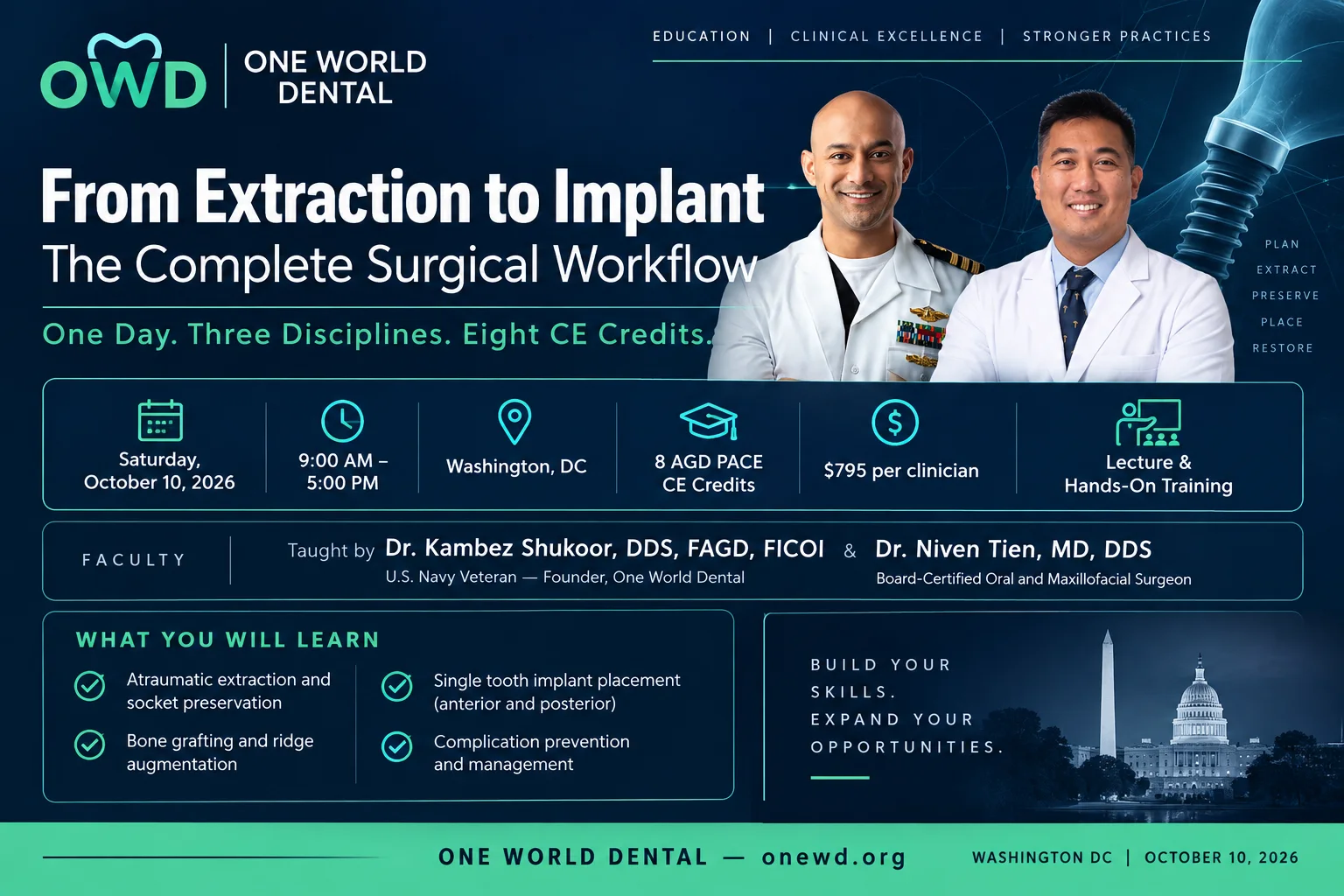
Multi-day immersive courses run 3–5 days and typically combine lectures, simulation exercises, and supervised live surgeries. These programs offer the best balance of depth and accessibility for general dentists. Full-length courses range from $1,500 to $5,000 or more, depending on the number of live cases and the faculty involved. Onewd’s four-day hands-on placement course in Guadalajara is one example of this format, combining didactic sessions with supervised live surgeries.
Residency and fellowship programs run from several months to two years and provide the most thorough preparation. The AAID diplomate pathway requires up to 670 hours of documented training and examination. These programs suit dentists who want to build a significant implant practice or pursue advanced cases.
Online modules serve a specific purpose: foundational knowledge, anatomy review, and treatment planning concepts. Online CE is consistently rated lower than in-person training for developing psychomotor surgical skills. Use online content to prepare for live courses, not to replace them.
| Format |
Typical duration |
CE hours |
Cost range |
Best for |
| Weekend workshop |
1–2 days |
8–16 |
$300–$1,000 |
Foundational knowledge |
| Multi-day immersive |
3–5 days |
20–40 |
$1,500–$5,000+ |
Hands-on skill building |
| Residency/fellowship |
Months to years |
100–670+ |
Varies |
Advanced or high-volume practice |
| Online modules |
Self-paced |
1–20 |
$50–$500 |
Theory and pre-course prep |
4. Scope of practice: what general dentists can and should place
General dentists can successfully place implants in straightforward cases with adequate bone volume, healthy patients, and no significant anatomical complications. Single-tooth replacements in the posterior with sufficient bone height and width are the standard entry point. Complex procedures such as bone grafting, sinus lifts, and full-arch reconstructions require specialist training and should be referred to oral surgeons or periodontists until you have the supervised experience to manage them safely.
No federally recognized implant specialist designation exists for general dentists. The ADA does not recognize “implantologist” as a specialty title. Clinical competency is measured by case volume, complication management capability, and imaging proficiency, not by course certificates alone. That distinction matters when you are selecting training and when patients ask about your qualifications.
State boards add another layer of variation. Some states, like Oregon, mandate a minimum of 56 hands-on hours before a general dentist may place implants independently. Others have no implant-specific minimums at all. Checking your state board’s requirements before enrolling in any program is not optional. It determines which courses count toward your license obligations and which do not.
Pro Tip: Before placing your first implant in practice, have a documented referral plan for complications. Knowing when to refer is as important as knowing how to place.
5. How to choose the right implant dentistry training for your goals
Start by assessing your current skill level honestly. If you have never placed an implant, a weekend lecture course will not prepare you for clinical practice. If you have placed 20 cases with supervision, an advanced course on immediate loading or bone grafting makes more sense than repeating a beginner program.
The first 50 implant cases are the highest-risk period in any dentist’s implant career. Supervised training during these cases significantly reduces failure rates and builds the surgical judgment that carries you through the next 500. Choosing a program that covers this critical window with real mentorship is the highest-return decision you can make.
Practical tips for selecting and succeeding in implant education:
- Match the course format to your actual goal. If you want to place implants next quarter, choose a live-patient program, not an online series.
- Prioritize programs with post-course case review. Being able to send a CBCT scan to an instructor and get feedback is worth more than any certificate.
- Budget for the full cost. Travel, materials, and time out of practice add to the tuition figure. A $2,000 course can cost $4,000 total.
- Avoid theory-only or large-group courses if surgical skill is your goal. Supervised live-patient experience is the standard for competency development.
- Build your implant practice gradually. Start with the cases your training covered, and expand your case complexity as your volume and confidence grow.
General dentists who add implant services with proper training and ongoing support successfully integrate implant dentistry into their practices at high rates. The barrier is not ability. It is access to the right training structure.
Key takeaways
The most effective dental implant training programs combine supervised live-patient surgery, low student-to-instructor ratios, and post-course mentorship to build lasting surgical competency.
| Point |
Details |
| Supervision is the core variable |
Real-time expert feedback during live cases reduces failure rates and builds surgical judgment faster than any other method. |
| Format must match your goal |
Live multi-day courses build surgical skill; online modules build foundational knowledge only. |
| Scope of practice matters |
General dentists should start with straightforward single-tooth cases and refer complex procedures until training supports them. |
| Post-course support determines success |
Community, mentorship, and case review after training separate dentists who place implants from those who do not. |
| Cost reflects depth |
Short workshops cost $300–$1,000; full immersive programs run $1,500–$5,000 or more, with additional expenses for travel and materials. |
Why the “just take a course” mindset fails most dentists
The most common mistake I see dentists make is treating implant education as a one-time event. They attend a weekend workshop, feel inspired, and then return to a practice with no mentor, no peer group, and no structured plan for their first ten cases. Six months later, they have placed two implants and stopped.
Surgical confidence does not come from a certificate. It comes from repetition under supervision, from having someone review your treatment plan before you pick up a drill, and from knowing you can call someone when a case does not go as expected. The dentists I have seen build thriving implant practices all share one trait: they stayed connected to a learning community long after their initial course ended.
The other pattern worth naming is the opposite extreme. Some dentists attend course after course, accumulating CE hours, but never commit to placing cases in their own practice. At some point, more education without clinical application stops building skill and starts becoming avoidance. The goal of any good implant dentistry course is to get you to your first supervised case, then your tenth, then your fiftieth. If a program is not designed around that progression, it is not designed around your success.
Choose training that treats you as a clinician in development, not a student collecting hours.
— Jake
Advance your implant skills with Onewd
Onewd offers implant training courses built around the principles that actually produce competent clinicians: supervised live surgeries, small group settings, and mentorship that extends beyond the course itself. Programs range from foundational four-day hands-on placements to advanced case formats, structured so you build skills in the right sequence.
Whether you are placing your first implant or expanding into more complex cases, Onewd’s faculty are active clinicians who teach from current practice, not theory. Explore the current course offerings to find a program matched to your skill level and clinical goals. The right training is the one that gets you to your next case with confidence.
Recommended