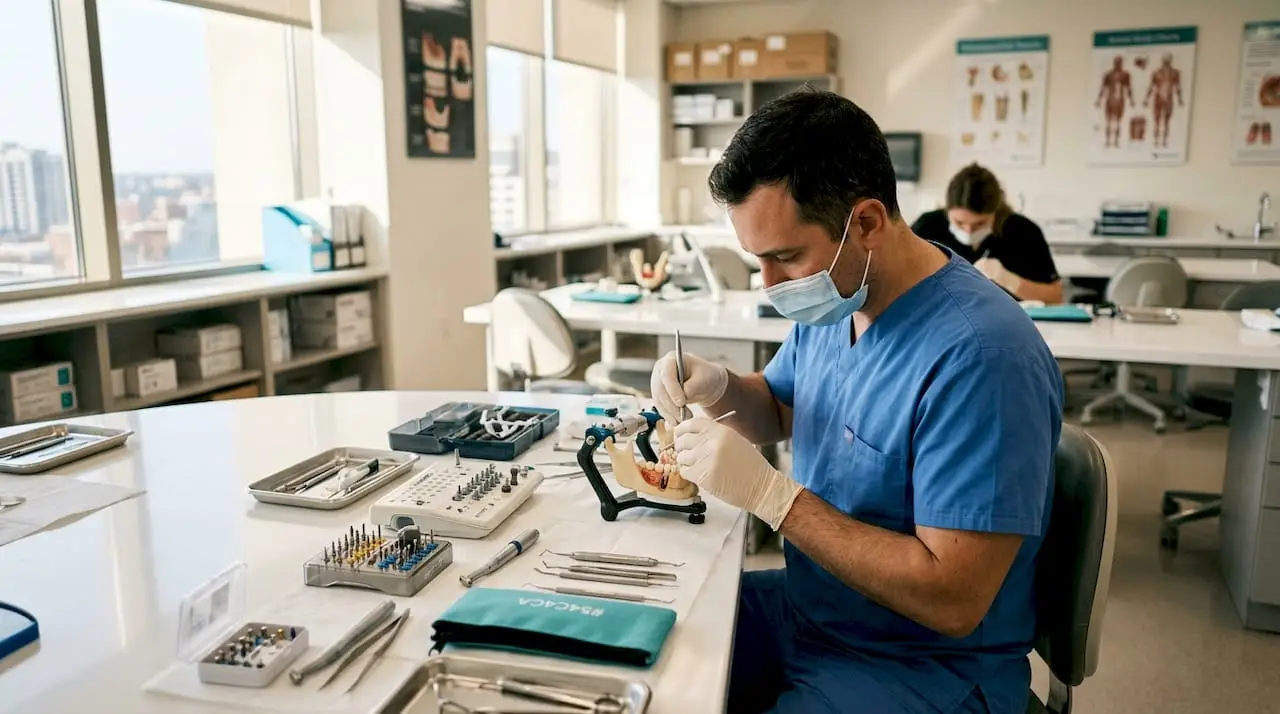
The strongest implant training pathway combines three things: modular didactic coursework you can complete on your own schedule, supervised live-patient surgery under a low student-to-instructor ratio, and mentorship that continues for months after the last CE credit posts. Skip any one of those three and you end up with a certificate that doesn’t translate into confident hands at the chair.
Before you enroll in anything, run this four-step checklist:
- Start with foundational modules that cover implant biology, treatment planning, and case selection through recorded or live online lectures.
- Move into hands-on simulation using typodonts and bone models to build muscle memory before touching a real patient.
- Complete supervised live-patient placements with a faculty member physically present and actively correcting technique in real time.
- Lock in post-course mentorship for case review, teledentistry consults, and treatment-plan feedback for at least six months after graduation.
That structure isn’t arbitrary. A retrospective survey of 125 dentists found satisfaction scores jumped from roughly 3.5 to over 4.5 out of 5 once live surgical demonstrations were added to an implant CE curriculum. The ABOI/ID general-dentist credential path requires 670 hours of implant-related CE recognized by ADA CERP or AGD PACE, plus a case exam defending eight qualifying implants. And organizations like Osseo maintain public lists of authorized training centers so you can verify a program’s credentials before you write a check.
Key Takeaways
The most effective implant training pathway pairs progressive modular coursework with low-ratio supervised live surgery and mentorship lasting six months or longer.
| Point |
Details |
| Mentorship and live surgery come first |
Prioritize programs with documented live-patient sessions and post-course mentorship over price alone. |
| Verify accreditation before enrolling |
Confirm CE hours are recognized by ADA CERP or AGD PACE if you plan to pursue ABOI/ID certification later. |
| Start with foundational modules |
Build planning and single-tooth placement skills before advancing to complex grafting or full-arch cases. |
| Ask the 20-question checklist |
Request supervision ratios, case counts, and mentorship terms in writing before committing tuition. |
| One World Dental maps to this model |
Its tiered courses combine modular coursework, live surgical training, and mentorship-driven follow-up. |
What Does a Complete Implant Training Pathway Include?
A pathway that produces competent implant dentists, not just certificate holders, has six non-negotiable pieces. Miss one and you’re left with a gap between what you learned and what you can actually do on a Monday morning with a patient in the chair.
- Modular didactic coursework delivered online or on-demand, with quizzes or case-based assessments that force you to apply concepts rather than just watch a lecture.
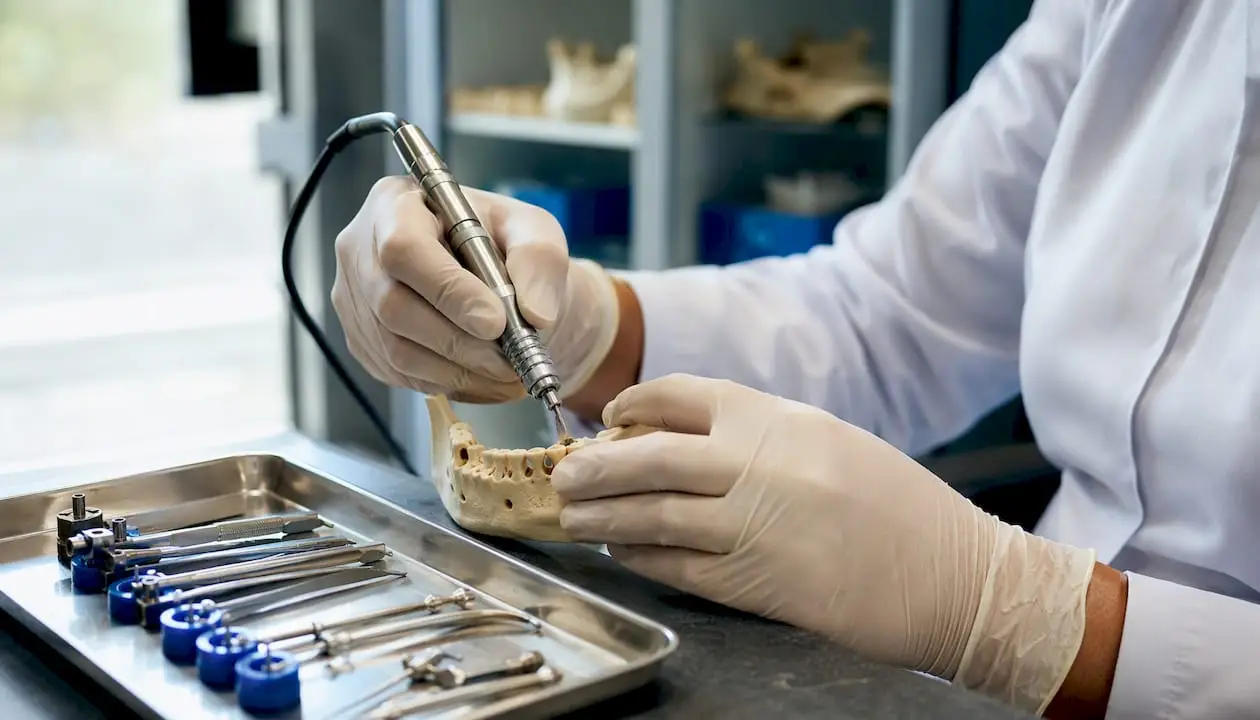
- Progressive hands-on labs, starting with typodont drilling, moving to bone models, and ideally including cadaver work where a program has that access.
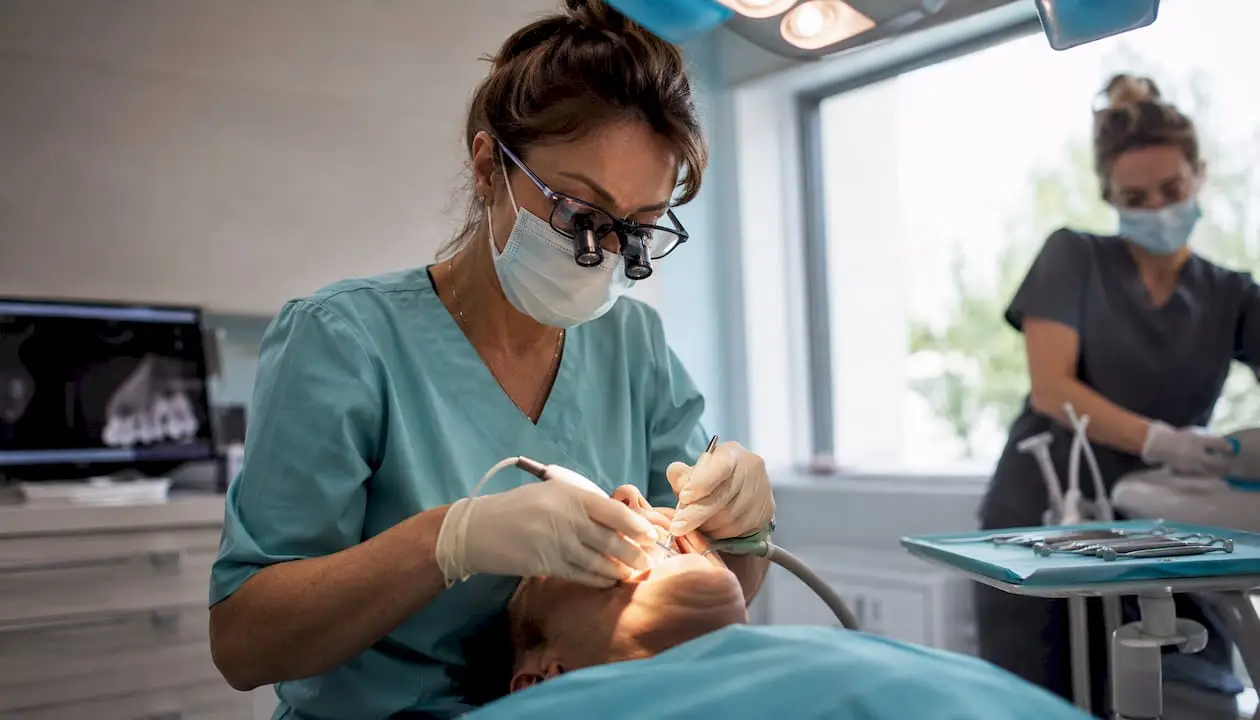
- Supervised live-patient placements where an instructor is scrubbed in or standing chairside, not reviewing your work from a monitor in another room.
- Mentorship and case review that extends past the final course day, covering treatment planning for cases you bring back to your own practice.
- Digital workflow training, including CBCT-based planning and guided surgery software, since most modern implant placement now starts on a screen before it starts on a patient.
- Formal assessment and documentation, meaning a program tracks and certifies your case count, not just your attendance.
A well-built curriculum usually progresses in this order:
- Foundation module: implant biology, radiographic interpretation, and single-tooth case selection.
- Intermediate module: guided surgery workflows, basic bone grafting, and posterior case management.
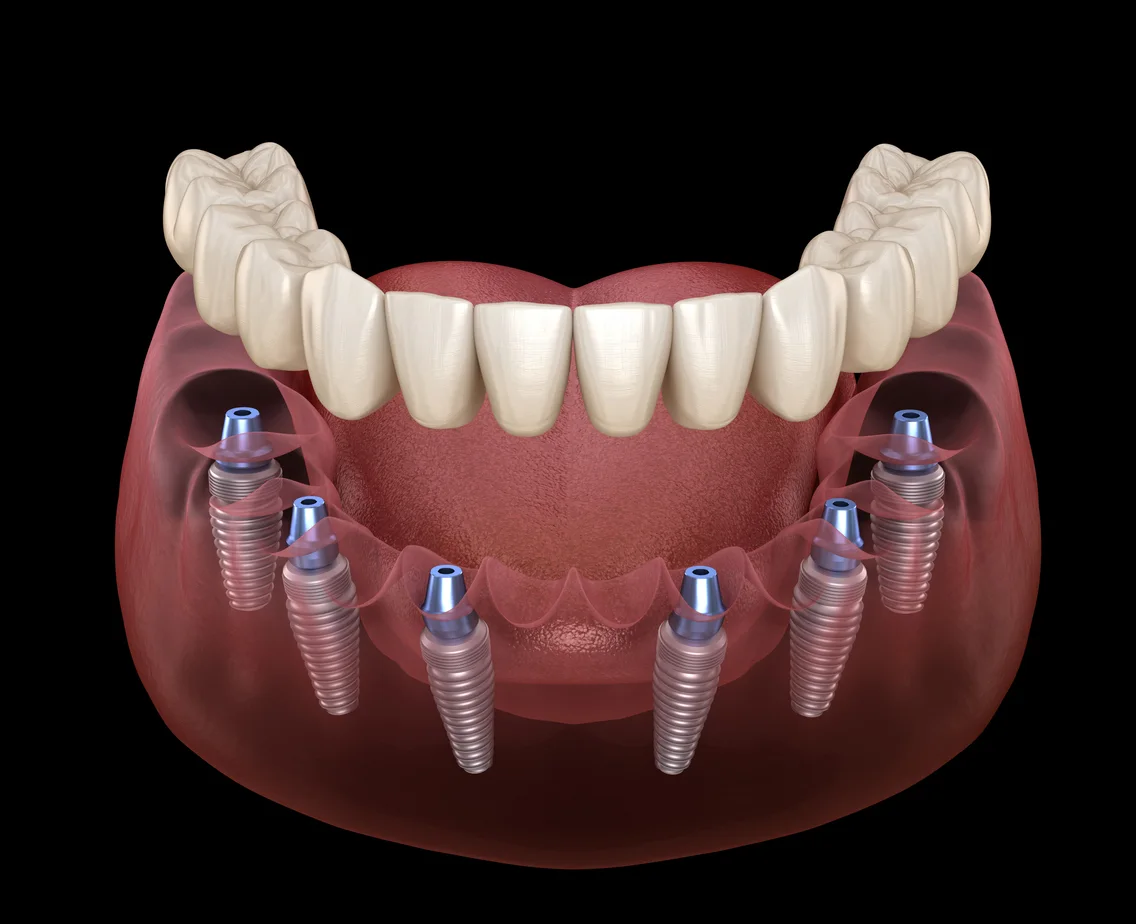
- Advanced module: full-arch protocols, complex grafting, and prosthetic-surgical coordination.
Pro Tip: Ask every program to distinguish clinical hours from credit hours in writing. A weekend course advertising “40 hours of CE” might include only two or three hours of actual hands-on time. Also ask for the student-to-instructor ratio during live surgical sessions. Anything above 4:1 during a live case means you’ll spend more time watching than doing.
Fast-Track or Standard: Which Timeline Fits Your Practice?
Compressed weekend intensives and multi-month mini-residencies solve different problems, and picking the wrong one wastes both your money and your learning curve. Progressive, multi-session formats allow repetition and incremental complexity that a single weekend simply can’t replicate.
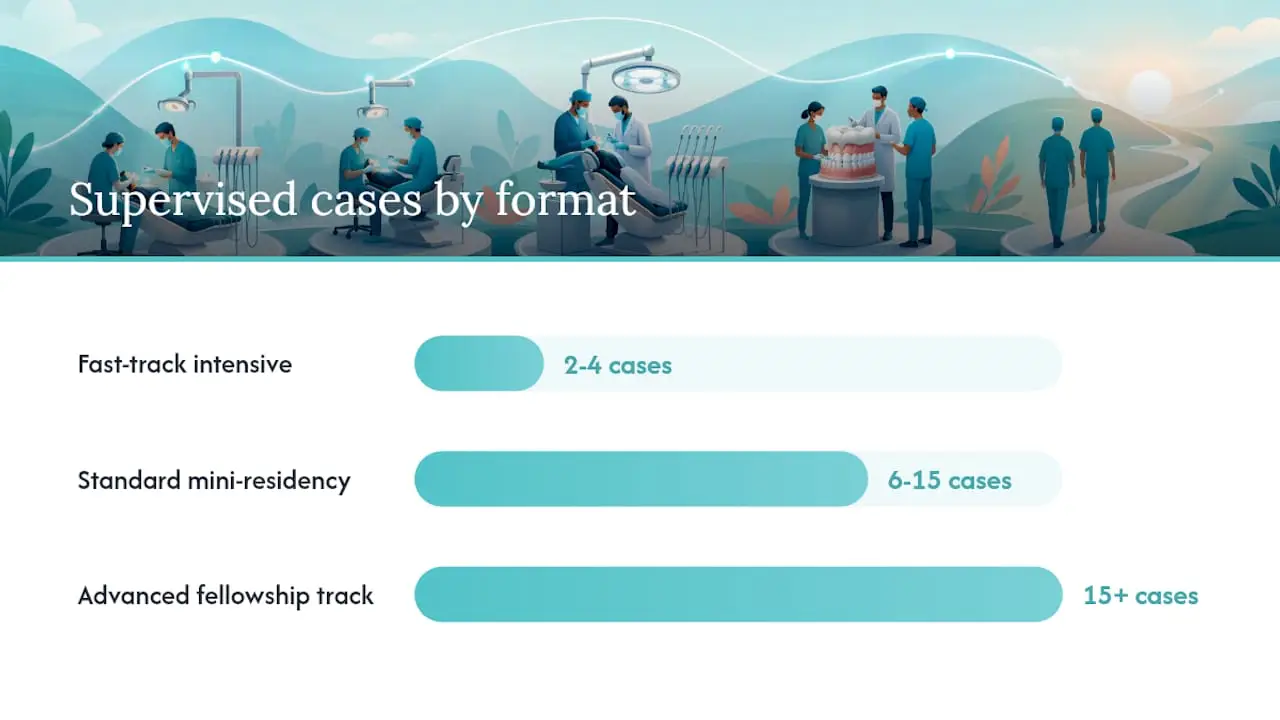
Fast-track programs compress instruction into a short series of intensive sessions, often over a few consecutive weekends. They suit dentists who already have surgical experience in other disciplines, oral surgery assisting backgrounds, or periodontal exposure, and just need implant-specific technique and credentialing. Standard or mini-residency models spread instruction across several months, with sessions spaced out so you can practice on your own cases between visits and bring questions back to faculty.
Here’s a realistic breakdown of what to expect at each stage:
- 0 to 3 months: Complete foundational and intermediate modules; place your first few supervised single-tooth cases.
- 3 to 12 months: Handle posterior and multi-unit cases with decreasing supervision; begin incorporating guided surgery independently.
- 12+ months: Take on complex grafting and full-arch cases, often through advanced fellowship-level coursework.
| Format |
Typical Duration |
Average Supervised Cases |
Student:Instructor Ratio |
| Fast-track intensive |
2 to 4 weekends |
2 to 4 live cases |
3:1 to 6:1 |
| Standard mini-residency |
6 to 12 months |
6 to 15 live cases |
2:1 to 4:1 |
| Advanced fellowship track |
12+ months |
15+ live cases, including full-arch |
1:1 to 3:1 |
CE hours matter beyond the certificate on your wall. The ABOI/ID pathway counts recognized hours toward its 670-hour requirement, so a mini-residency with properly accredited hours can double as progress toward board credentialing, while a one-off weekend course usually can’t carry the same weight.
What Should Hands-On Implant Training Actually Look Like?
True hands-on training moves through a tell-show-do progression: an instructor explains the technique, demonstrates it, then watches you perform it with correction in real time. That model, described in guidance from the Dental Implant Learning Center, is what separates a program that builds competence from one that just fills a weekend.
A rigorous hands-on component covers drilling sequences on bone models, cadaver or animal-tissue labs where a program has access to them, guided and freehand placement technique, soft-tissue flap management, suturing practice, basic bone grafting, and prosthetic workflow from impression through final restoration.
Live-patient sessions carry real responsibility, and a legitimate program builds in safeguards: documented patient selection criteria matched to trainee skill level, informed consent that specifically discloses a trainee is performing part of the procedure under supervision, posted emergency protocols, and a supervising clinician physically present, not just available by phone.
Pro Tip: Ask how many live cases you’ll personally place versus observe. A program that promises “hands-on surgery” but delivers mostly observation with one supervised case at the end isn’t a hands-on program, it’s a lecture with a demonstration.
The satisfaction data backs this up directly. Surveyed dentists rated their training experience above 4.5 out of 5 after live surgical demonstrations were added to the curriculum, up from roughly 3.5 beforehand, a jump large enough that it’s hard to attribute to anything other than the live component itself.
Trainees should also expect exposure to the tools they’ll use in daily practice: CBCT-based implant planning software, surgical guides for guided placement, and the major implant systems in common clinical use. A course that never touches digital planning software is teaching you to place implants the way it was done fifteen years ago.
How Long Should Mentorship Last After the Course Ends?
Mentorship that ends when the course does isn’t mentorship, it’s a farewell. Supervision quality, specifically active guidance from an instructor rather than passive case-count accumulation, has more influence on your readiness than the number of cases you’ve technically completed.
Effective post-course support typically runs six to twelve months or longer and should include treatment-plan review for cases you’re considering back home, teledentistry consults when something looks off on a radiograph, guidance on defending your case selection if a complication arises, and, where a program offers it, in-office proctoring for your first few independent cases.
Before you commit to any program, ask the program director these questions directly:
- How many mentors are available, and what is their typical response time for a case question?
- Is mentorship included in tuition, or is it a separate paid tier?
- Can I submit case photos and radiographs for review, and how is that documented?
- Do you offer in-person proctoring for early independent cases, and at what cost?
- What happens if I have a complication six months after the course ends?
Watch for these red flags during your evaluation:
- No structured follow-up beyond a generic “email us if you have questions.”
- Vague or undocumented case submission requirements with no clear sign-off process.
- High student-to-instructor ratios during the live clinical sessions themselves.
Progressive case submission, with a mentor formally signing off on each stage, does double duty. It builds your clinical judgment, and it creates the documented case portfolio that credentialing bodies like ABOI/ID require when you eventually pursue board certification.
What Credentials and Career Paths Follow Implant Training?
Two accrediting marks matter more than any other detail on a course brochure: ADA CERP and AGD PACE. Hours recognized by either organization count toward formal credential pathways, while unrecognized hours often don’t, even if the course itself was excellent.
The ABOI/ID pathway for general dentists requires 670 hours of implant-related CE recognized by ADA CERP or AGD PACE, a 200-question written examination, and an oral case exam where you defend eight qualifying implant cases you’ve personally treatment-planned and placed. That’s a specific, demanding bar, and it means the hours you accumulate during your training pathway should be tracked with documentation you can actually submit later.
After completing a structured pathway, most general dentists follow one of a few tracks:
- Integrate straightforward single-tooth and multi-unit implants directly into general practice.
- Pursue advanced fellowship-level training in full-arch and complex grafting cases.
- Work toward board certification through ABOI/ID or a comparable credentialing body.
- Specialize further through periodontics or oral surgery residency, using implant training as a foundation.
Verify your state’s specific requirements before you enroll anywhere. Some states have scope-of-practice rules around implant surgery for general dentists that affect what training and documentation you’ll need, and those rules vary enough that assuming your neighboring state’s standard applies to you is a mistake.
How Do You Choose the Right Implant Training Program?
Start with an honest self-assessment. What’s your current surgical comfort level? What case mix walks through your door each week? Do you have staff and equipment ready to support implant placement once you’re trained, and what’s your realistic timeline for offering the service?
Once you know that, run every program you’re considering through this expanded checklist:
- Is the curriculum built in progressive modules, or is it a single undifferentiated course?
- How many live-patient cases will I personally place, not observe?
- What is the student-to-instructor ratio during hands-on and live sessions?
- Are instructors board-certified or actively practicing implant surgeons?
- Is the program listed among authorized training centers recognized by professional organizations?
- Are CE hours recognized by ADA CERP or AGD PACE?
- How does the program document case hours for credentialing purposes?
- What is the total tuition, and what does it actually include?
- Are there additional costs for cadaver labs, kits, or materials?
- What financing options or payment plans are available?
- Does the program offer group or practice discounts?
- How long does structured mentorship last after course completion?
- What is the average response time for a post-course case question?
- Does the curriculum include digital planning software training?
- What implant systems and surgical kits will I train on?
- Is patient selection for live cases matched to trainee skill level?
- What informed consent process is used for live-patient sessions?
- What emergency protocols are in place during live surgery?
- Can I speak with a recent graduate about their experience?
- What does progression from foundational to advanced modules look like?
Cost tends to track four variables: total duration, whether a live-patient component is included, the credentials of the teaching faculty, and whether you’re in a small-group or large-class format. A weekend lecture series with no live surgery might run a few hundred dollars, while a comprehensive mini-residency with live surgery and mentorship costs considerably more, often payable through installment financing many programs offer directly.
Understand the tradeoffs going in. Fast completion sounds appealing, but it usually means fewer supervised cases and thinner mentorship. A higher volume of supervised cases takes longer and costs more, but it’s what actually builds the judgment you’ll rely on when a case doesn’t go according to plan.
How Does One World Dental’s Pathway Match This Model?
One World Dental built its implant curriculum around the exact structure this article describes: tiered modules that progress from foundational to advanced, hands-on lab options, live surgical modules, and mentorship-driven follow-up rather than a one-and-done weekend certificate.
Here’s how those offerings map to the criteria covered above:
- Curriculum progression: Courses run from an introductory on-demand module through advanced full-arch surgical training, matching the foundation-to-advanced sequence dentists should look for.
- Hands-on and live-patient sessions: Hands-on training formats are built around small-group supervision during live surgical sessions, not large-lecture observation.
- Digital workflow training: Course content incorporates CBCT-based planning and guided surgery concepts alongside surgical technique, addressing the digital dentistry gap many older CE formats leave open.
- Mentorship and documentation: Case review and follow-up support continue past course completion, and course case submission gives trainees documentation they can carry toward future credentialing.
- Faculty credentials: Program faculty backgrounds are listed publicly, letting you verify supervising credentials before enrolling rather than after.
Pro Tip: When comparing course syllabi across programs, ask each one specifically how many live cases you’ll place versus watch, and request the faculty-to-trainee ratio in writing before you register. A program willing to put that detail on paper is telling you something important about how it structures live sessions.
If you’re weighing your options, request the surgical session syllabus and instructor credentials for the specific course you’re considering before committing tuition. Browse the full training course catalog to compare formats side by side.
Why Does the Research Point to Live Surgery and Mentorship?
The clearest data point in implant CE research isn’t about lecture quality or slide design. It’s about what happens when live surgery is added to a curriculum that previously relied on video and static demonstration.
Participant satisfaction in a retrospective cross-sectional survey of 125 practicing dentists rose from approximately 3.5 to over 4.5 out of 5 once live surgical demonstrations were integrated into the implant CE curriculum. Dentists consistently cited the ability to observe expert decision-making and complication management in real time as the differentiator, something pre-recorded video simply can’t replicate.
That gap between recorded content and live observation matters because implant surgery rarely goes exactly according to a textbook diagram. Watching an instructor adjust angulation mid-osteotomy, or manage unexpected bone density, teaches judgment that a polished training video edits out entirely.
Satisfaction scores jumped more than a full point on a 5-point scale after live surgery was added, a large enough shift that it’s difficult to explain as noise. That evidence also intersects directly with credentialing requirements. ABOI/ID’s 670-hour, case-defense model rewards documented, hands-on experience over passive hour accumulation, which means the same live-patient exposure that improves satisfaction scores is also the experience that eventually holds up in a board case exam.
How Do You Maintain Implant Competency Certification Over Time?
Completing a training pathway earns you a certificate, but maintaining competency is an ongoing commitment, not a one-time event. Most implant-related CE credits carry expiration or renewal cycles tied to state licensing periods, typically requiring you to log continuing hours every one to three years depending on your state dental board.
Beyond simple hour renewal, real competency maintenance means periodically submitting cases for peer or mentor review, staying current on new implant systems and digital planning software as they evolve, and revisiting advanced modules when your case mix shifts toward more complex procedures like full-arch or immediate-load protocols. Programs with structured case documentation from the original training pathway make this easier, since you already have a baseline record to build on rather than starting from scratch each renewal cycle.
If you’re pursuing ABOI/ID certification specifically, maintaining diplomate status requires ongoing CE hours after initial certification, not just the 670 hours needed to qualify initially. Treat certification as a floor, not a ceiling.
How Can You Collaborate With Specialists During Training?
The best implant training pathways don’t isolate you with other general dentists exclusively. Programs that bring oral surgeons and periodontists into the teaching faculty expose trainees to perspectives on complex extraction sites, grafting decisions, and soft-tissue management that a general-dentist-only curriculum tends to gloss over.
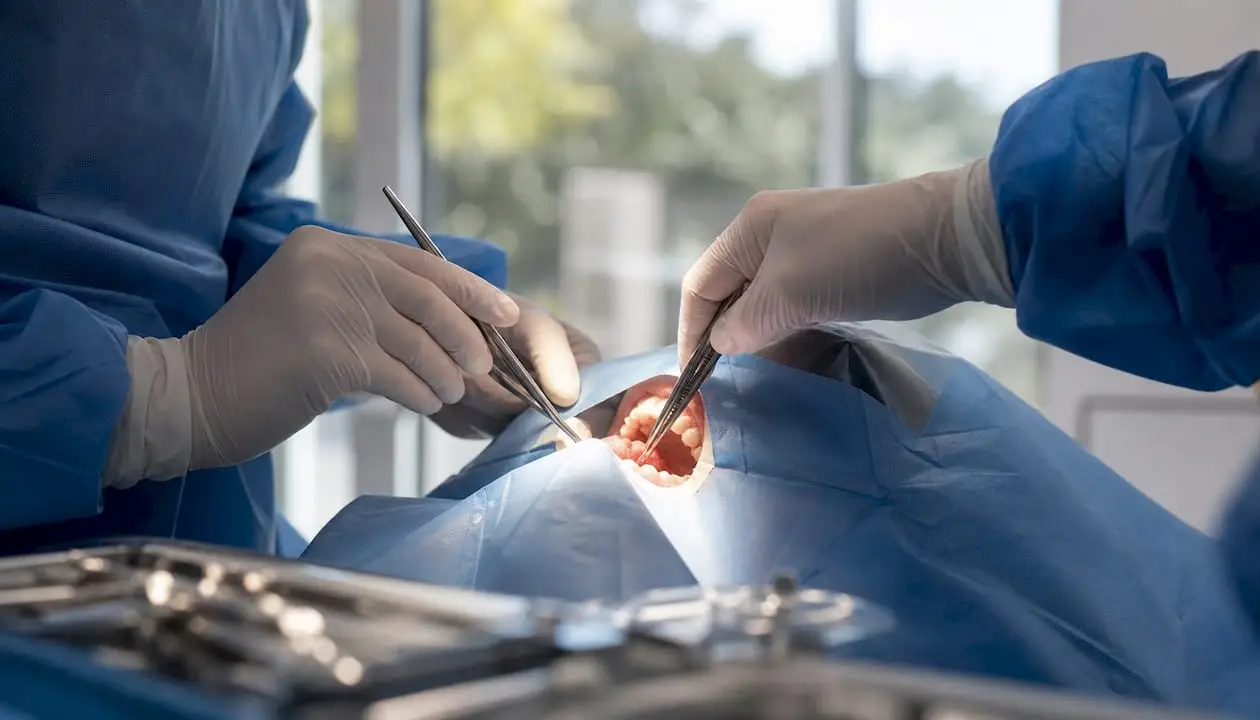
This matters practically. A periodontist teaching soft-tissue flap design will emphasize different priorities than a prosthodontist focused on final restoration outcomes, and seeing both perspectives during training builds a more complete clinical picture than either one alone. Some mini-residency formats build in specific sessions led by oral surgeons for complex extraction and grafting cases, then hand off to restorative-focused faculty for the prosthetic workflow.
If you’re evaluating a program, ask directly whether the teaching faculty includes specialists beyond general dentistry, and whether you’ll have access to case consults with those specialists after the course ends. That interdisciplinary access often becomes the resource you lean on most in your first year of independent placement, when a case presents a grafting or soft-tissue complication outside your training scope.
What Legal and Ethical Standards Apply to Implant Training?
Implant surgery carries real liability, and a training pathway should treat legal and ethical grounding as core curriculum, not an afterthought. Informed consent is the clearest example: patients in live-patient training sessions need to understand specifically that a trainee, under supervision, is performing part or all of the procedure, not just the standard surgical consent language used in an established practice.
Scope-of-practice rules also vary by state, and some jurisdictions place specific limits or documentation requirements on general dentists performing implant surgery. Verify your own state dental board’s position before assuming a national certification automatically satisfies state-level requirements.
Ethically, patient selection during live training carries extra weight. A responsible program matches case complexity to trainee skill level rather than accepting any available patient for the sake of filling a training slot, and documents that selection process in writing. Case documentation itself isn’t just an administrative box to check. It’s the record that protects you if a placed implant is later questioned, and it’s the same documentation ABOI/ID and other credentialing bodies require when you defend cases for board certification.
Choosing a Pathway as a Practicing Dentist
Most dentists evaluating implant training focus first on price and schedule convenience, and I understand why. Those are the easiest variables to compare across a stack of course brochures. But price and convenience are the wrong starting filters. The right filter is supervision quality, because that’s the variable the research keeps pointing back to as the difference between a certificate and actual competence.
If I were picking a pathway today, I’d treat mentorship duration and live-surgery case count as the two non-negotiables, and I’d let everything else, format, price, location, be secondary. A cheaper course with no post-graduation mentorship isn’t actually cheaper once you factor in the cost of your first unsupervised complication. A faster course with fewer live cases isn’t actually faster if you spend the next year hesitant to place anything more complex than a straightforward single-tooth case.
Call an advisor and ask directly for the surgical session syllabus before you enroll anywhere. If a program hesitates to share exactly how many live cases you’ll place and what the supervision ratio looks like, that hesitation is your answer.
How One World Dental Can Help You Build a Complete Pathway
Onewd runs its implant curriculum on the same structure this article has walked through: tiered modules, live surgical sessions with hands-on placement, and mentorship that continues once the course ends.
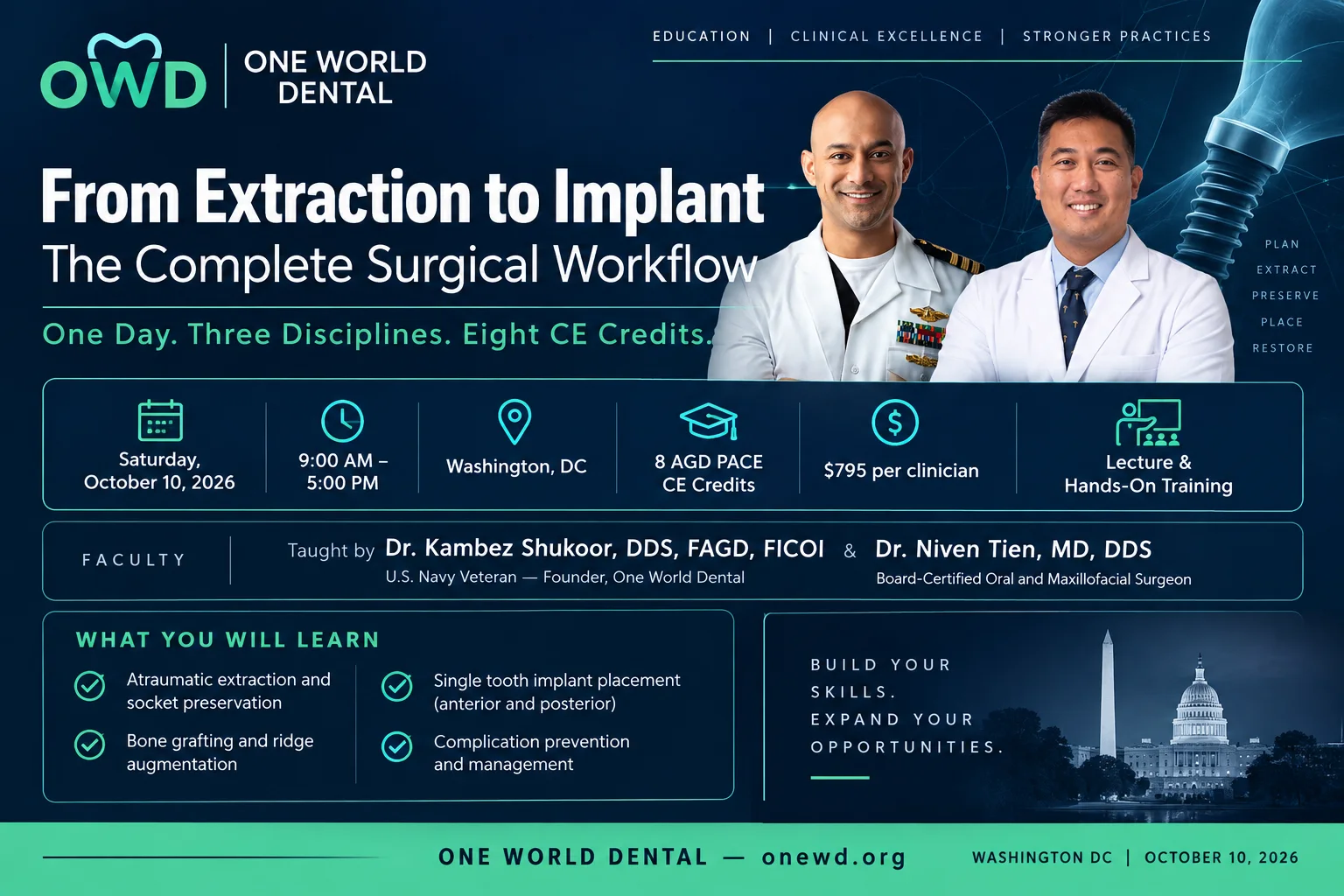
Three programs are worth a close look depending on where you are in your training. If you’re starting from zero, the Introduction to Dental Implants course builds foundational planning and single-tooth placement skills. If you’re ready for live-patient experience, the hands-on training program puts you in small-group supervised sessions rather than large-lecture observation. And if you’re already placing implants and want to expand into full-arch cases, the All-on-X dual arch surgical course offers seven days of expert-supervised training.
Financing plans and group discounts are available for practices sending multiple dentists through training together. To find the right starting point, browse the full training course catalog, review the syllabus for the format that matches your skill level, and reserve your seat directly through the course page.
Recommended