What is the ADA Caries Risk Assessment and why does it matter?
The ADA Caries Risk Assessment is a standardized clinical tool that helps dental professionals evaluate how likely a patient is to develop new carious lesions in the near future. Rather than treating every patient with the same recall schedule and preventive protocol, the assessment gives you a structured framework to stratify patients by risk level and build individualized care plans around that data. Two tools dominate clinical practice in the United States: the ADA Caries Risk Assessment Form and CAMBRA (Caries Management by Risk Assessment), the evidence-based philosophy developed at the University of California, San Francisco.
Structured caries risk assessment tools, including the ADA forms and CAMBRA, represent best clinical practice by providing systematic, evidence-based patient evaluations. The ADA form exists in two versions, one for patients ages 0–6 and one for ages 6 through adult, reflecting the different risk profiles and protective factor patterns across age groups. CAMBRA goes a step further by linking the risk level directly to a chemical therapy and restorative treatment plan, making the assessment the first step in a complete caries management cycle.
The clinical value is straightforward. A patient classified as low risk gets a different recall interval, fluoride protocol, and conversation than one classified as high risk. Without a formal assessment, those distinctions tend to collapse into a one-size-fits-all approach that underserves both ends of the spectrum.
- ADA Caries Risk Assessment Form: Separate forms for ages 0–6 and 6 through adult; evaluates disease indicators, risk factors, and protective factors.
- CAMBRA: An evidence-based clinical philosophy integrating caries risk assessment into personalized care plans combining chemical therapy and restorative treatment based on risk level.
- Risk levels: Low, moderate, high, and very high (or extreme for the adult form).
- Clinical application: Drives recall intervals, fluoride prescribing, antibacterial therapy, and patient education.
- Evidence base: CAMBRA CRA tools have been validated in studies totaling more than 20,000 patients, confirming predictive accuracy for future caries in both age groups.
The form itself is not complicated, but the quality of the data you put into it determines whether the risk level you assign actually reflects the patient’s biology. The process runs in a consistent sequence regardless of which age version you use.
Step 1: Select the correct form. Use the 0–6 form for young children, where the parent or caregiver is the primary informant. Use the 6-through-adult form for older children and adults. The CAMBRA system provides both, and the practitioner decides which applies.
Step 2: Collect patient history. Ask about diet patterns, fluoride exposure (water, toothpaste, supplements), oral hygiene frequency, recent dental treatment, medications that reduce salivary flow, and socioeconomic factors. For the pediatric form, ask whether the mother or caregiver has active caries, since that is a documented risk factor for early childhood caries.
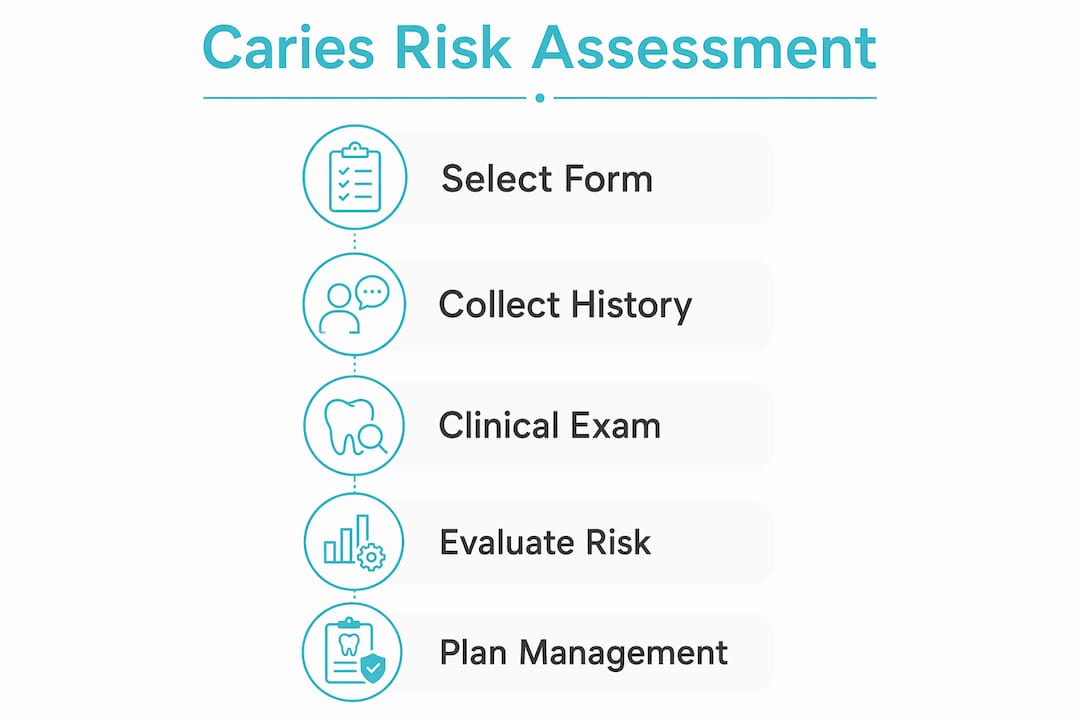
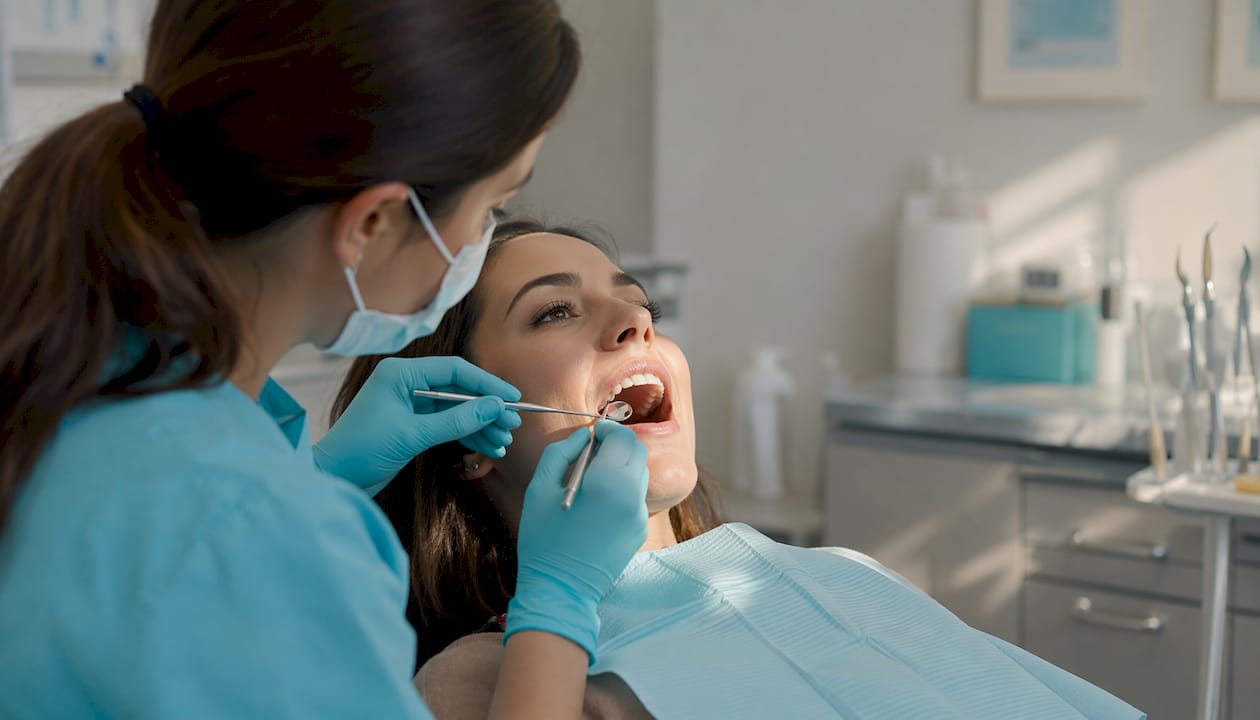
Step 3: Conduct the clinical exam. Document active carious lesions, white spot lesions, restorations placed in the past three years, visible plaque, and signs of hyposalivation. These clinical observations are the disease indicators that carry the most weight in risk classification.
Step 4: Score and categorize. The updated CAMBRA forms include a quantitative scoring component to help clinicians determine risk level. Tally the responses across disease indicators, risk factors, and protective factors, then apply the “caries balance” concept to weigh them against each other.
Step 5: Document and communicate. Integration of risk assessment into practice records and patient discussions is recommended as a standard part of the clinical workflow, not an add-on.
- Collect history before the exam so clinical findings can confirm or challenge what the patient reports.
- Document every “yes” response on the form; each one becomes a behavior modification target.
- Apply fluoride varnish at the same appointment when appropriate, especially for moderate and high-risk patients.
- Record the assigned risk level in the patient’s chart with the date, so reassessment comparisons are meaningful.
Pro Tip: Clinical judgment is the final arbiter. The form generates a score, but the provider makes the call. Factors like expected parental compliance, access to care, and patient motivation can shift a borderline moderate patient into high-risk management.
How to classify caries risk levels and interpret clinical findings
Risk classification in the CAMBRA system rests on three categories of information: disease indicators, biological and environmental risk factors, and protective factors. The provider weighs all three against each other using the caries balance concept, a mental model that visualizes pathological factors on one side and protective factors on the other.
The caries risk level is determined as low, moderate, high, or very high/extreme by visualizing this balance, then applying clinical judgment. Here is how the four levels typically present:
- Low risk: No disease indicators, very few or no risk factors, and protective factors that clearly prevail. Adequate fluoride exposure, good oral hygiene, no recent restorations, and no active lesions. Usually obvious.
- Moderate risk: No disease indicators, but risk and protective factors appear roughly balanced. A patient with one restoration placed two years ago who brushes once daily and drinks fluoridated water might land here. When in doubt between low and moderate, assign moderate and monitor closely.
- High risk: One or more disease indicators, such as active white spot lesions, visible cavities, or restorations placed in the past three years. Risk factors that clearly outweigh protective factors also qualify, even without positive disease indicators.
- Very high/extreme risk: High-risk criteria plus hyposalivation, severe or extensive existing decay, or a combination of factors that signals the disease is poorly controlled. Antibacterial therapy is added to the fluoride protocol at this level.
The caries balance concept is worth internalizing because it prevents over-reliance on any single factor. A patient with a dry mouth from polypharmacy but excellent oral hygiene and high fluoride exposure sits differently on the balance than a patient with the same salivary flow and poor home care. The form captures both; the clinician resolves the tension.
Pro Tip: Past caries experience is the single strongest predictor of future caries at all ages. Any clinical sign of active demineralization on smooth, occlusal, or proximal surfaces should trigger individualized preventive measures immediately, regardless of where the total score lands.
Best practices for managing patients based on their caries risk level
Once you have a risk level, the management plan follows directly from it. CAMBRA ties chemical therapy to risk category, so the assessment is not just a documentation exercise. It drives what you prescribe.
Low-risk patients need fluoride toothpaste at every visit, full stop. The ADA and AAPD recommend a smear (grain-of-rice amount) for children ages 0–2 and a pea-size amount for ages 3–6 using a 1,000 ppm fluoride toothpaste, brushed at least twice daily. Low-risk patients do not benefit from in-office fluoride applications, and recall intervals of every 6 months are appropriate. Fluoride-free training toothpaste should not be recommended; it lacks the therapeutic effect of fluoride-containing products.
Moderate-risk patients get the same fluoride toothpaste instruction plus professional topical fluoride treatment every 6 months. Dietary counseling and oral hygiene reinforcement are added. Radiographic intervals can be extended to 6–12 months depending on clinical presentation.
High-risk patients require more aggressive chemical therapy. Fluoride varnish every 3 months, high-potency fluoride gel for patients over age 6, and antibacterial therapy with chlorhexidine mouthrinse are all indicated. Restorative work follows minimal intervention principles, meaning you restore what needs restoring without extending preparations unnecessarily. Dietary analysis is part of the protocol.
Extreme-risk patients get everything in the high-risk protocol plus antibacterial therapy. Silver diamine fluoride (SDF) is an option for arresting active lesions in children, and the CAMBRA guidelines address its use specifically. Recall intervals shorten to every 3 months.
Across all risk levels, patient communication of caries risk and personalized management plans improves motivation and adherence to preventive strategies. Telling a patient their specific risk level and explaining why tends to produce better compliance than a generic “brush more” instruction.
- Motivational interviewing works better than directive counseling for behavior change.
- Document every chemical therapy recommendation in the chart with the rationale tied to the risk level.
- Compliance with home-use regimens is the biggest variable in CAMBRA treatment success; address it directly at every visit.
How often should you reassess caries risk?
Caries risk status is dynamic, requiring reassessment at every recall to allow personalized care and timely intervention. A patient who was low risk two years ago may have started a new medication, changed their diet, or developed a systemic condition that shifts their salivary function. The risk level you assigned at the last visit is a starting point, not a permanent label.
Recommended reassessment intervals follow the risk level. High-risk patients should be seen every 3 months, with a full reassessment at each visit. Moderate-risk patients typically return every 6 months. Low-risk patients can be seen every 6–12 months, with reassessment at each recall. The CariesCare practice guide also recommends performing caries risk assessment at least once every two years throughout life, and whenever significant life events occur that could affect the caries balance, such as pregnancy, new medications, or major dietary changes.
Electronic health records make this practical. When the risk level and reassessment date are documented in the EHR, the system can flag patients who are overdue for reassessment before they arrive. Clinicians should integrate caries risk assessments with EHR systems to support documentation and recall management, enhancing preventive care delivery.
- Update the risk level in the chart at every recall, even if it has not changed.
- Use EHR alerts or recall flags to prompt reassessment for high-risk patients at the 3-month mark.
- When a patient’s risk level drops from high to moderate, adjust the chemical therapy protocol accordingly and document the change.
- Life events like new medications, pregnancy, or orthodontic treatment should trigger an unscheduled reassessment.
Consistent use of the ADA Caries Risk Assessment forms requires more than reading the instructions once. Calibration across the dental team matters because different providers scoring the same patient can arrive at different risk levels, particularly in the moderate range where the caries balance is genuinely ambiguous.
Research shows that dental hygienists tend to score patients in a lower-risk category than dentists, partly because the patients they see are often a preselected, healthier sample. That finding points to a real calibration gap. Team-based training that walks through case examples and compares scoring decisions closes that gap faster than individual study.
Dental schools in the United States have been incorporating CAMBRA into their curricula, and recent graduates are more likely to use a structured caries risk assessment than older graduates. For established practices, the practical path is a short in-office calibration session using de-identified patient cases, followed by periodic review when the forms are updated. The ADA and CAMBRA guidelines are updated based on clinical outcomes, so staying current matters.
For clinicians who want structured, accredited training on applying caries risk assessment in clinical workflows, Onewd offers continuing education courses covering evidence-based caries management and personalized treatment planning. In-person formats that include live patient modules are particularly effective for building the clinical judgment that quantitative scoring alone cannot teach. The in-person course format at Onewd is designed specifically for that kind of hands-on calibration.
The role of the full dental team in caries risk assessment is worth emphasizing. Dental assistants and hygienists who understand the forms and the rationale behind them can collect history more efficiently, flag inconsistencies, and reinforce the management plan during patient education. A dental assistant’s salary reflects a scope of practice that increasingly includes preventive care coordination, and caries risk assessment is a natural fit for that role.
The evidence base for CAMBRA is more developed than for most clinical risk tools in dentistry. The CAMBRA CRA tool was launched in 2003, developed at UCSF, and has been updated multiple times based on clinical outcomes. Three separate studies, totaling more than 20,000 patients, confirmed its predictive accuracy for future caries in both the 6-through-adult and 0–5 age groups. The CAMBRA model was also validated in a study of 12,954 patients over 6 years, with prediction accuracy for extreme caries risk reaching 88%.
The broader literature on caries risk assessment tools shows accuracy ranging between 60% and 90%, depending on age, with better performance in children than adults. One consistent finding across studies is that caries risk assessment is more effective at identifying low-risk patients than predicting high-risk individuals. That asymmetry has a practical implication: the tools are excellent for screening out patients who do not need intensive preventive intervention, freeing clinical resources for those who do.
No single method has been proven superior to all others. The evidence supports using structured, multifactorial models over informal clinical impression, and computer-based or EHR-integrated versions of those models over paper forms, primarily because they reduce scoring variability and improve documentation. Past caries experience remains the single most important predictor of future caries at all ages, which is why disease indicators carry the most weight in the CAMBRA scoring system.
The limitations are real. Most validation research has been conducted in academic or community health settings, and the tools may perform differently in general practice populations. Adult caries risk assessment is less well-studied than pediatric assessment. Barriers to routine use include difficulty charging for the service, workflow integration challenges, and clinician awareness gaps. Simplifying the procedure and focusing on key risk factors, rather than trying to capture every possible variable, improves adoption without sacrificing clinical utility.
Advance your caries management skills with Onewd

Applying the ADA Caries Risk Assessment accurately in practice takes more than a downloaded form. It takes calibrated clinical judgment, team training, and a workflow that makes reassessment routine rather than an afterthought. Onewd’s dental training courses are built for exactly that, with tiered learning paths from foundational to advanced, accredited CE credits, and mentorship from clinicians who use these tools in active practice. Whether you prefer online modules or hands-on live patient formats, Onewd gives you the structured training to make evidence-based caries management part of every patient encounter.
Key Takeaways
The ADA Caries Risk Assessment, used within the CAMBRA framework, is the most validated approach to individualized caries prevention in U.S. clinical practice, with predictive accuracy confirmed across more than 20,000 patients.
| Point |
Details |
| Two age-specific forms |
Use the 0–6 form for young children and the 6-through-adult form for older patients; each has distinct risk indicators. |
| Four risk levels |
Classify patients as low, moderate, high, or very high/extreme using the caries balance of disease indicators, risk factors, and protective factors. |
| Chemical therapy is universal |
Fluoride toothpaste is indicated for all patients at every risk level; intensity of additional therapy scales with risk. |
| Reassessment is dynamic |
Caries risk changes over time; high-risk patients need reassessment every 3 months, low-risk every 6–12 months. |
| Calibration improves accuracy |
Team training and case-based calibration sessions reduce scoring variability across providers. |
Recommended