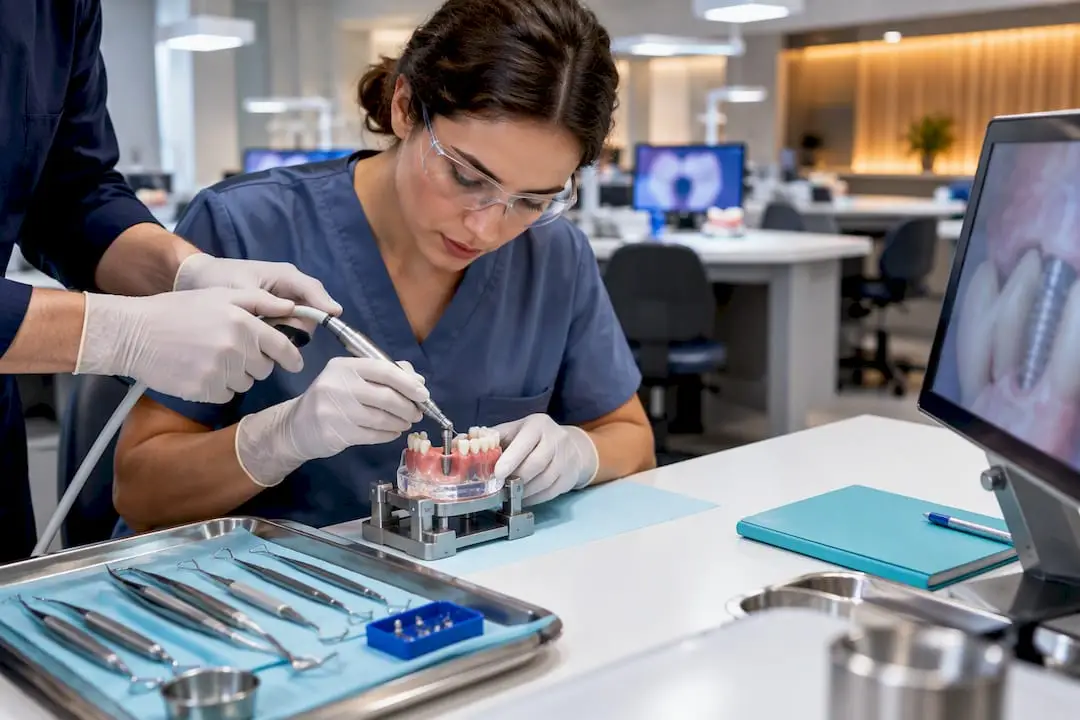
Live-patient dental training is ethically defensible only when three conditions hold at once: informed, voluntary consent specific to the teaching context; documented, site-specific safety including infection-prevention audits; and clear supervision paired with a real continuity-of-care plan. Miss any one of the three and the program is exposed, no matter how skilled the faculty or how routine the procedure looks on paper.
Live Patient Training Ethics Starts With a Real Consent Checklist
A consent form that reads like a legal waiver protects nobody. HHS/OHRP guidance on research consent forms pushes toward simpler documents that focus on the risks and benefits a patient would actually weigh, and that same logic applies directly to live patient training in dental CE settings. Boilerplate language that never mentions “a resident under supervision will perform part of this procedure” fails the patient before the handpiece even turns on.
A workable checklist for live-patient training ethics includes:
- Which specific procedures will be performed, and by whom, at each stage.
- A clear statement of which elements exist for teaching purposes versus standard clinical care.
- Foreseeable risks unique to a training environment, including a slower pace or a trainee performing a step under supervision.
- Expected benefits, stated honestly rather than inflated.
- Alternatives, including treatment from a non-training clinician.
- Explicit confirmation of voluntary participation and the right to withdraw at any point, with no penalty to future care.
Most standard educational encounters don’t require formal IRB review, but once a course collects data for research publication or deviates from standard care, that line matters and should be reviewed by the sponsoring institution. Whoever obtains consent should do it before the day of the procedure whenever feasible, with a witness present, and document the conversation in the chart, not just a signature line.
Pro Tip: Build in a second, brief confirmation of consent immediately before the procedure starts, with students in the room. Staged consent catches drift between what a patient agreed to weeks ago and what they understand today.
Screening Patients for Suitability, Not Just Willingness
A willing patient is not automatically a suitable one. Case selection needs its own workflow, separate from the consent conversation, because the two questions (can this patient consent, and is this the right case for a training setting) are not the same question.
Faculty typically screen on:
- ASA classification and relevant comorbidities that could complicate an already slower, more closely watched procedure.
- Anatomical predictability. A straightforward single-tooth extraction fits a training block; a complex full-arch case with unpredictable bone quality usually doesn’t.
- Whether the treatment plan can be staged, so an interrupted session never leaves a patient mid-procedure with no clear next step.
Effective programs run this through more than one set of eyes. A pre-course review with at least two faculty reviewers, each documenting a written rationale for why a specific case was selected, catches the cases that look fine on a referral sheet but fall apart once someone examines the radiographs closely. Patients also deserve a direct conversation about what to expect: the appointment may run longer, more people may be in the room, and a trainee will be doing hands-on work under a supervisor’s eye. Setting that expectation before the chair, not during it, prevents a lot of confusion later.
Site Infection Control Audits Faculty Can’t Skip
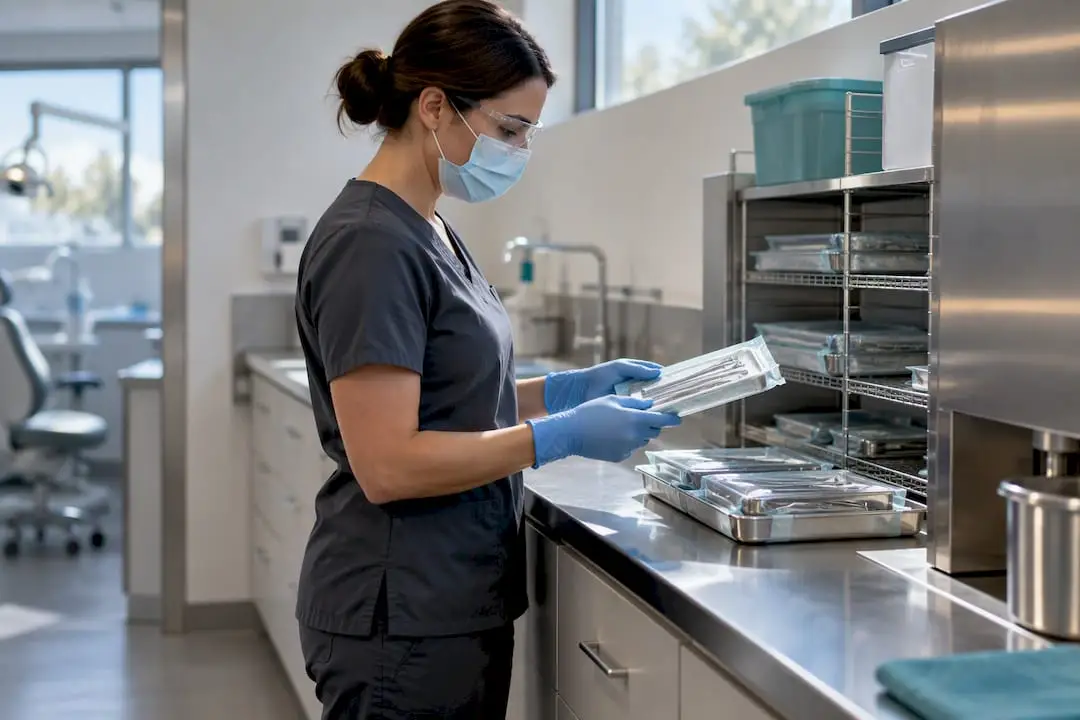
Infection control in a live-patient training setting carries more variables than a standard solo practice: more hands touching instruments, more people moving through the room, more chances for a break in protocol to go unnoticed. Recommended practice calls for a named infection prevention coordinator responsible for the site’s written policies, staff orientation, and ongoing training, backed by direct-observation audits rather than a paper checklist nobody actually watches happen.
A practical audit sequence looks like this:
- Appoint an infection prevention coordinator with authority to pause a session if protocol breaks down.
- Run orientation training for every faculty member, trainee, and support staff member before the course, not just once a year.
- Conduct direct-observation audits of instrument flow, PPE use, and sterilization verification, and repeat them annually at minimum.
- Document every finding and the remediation steps taken before the next live session runs.
High-traffic training days multiply the number of contact points between instruments, hands, and surfaces. That’s the practical reason course directors treat instrument flow and PPE management as a bigger operational lift than in a normal clinic day. Listing audit dates, the coordinator’s name, and remediation logs on file gives both patients and accrediting bodies something concrete to check, rather than a vague assurance that “we follow protocol.”
Who’s in Charge When Something Goes Wrong
Supervision needs a name and a trigger point, not just a general sense that “faculty are around.” Course directors generally define three tiers: direct supervision, where the faculty member is chairside and hands-on for the step; indirect supervision, where the faculty member is in the building and immediately available; and observed practice, reserved for trainees who have already demonstrated competence on that specific step.
Some steps should never be delegated past direct supervision, regardless of trainee confidence: administering anesthesia in a medically complex patient, managing unexpected bleeding, or any moment where the treatment plan changes mid-procedure. A short prebrief before the patient sits down should cover exactly which steps the trainee handles solo, which require the faculty member scrubbed in, and what triggers an immediate takeover.
- Faculty prebrief every trainee on takeover criteria before the patient is seated, not after a problem starts.
- Assign one person, by name, to manage communication if an emergency occurs, so nobody assumes someone else made the call.
- Document any takeover in the case notes, including the reason.
Pro Tip: Write takeover triggers down and post them where faculty can glance at them mid-procedure. A criterion everyone agreed to in a meeting last month is easy to hesitate on when adrenaline is up.
What Patients and Observers Are Actually Told
Patients deserve plain language, not a euphemism buried in a consent packet. “A trainee under my direct supervision will perform part of this extraction” tells a patient something real; “you may participate in an educational activity” does not. Disclosure should cover the teaching nature of the visit, which specific steps a trainee will perform, who is supervising, and whether the session will be photographed or recorded.
Observers in the room carry their own set of rules:
- No audience member should have access to identifying patient information beyond what’s needed for the teaching point.
- Recording should be limited to what the patient specifically consented to, with a clear stop point.
- Spectators should be briefed on professional conduct before the patient enters, not reminded mid-procedure.
Any photos or video from a live case need to be stored and shared under the same safeguards required for any protected health information, which means controlled access, no casual sharing to personal devices, and a retention policy that matches the practice’s broader HIPAA compliance program.
The Paper Trail That Protects Everyone
A course director’s best defense against a complaint, or an accreditation review, is a documentation trail that connects every piece of the encounter. That means:
- Signed consent forms, timestamped and stored with the clinical record.
- Supervisor sign-off confirming who performed which step.
- A case log noting patient selection rationale and any deviation from the plan.
- Infection-control audit records tied to the specific course date.
- Complication reports and the follow-up notes documenting resolution.
When CE credit is tied to clinical participation, that attendance record needs to link back to the actual clinical encounter, not just a signature on a roster. Programs offering live patient CE credit should be able to produce that connection on request. Retention timelines should match state dental board requirements at minimum, and access should be limited to faculty, compliance staff, and the patient’s own records request.
Continuity of Care Doesn’t End When the Course Does
The single biggest ethical failure in live-patient training isn’t a botched procedure. It’s a patient left mid-treatment when the course wraps up and everyone goes home. ADEA’s policy framework treats continuity of care as a standing obligation, not a courtesy, and that obligation doesn’t expire when the CE credits get logged.
Before the first patient sits down, the course should already name a specific clinician or clinic responsible for finishing any staged treatment, with a stated timeframe. A direct phone line, monitored for at least a week or two after an invasive procedure, matters more than any glossy course brochure.
- Name the clinician responsible for completing unfinished treatment before the course begins, not after.
- Report and disclose any complication to the patient immediately, with a documented remediation plan.
- Clarify financial responsibility for follow-up care in writing, before the patient consents to treatment.
Pro Tip: Give the patient a direct phone number, not a general clinic line, and confirm someone actually checks it daily for the follow-up window. A continuity plan that exists only on paper isn’t a continuity plan.
A Course Director’s Take: What the Checklist Looks Like in Practice
Most of the failures in live-patient training trace back to sequencing, not bad intent. A consent form gets signed weeks before anyone finalizes which trainee handles which step, so the paperwork and the reality drift apart. A simple fix: draft consent language after the case is fully planned, not before.
A short template helps here: procedure and stage, trainee’s specific role, supervising faculty by name, anticipated risks unique to the teaching setting, and the continuity contact if treatment runs past the course date. One World Dental’s mentorship-driven course structure, built on staged skill progression rather than one-off exposure, reflects how that sequencing should work when it’s done right. Adapt the template, don’t skip the sequencing.
— Jake
How One World Dental Builds Ethics Into Live Surgical Courses
Reading a checklist is one thing. Running a course where consent, supervision, and follow-up actually hold together under pressure is another. Onewd’s course formats are built around that gap, structuring live-patient modules with mentorship-driven supervision rather than a single instructor overseeing a room of trainees at once.
Courses like From Extraction to Implant: The Complete Surgical Workflow walk a trainee through staged skill progression under direct faculty oversight, with the kind of orientation, safety review, and case selection standards this article lays out. Other course formats, including options in the implant and surgery category, let clinicians build toward live-patient work through structured lecture series before ever stepping into a live surgical setting.
If you’re evaluating a course for its ethical structure, not just its curriculum, start with the full course catalog and look at how each format handles supervision tiers and continuity planning before you register.
Recommended