Finding a zygomatic implant course that offers real clinical experience and mentorship is unpredictable for dental professionals. Many programs lack clear pricing, immediate enrollment, or a direct path to recognized CE credit for hands-on training. This comparison highlights course formats, hands-on components, and accreditation so dental professionals can choose the most practical zygomatic implant training for their needs.
One World Dental
At a Glance
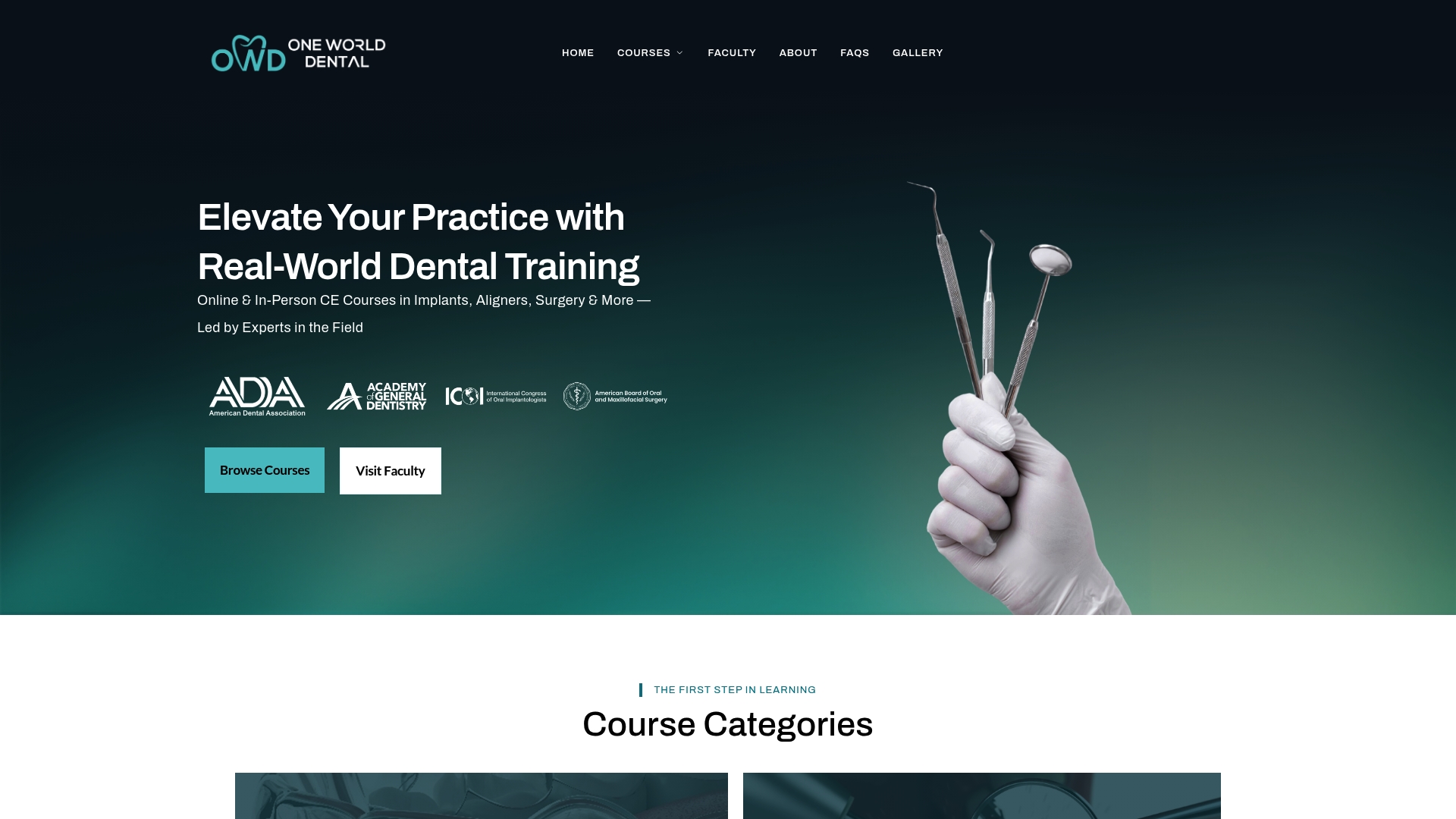
Almost all courses are currently free or include free modules. The platform centers its training on live clinical cases and mentorship that connect online learning to supervised practical work. Instant online enrollment and a personalized dashboard let you track CE credits and course progress.
Core Features
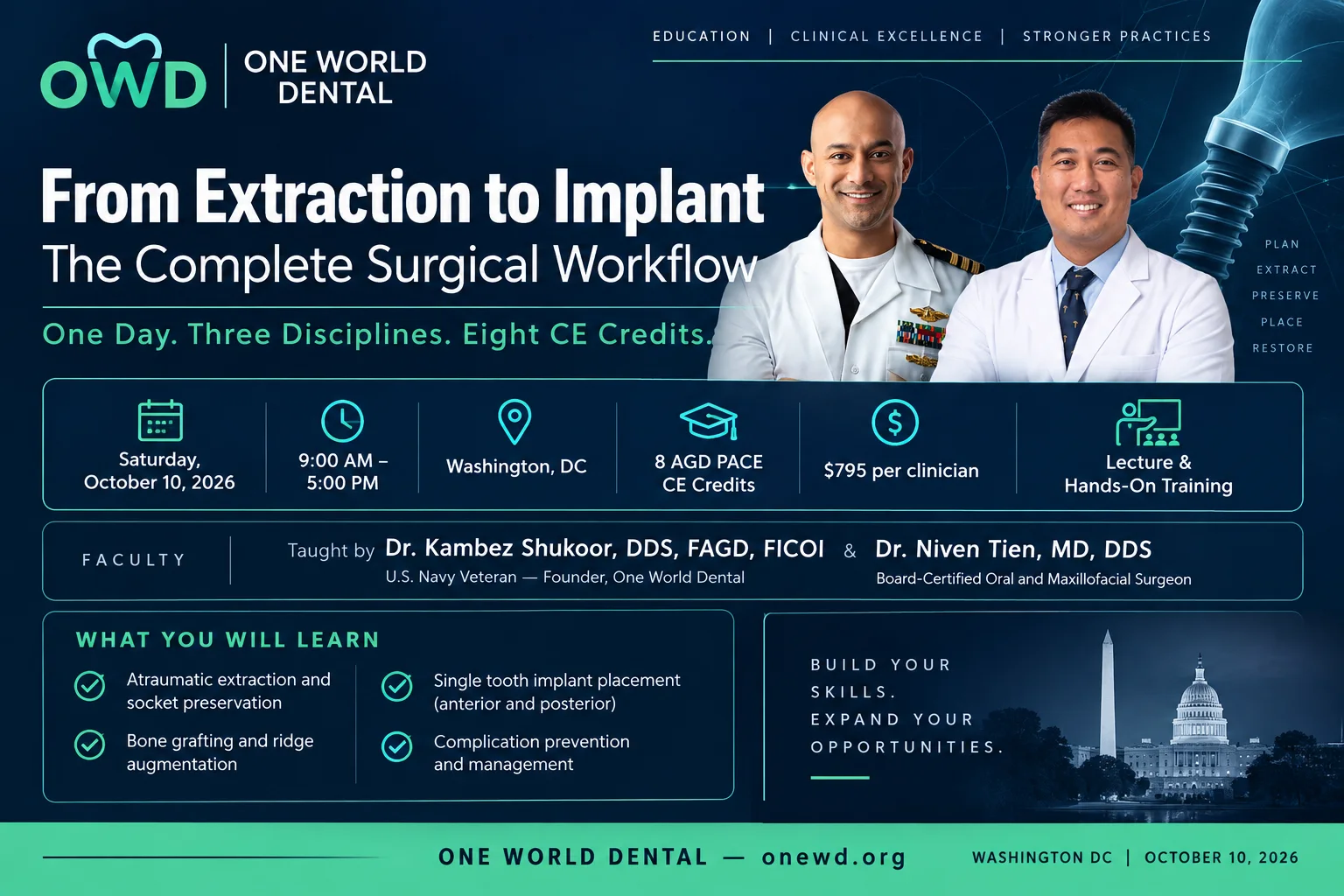
Courses run online and in person and include on demand modules, webinars, and live surgeries. Clinicians lead the curriculum, including the founder Dr. Kambez Shukoor, and lessons span foundational to advanced surgical protocols. One World Dental is an accredited continuing education provider, and approved CE hours are listed on each course page.
Key Differentiator
The program uses tiered learning paths that pair classroom modules with supervised live cases for practicing clinicians. Mentors guide clinicians from basic protocols to advanced surgical decisions while you practice on real case workflows. That focus makes training practical rather than theoretical for clinicians who need hands on competence.
Pros
The curriculum reflects active clinical experience because practicing clinicians design and teach courses. Multiple formats let you study online modules, join scheduled webinars, or attend in person sessions and supervised live surgeries. Structured tiered pathways support progressive skill building. The learning sequence moves from fundamentals to advanced practice with clear milestones, and the dashboard records progress and credits across modules.
Cons
- Most offerings are free modules or upcoming courses, so waiting may be required before full CE certification is available.
Who It’s For
Licensed dental professionals who want hands on clinical training fit this program. General dentists and specialists benefit when they need practical surgical skill development and mentorship. Dental educators and students can use the evidence based modules for curriculum support and refresher learning.
Unique Value Proposition
Tiered learning paths that pair live surgeries with one on one mentorship let you schedule case based training while tracking CE progress. That structure shortens the gap between observing techniques and performing them under mentor supervision. A personalized dashboard helps you plan training blocks, document hands on experience, and record credits for credentialing.
Real World Use Case
A general dentist signs up for the implant and surgery sequence to move from basic placement to advanced protocols. They complete online modules, attend a live surgery session, and then treat supervised cases with mentor feedback. The dashboard records course progress and credits during each stage of training.
Website: https://onewd.org
Pikos Institute
At a Glance
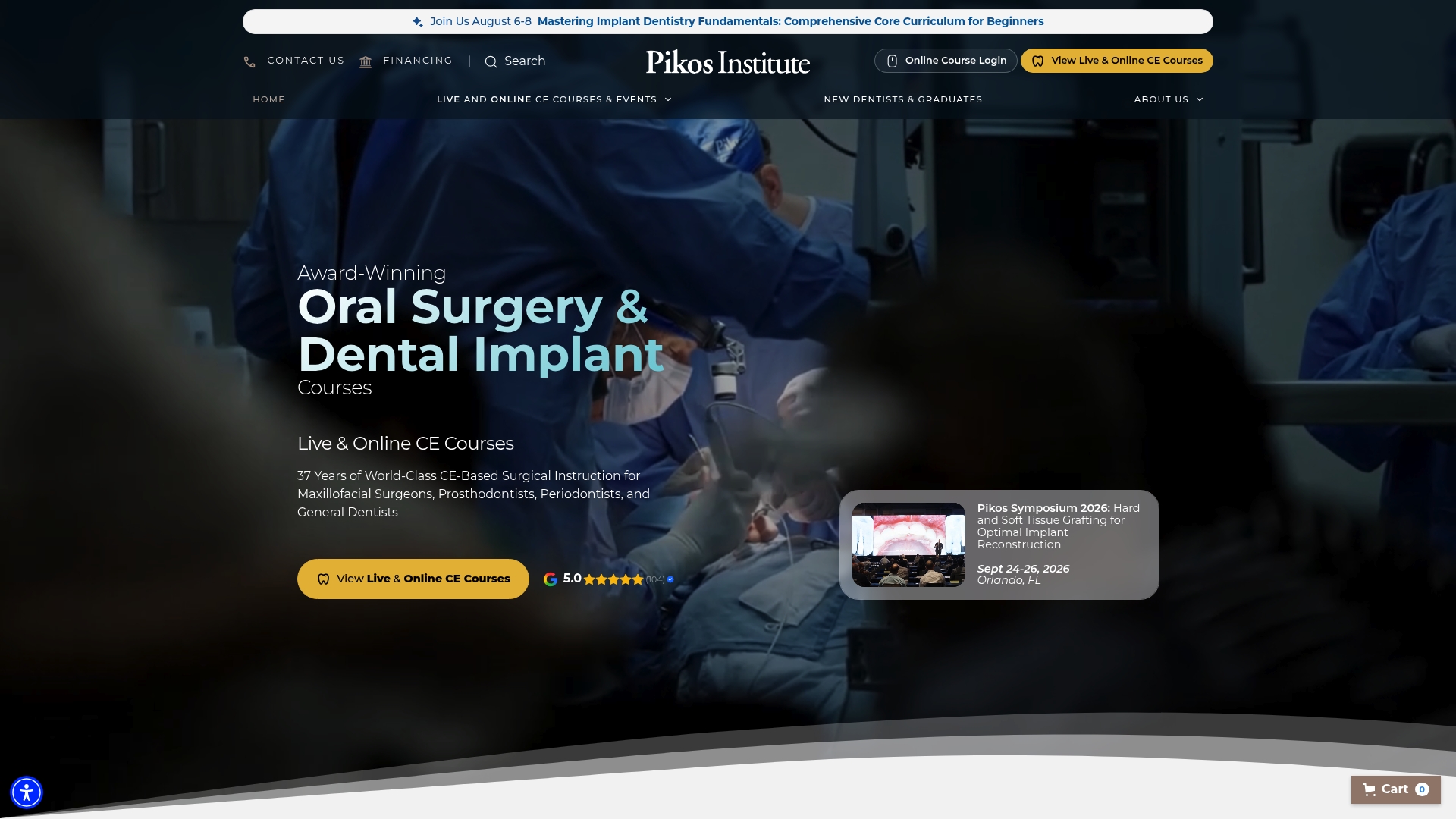
Courses range from about $3,595 for single symposia to $19,996 for multi-module beginner tracks, which explains the steep upfront cost for full training. The program was founded in 1990 by Dr. Michael A. Pikos and remains centered on live surgical demonstration and hands on instruction. Early registration is often necessary because several key courses limit enrollment to small cohorts.
Core Features
Pikos Institute mixes live and online continuing education modules with in-person, hands on surgical workshops and live surgery demonstrations. The platform also provides an extensive reference library of videos and books and relies on a roster of experienced faculty for clinical instruction. The vendor advertises an evidence-based, peer-reviewed curriculum, which the school uses to structure its classroom and workshop content.
Key Differentiator
The main distinction is the combination of live surgical exposure with structured course modules taught by an experienced faculty. That claim sets Pikos apart from purely virtual programs by prioritizing operating-room observation, stepwise surgical technique teaching, and take-home reference materials for procedural follow up.
Pros
Pikos delivers very practice-focused training that recreates clinical workflows in a classroom setting. The hands on workshops and live surgery demonstrations translate textbook steps into real operating-room decisions and instrument sequencing. The course catalog spans beginner through advanced modules so clinicians can progress from basics to full arch reconstruction and sinus grafting within a coherent curriculum. The global alumni network and published reference materials add postcourse support for case planning and patient selection.
Cons
- Pricing varies widely by course and often skews high, which raises the barrier for solo practitioners.
- Several flagship courses have limited seats, so enrollment requires advance planning and commitment.
- Travel and lodging are not bundled, increasing total program cost for international attendees.
When It May Not Fit
If your primary need is a low-cost online refresh or short continuing education credits, this program will feel oversized and costly. Practices that cannot send clinicians offsite for multiple days will find the live components impractical. Teams seeking quick digital modules only should look at providers with purely remote course catalogs.
Who It’s For
Dentists and oral surgeons who plan to add complex implant procedures to their service mix will benefit most. The program suits clinicians who value live surgery observation, stepwise hands on technique practice, and extended reference materials rather than a single lecture series.
Real World Use Case
A general dentist enrolls in a beginner multi-module track to learn implant placement protocols and soft tissue management. After hands on sessions and live surgery observation, the clinician returns to practice with clearer implant sequencing, improved graft handling, and confidence in patient case selection.
Pricing
Pricing is per course. Examples run from about $3,595 for symposium events to $19,996 for comprehensive beginner modules, with most workshop tiers between those figures. Additional costs for travel and accommodation apply and are billed separately.
Website: https://pikosinstitute.com
California Implant Institute
At a Glance
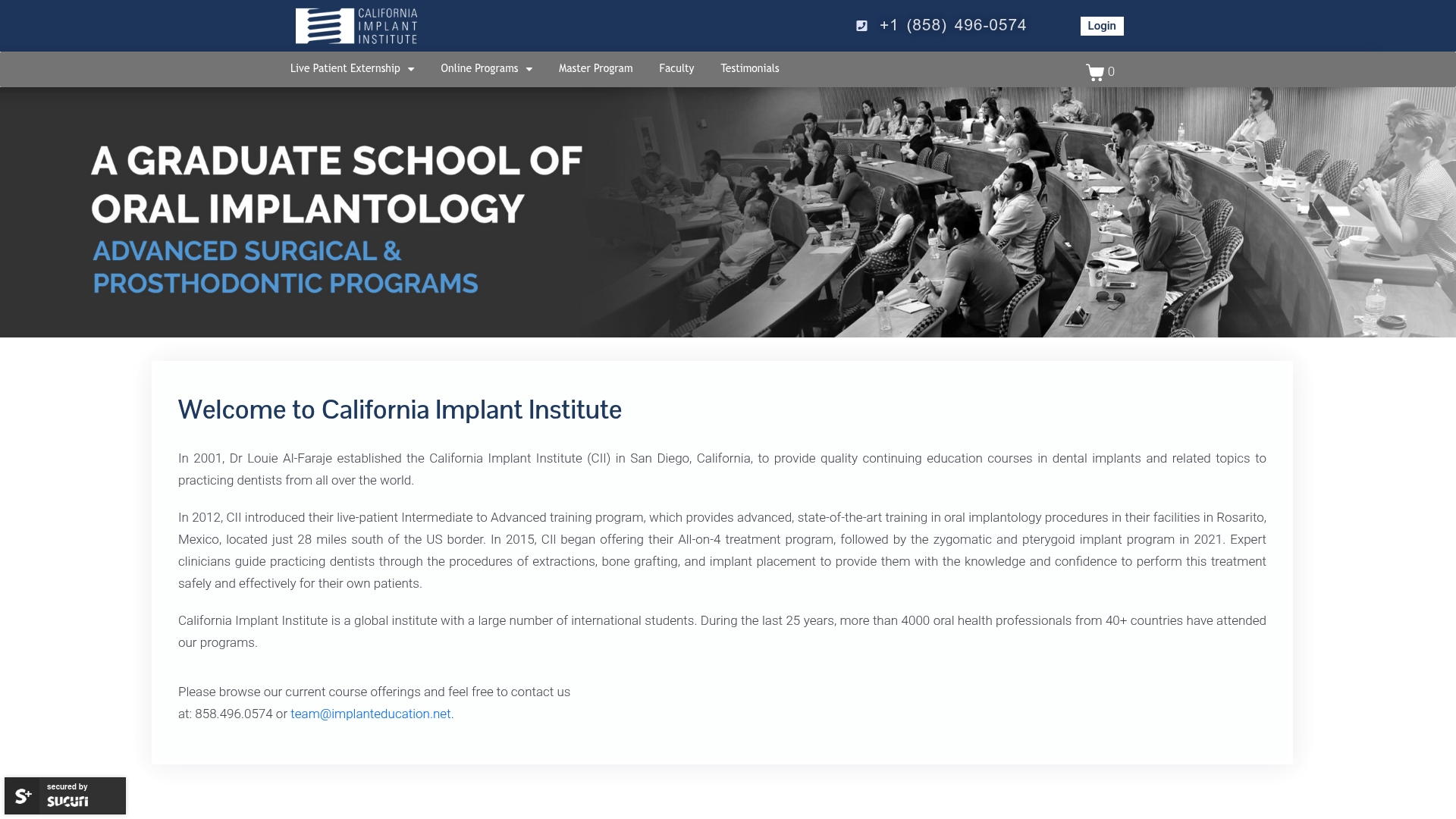
California Implant Institute reports it has served more than 4,000 professionals from over 40 countries across 25 years. The institute’s marketing materials state it is a nationally approved PACE provider with accreditation through 2028. Courses include hands on externships and remote learning for implant surgeons at different skill levels.
Core Features
The curriculum pairs live patient externship programs with online coursework and fellowship options, so clinicians can practice surgical steps and review cases remotely. Training covers basic to advanced implant surgery, including All on 4 alternatives, zygomatic implants, and pterygoid implant techniques, plus peri implantitis management. Internationally recognized faculty lead the sessions and the program issues continuing education credit.
Key Differentiator
The institute emphasizes a mix of supervised, live patient experience and structured online study guided by experienced clinicians. That combination is backed by its PACE accreditation and long operational history, which the institute highlights in its marketing. This focus makes the offering more hands on than many solely classroom based courses.
Pros
The program blends practical and classroom elements, letting you place implants under clinician supervision and then review complications and protocols in online modules. Being a PACE credited provider means attendees can claim recognized continuing education credit, which supports license maintenance in many states. Faculty with international teaching experience bring varied surgical techniques and case selection insights that help clinicians expand the kinds of cases they accept.
Cons
- Course fees are not listed openly on the website and often require direct inquiry, which can slow budgeting decisions.
- The site lacks specific details about course prerequisites and what certification outcomes to expect after completion.
- The curriculum focuses narrowly on implant surgery and peri implant care, so general practice management topics are not covered.
When It May Not Fit
If you need transparent, fixed pricing before you contact a provider, this offering may feel cumbersome because fees require direct follow up. Practices seeking broad continuing education outside implantology will find the scope too narrow. Clinicians who prefer purely simulated training without live patients should look elsewhere.
Who It’s For
Practicing dentists and oral surgeons who want to add advanced implant techniques to their skill set will benefit most. International clinicians seeking accredited coursework and hands on experience will find the format familiar. Early career dentists without baseline surgical experience should confirm prerequisites before enrolling.
Real World Use Case
A general dentist enrolls in the online full arch program and completes two live patient externship days to observe and place implants under supervision. The clinician then uses the online modules to review prosthetic sequencing and manage a peri implantitis case. After training, the dentist accepts more full arch referrals with greater confidence.
Website: https://implanteducation.net
Fugazzotto Institute
At a Glance
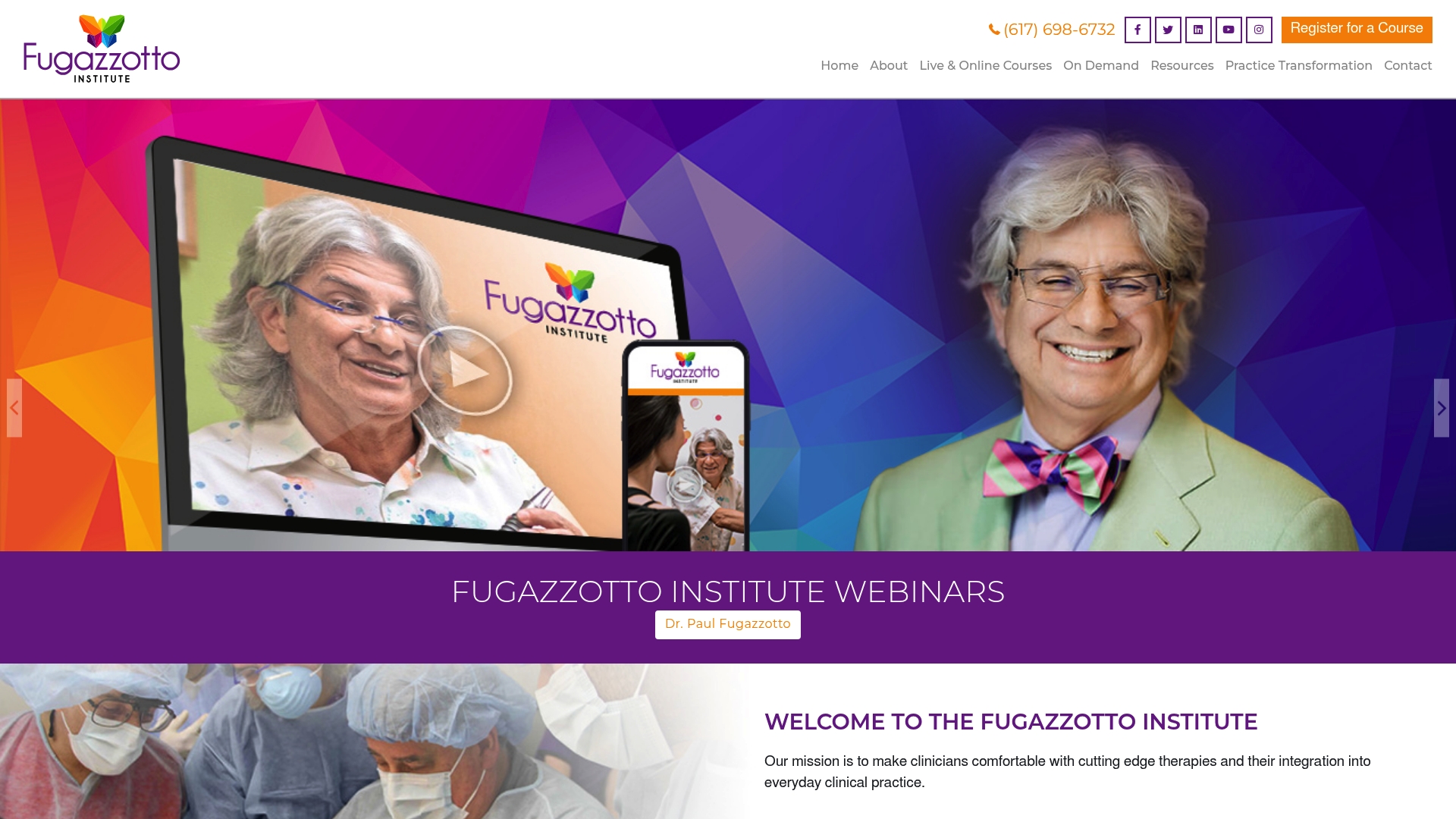
No upcoming courses are currently scheduled for immediate enrollment. The Fugazzotto Institute combines live observation, online modules, and on demand content with a clinical focus centered in Milton, Massachusetts. The offering targets implantology and periodontal therapy with a strong emphasis on clinical decision making and hands on practice.
Core Features
The platform delivers live surgical observation, recorded lectures, and on demand courses alongside webinars and written resources. It includes hands on cadaver exercises and offers individual mentoring to support clinical skill transfer. Materials include books, brochures, and publications that accompany practical sessions.
Key Differentiator
The institute prioritizes small group, science based instruction that pairs clinical decision making with practical experience. That focus positions the platform as a clinician focused learning environment rather than a high volume content library.
Pros
The curriculum emphasizes interactive, science based learning and pairs didactic content with hands on practice. Limited class sizes support personalized feedback and closer mentorship during live surgical observation and cadaver sessions. Multiple delivery formats let clinicians select live attendance, synchronous online participation, or on demand review when schedules conflict. Faculty are described as experienced and published, which helps when you want evidence informed methods paired with procedural technique.
Cons
- No upcoming courses currently scheduled, which prevents immediate enrollment for clinicians who need a seat now.
- Course outlines, module level learning objectives, and detailed day by day agendas are not listed in the supplied information.
- Pricing details and registration fees are not published in the data, so budgeting requires direct contact with the institute.
- There are no listed prerequisites or formal certification details in the available materials.
When It May Not Fit
If you need a guaranteed live course within weeks, this offering may not meet that timing need because of currently unscheduled sessions. If you require transparent pricing or a clearly defined certification pathway, the absence of those details will slow procurement and credential planning. Large groups seeking scalable online seat licensing will find the small group format a poor operational fit.
Who It’s For
You are a dentist or oral surgeon focused on implantology or periodontal therapy who values hands on practice paired with evidence based reasoning. The institute suits clinicians who prefer small class sizes and mentorship rather than large lecture formats. It also fits practitioners who can plan training around intermittent live sessions.
Real World Use Case
A periodontal specialist books a module of live observation and a cadaver day to refine flap management and graft handling. The specialist reviews recorded lectures before the hands on session and follows up with individual mentoring to adapt techniques to specific practice cases. That sequence improves case selection and surgical confidence.
Pricing
Pricing is not applicable in the data and no fees are published. Prospective attendees must contact the institute for course dates, tuition, and registration details.
Website: https://fugazzottoinstitute.com
Midwest Implant Institute
At a Glance
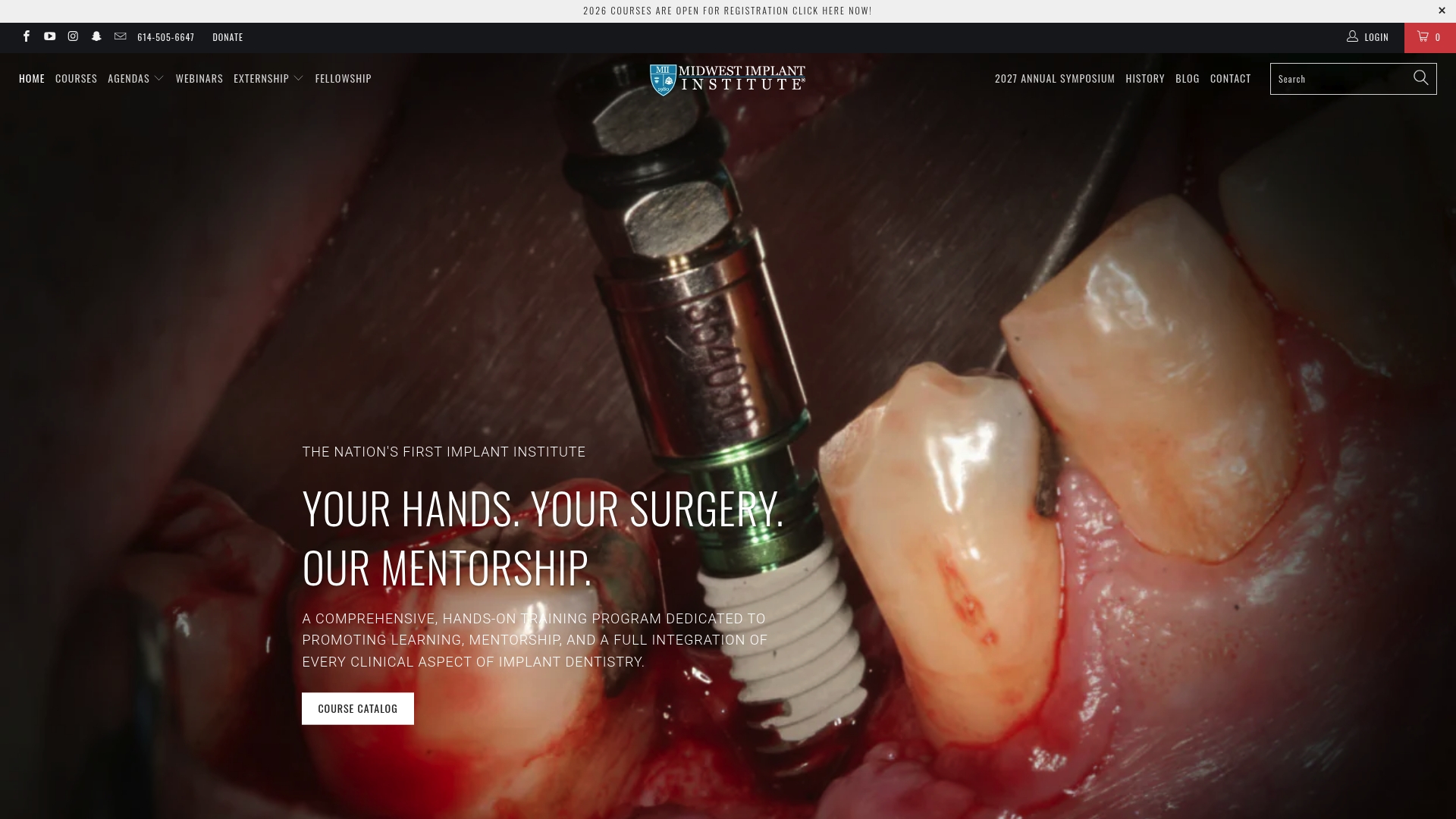
Live surgical courses include real patient procedures and supervised implant placement. The institute pairs those courses with hands-on surgical training and team sessions. Course topics span implant placement, prosthetics, bone grafting, sinus elevation, and complication management. Many offerings include externship and fellowship pathways that extend learning beyond a single event.
Core Features
Hands-on surgical training and live surgery courses give clinicians supervised clinical experience in operating room style settings. Course modules teach implant placement, prosthetic workflows, bone grafting techniques, sinus elevation, and strategies for complication management. Training pathways include externship and fellowship options that build skills over time. Team-oriented sessions prepare assistants and office staff to support implant cases and post operative care.
Key Differentiator
The institute centers training on in-person mentorship during live patient procedures. That approach pairs faculty supervision with practical team training in a clinical environment. Clinicians practice full arch restoration workflows while faculty observe and coach intraoperative decision making.
Pros
The course catalog covers surgical and prosthetic topics from basic placement through advanced full arch protocols, which helps clinicians progress logically. Live surgery formats expose attendees to real intraoperative problems and faculty reasoning. Externship and fellowship tracks extend mentorship and offer continuity after the initial course. Team sessions include assistants and front office staff, so practices can adopt new workflows with shared staff knowledge. Instructor rosters include experienced faculty and international guest speakers who present varied clinical perspectives.
Cons
- Course costs can be high for some practitioners because programs are intensive and span multiple days.
- Many programs run across several days and require travel plus time away from the practice.
- Online or distant learning options are limited, with most training delivered in person.
When It May Not Fit
If your clinic cannot spare clinicians for multi day programs, this training may not fit your schedule. Practices working with tight continuing education budgets should compare fees and payment options first. Remote learners seeking mostly online instruction will find few distance learning choices here. Solo practitioners who need strictly weekend modules may need to look at alternative formats.
Who It’s For
General dentists and specialists who want supervised operating room experience will gain practical skills. Dental teams planning to incorporate implant workflows benefit from the team oriented sessions. Early career clinicians seeking structured mentorship and progressive training will find externship and fellowship paths useful.
Real World Use Case
A general dentist attends an all inclusive live surgery course to learn implant surgical techniques under direct faculty supervision. They return to practice and perform initial implant cases with faculty available for follow up questions. The dentist then enrolls in an externship to refine prosthetic workflows and full arch protocols. That staged approach speeds practical adoption of new techniques.
Pricing
Pricing varies by course. Courses typically range from around $250 to over $4,995 for full programs or bundled tracks.
Website: https://midwestimplantinstitute.com
Comparison of alternatives
Among the analyzed courses, each presents strengths for dental implant training, but One World Dental stands out by integrating live clinical experience with structured learning pathways.
Both One World Dental and Pikos Institute offer a blend of online modules and in-person workshops, yet One World Dental incorporates mentorship throughout its tiered learning paths, facilitating practical skill uptake. Meanwhile, California Implant Institute prioritizes live externship opportunities, which provide an intense hands-on approach but lack flexibility in scheduling. Conversely, Midwest Implant Institute introduces team-oriented sessions that are an excellent fit for practices adopting workflows.
Resource Accessibility and Accreditation
Pikos Institute distinguishes itself through its extensive library of educational materials, including peer-reviewed content, supporting post-training development. For clinicians requiring transparent CE credits documentation, California Implant Institute’s PACE-approved courses prove especially appealing. While Fugazzotto Institute does offer evidence-informed mentoring, its current absence of scheduled courses reduces convenience for those needing prompt enrollment.
Best fit
- Practical skill building with guided mentorship: One World Dental provides tiered learning paths supported by live casework and clinical mentoring.
- resource library: Pikos Institute stands out with its extensive reference materials and post-training case support.
- Advanced implant techniques with in-person practice: California Implant Institute offers externships on live patients with internationally recognized faculty.
- Team-focused sessions for workflow training: Midwest Implant Institute enhances clinical adoption through team-inclusive courses.
Our pick
One World Dental excels for clinicians needing a clear progression from theory to real-time, mentor-guided surgical competence. For practices requiring immediate live course enrollment or extensive resources, alternatives such as Pikos Institute or California Implant Institute may suit specific needs better.
The table below compares various dental implant training programs focused on offering clinicians opportunities to enhance their surgical expertise.
| Program |
Key Features |
Target Audience |
Pricing |
Limitations |
| Onewd |
Live surgeries, mentorship, and tiered learning paths |
Licensed professionals seeking practical training |
Price not published |
Awaiting full CE accreditation |
| Pikos Institute |
Hands-on workshops, symposia, live demonstrations |
Clinicians learning advanced implant procedures |
$3,595–$19,996 |
High costs and limited seats availability |
| California Implant Institute |
Live patient externships and PACE-accredited coursework |
Advanced dental surgeons and international practitioners |
Price not published |
Focus narrow and inquiry needed for fee details |
| Fugazzotto Institute |
Cadaver exercises, small group clinical experience, mentoring |
Dentists focusing on implantology or periodontal therapy |
Price not published |
No immediate course enrollment available |
| Midwest Implant Institute |
Real patient procedures with supervisory mentorship |
Teams integrating implant workflows or dentists seeking hands-on mentorship |
$250–$4,995 |
Majority courses require multi-day participation |
How to Gain Practical Skills From Top Zygomatic Implant Courses
Learning complex zygomatic implant techniques requires hands-on experience and direct mentorship. Many dental professionals find it challenging to move beyond theory and apply what they learn in real clinical settings. The article highlights leading programs that use live surgeries and supervised cases to build clinician confidence and skill.
Onewd offers a practical approach with tailored tiered learning paths linking live surgical training and one-on-one guidance. This model helps licensed dentists and specialists build competence step-by-step while tracking continuing education credits online. Get access to online modules, live case mentorship, and easy enrollment at Uncategorized Archives – One World Dental.
Take the next step by visiting Onewd to sign up for courses focused on implant surgery and zygomatic implant techniques. Feel confident managing real patient cases with expert supervision and a personalized training dashboard.
Recommended