Rehabilitating the Managing Vertical Dimension of Occlusion in Dual-Arch Cases requires a precise balance of neuromuscular harmony, structural mechanics, and material science. When a patient presents with a completely collapsed dentition, a lack of posterior occlusal references turns full-mouth rehabilitation into a complex clinical challenge. This article provides advanced clinicians with a predictable, step-by-step protocol to diagnose, alter, and stabilize the Vertical Dimension of Occlusion (VDO) when treating both arches simultaneously.
Introduction to Vertical Dimension of Occlusion (VDO)
Defining VDO and Vertical Dimension of Rest (VDR)
The Vertical Dimension of Occlusion (VDO) is the vertical distance between the maxilla and mandible when the teeth are in maximum intercuspation (MIP). In contrast, the Vertical Dimension of Rest (VDR) is the postural position of the mandible. It is determined by the muscle tone of the elevator and depressor muscles when the patient is sitting upright and at rest.
The Physiological Variability of VDR
Historically, clinicians treated VDR as an immutable baseline. However, modern neuromuscular physiology demonstrates that VDR varies. Factors like head posture, stress, airway patency, and central nervous system medications can alter resting muscle tone. Therefore, relying on VDR as a static reference point can lead to errors in calculating the newly planned VDO.
Understanding the Interocclusal Distance (Freeway Space)
The difference between the VDR and the VDO is the interocclusal distance, or freeway space.
In a healthy dentition, this space typically measures between 2 mm and 4 mm. When restoring both arches, maintaining a functional freeway space is critical. Encroaching on this space by over-increasing the VDO causes continuous muscle hypertonicity. This leads to accelerated structural failures, joint pain, and phonetic issues.
Clinical Evaluation and Diagnostic Indicators
Etiology of Decreased VDO: Wear, Attrition, and Missing Teeth
A loss of VDO is rarely isolated. It is usually caused by chronic, combined etiologies:
Severe Attrition: Sleep bruxism and mechanical grinding.
Erosive Wear: Chemical breakdown from gastric reflux (GERD) or dietary acids.
Posterior Bite Collapse: The loss of posterior support leading to overloading and flaring of the anterior segment.
Methods to Evaluate and Measure Baseline OVD
Because no single method is completely accurate on its own, you must use a combination of evaluation techniques:
Phonetic Tests: Evaluate the closest speaking space using Silvermann’s metric during the articulation of sibilant (“S”) sounds.
Facial Proportion Metrics: Use Willis gauges or digital calipers to measure the distance from the base of the nose to the bottom of the chin. Compare this to the distance from the lateral canthus of the eye to the corner of the mouth.
Pre-Extraction Records: Analyze historical diagnostic casts, photographs, or old radiographs if they are available.
Facial Profile Assessment: Lips, Nose, and Mentalis Muscle Activity
Look for classic signs of a collapsed lower third of the face. These include thin, turned-down lips (cheilitis), a deepened mentolabial sulcus, and an over-active mentalis muscle as the patient tries to close their lips over worn teeth.
The Dual-Arch Challenge: Why Simultaneous Arches Change the Protocol
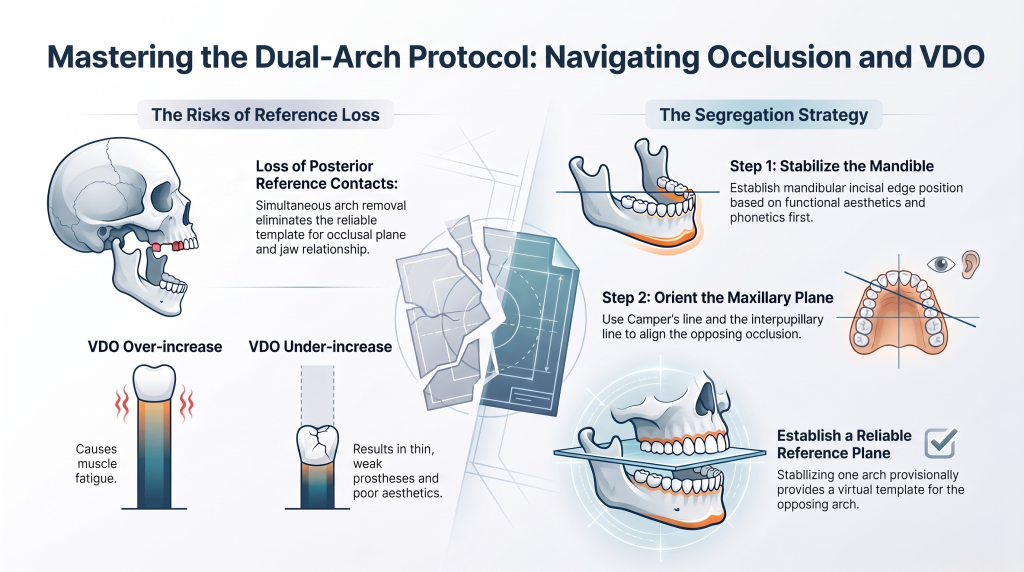
Loss of Posterior Occlusal Reference Contacts
In single-arch cases, the opposing arch serves as a reliable template for the occlusal plane and vertical stop. In a dual-arch case, you remove this reference point. This makes it easy to lose control of the orientation of the occlusal plane and the jaw relationship.
Risk of Over-Increasing or Under-Increasing VDO
Over-increasing VDO: Stretches the masticatory muscles past their physiological limits, causing muscle fatigue, porcelain fractures, and speech impediments.
Under-increasing VDO: Leaves the patient with inadequate space for restorative materials. This results in thin, weak prostheses and poor facial aesthetics.
Determining Which Arch to Restore First: The Segregation Strategy
To simplify complex dual-arch cases, do not treat both arches as a single problem. Use a segregation strategy:
First, establish the mandibular incisal edge position based on functional aesthetics and phonetics.
Next, orient the maxillary occlusal plane using the camper’s line and the interpupillary line.
By stabilizing one arch virtually or provisionally first (usually the mandible), you create a reliable reference plane to build the opposing occlusion.
Biomechanical and Physiological Adaptation to Altered VDO
How the Masticatory System Adapts to Changes in VDO
Studies show that the masticatory system has an excellent capacity to adapt to increases in VDO, provided the new position stays within the boundary of the patient’s resting freeway space. This adaptation is managed by proprioceptive feedback from the periodontal ligament (PDL) and mechanoreceptors within the temporomandibular joint (TMJ).
Considerations for Fully Dentate vs. Partially Edentulous Patients
Fully dentate patients with severe wear retain highly sensitive PDL feedback. This makes them more sensitive to subtle occlusal changes. Partially edentulous patients lack these reference keys, meaning they rely heavily on joint mechanoreceptors. This requires a more conservative approach when increasing vertical dimension.
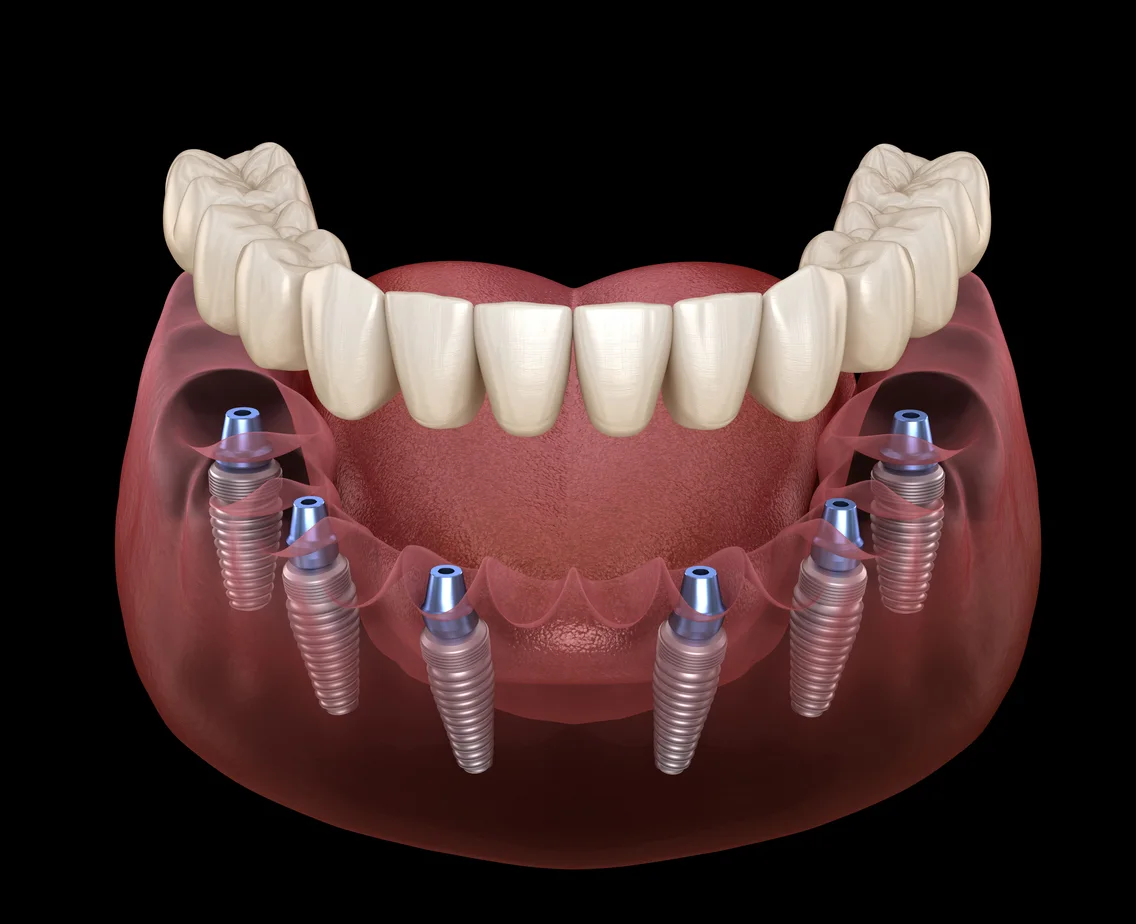
Considerations for Implant-Supported Dual-Arch Restorations
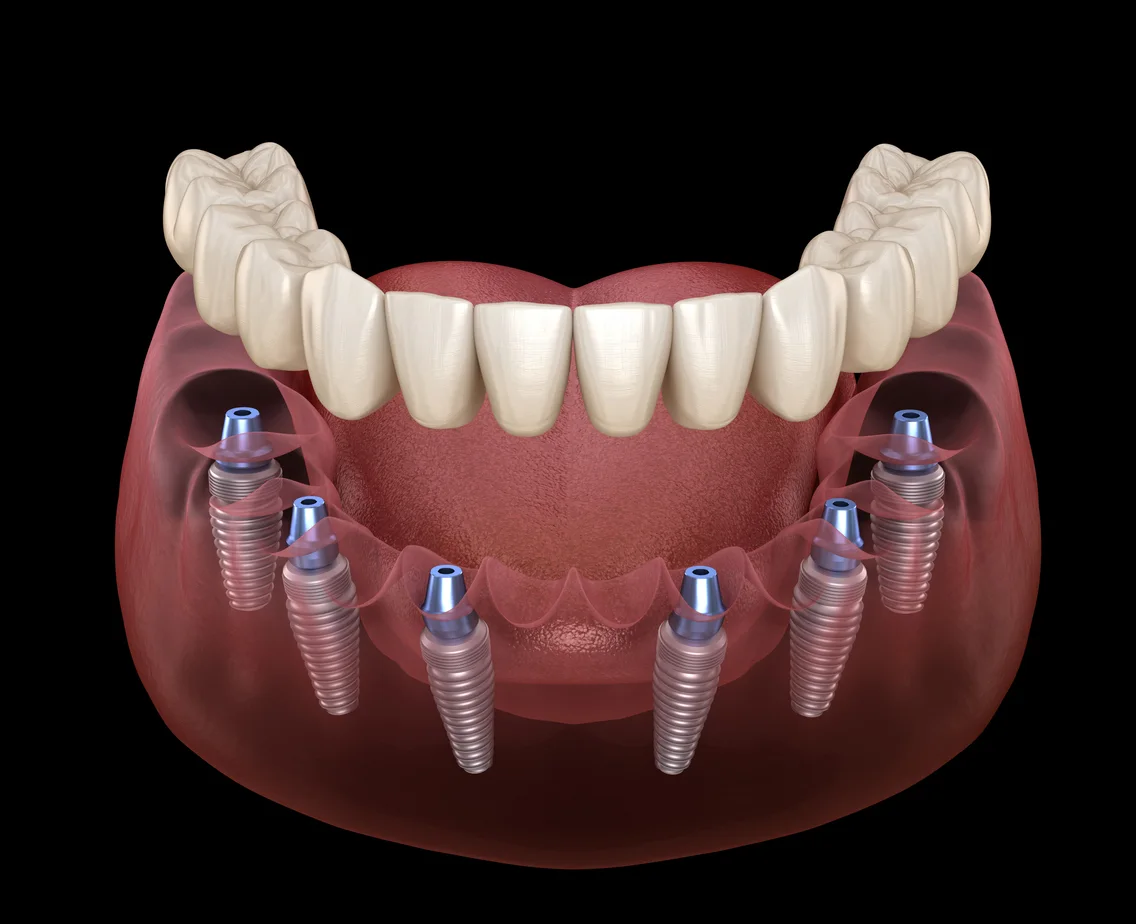
Implants lack a periodontal ligament. This absence of a natural shock absorber and mechanoreceptive feedback loop results in reduced tactile sensitivity. Because patients cannot sense heavy forces on implants as easily, dual-arch implant restorations require a precise VDO. Any errors can lead to porcelain chipping, screw loosening, or crestal bone loss.
Step-by-Step Clinical Technique for Managing Dual-Arch VDO
Deprogramming the Musculature and Centric Relation Records
Before recording a new jaw relation, you must eliminate the patient’s habitual path of closure. Use a Lucia Jig, a Kois Deprogrammer, or an anterior bite plane for 14 to 21 days. This relaxes hyperactive muscles and allows you to capture a repeatable Centric Relation (CR) record at the newly increased VDO.
Diagnostic Wax-Up and Digital Smile Design Integration
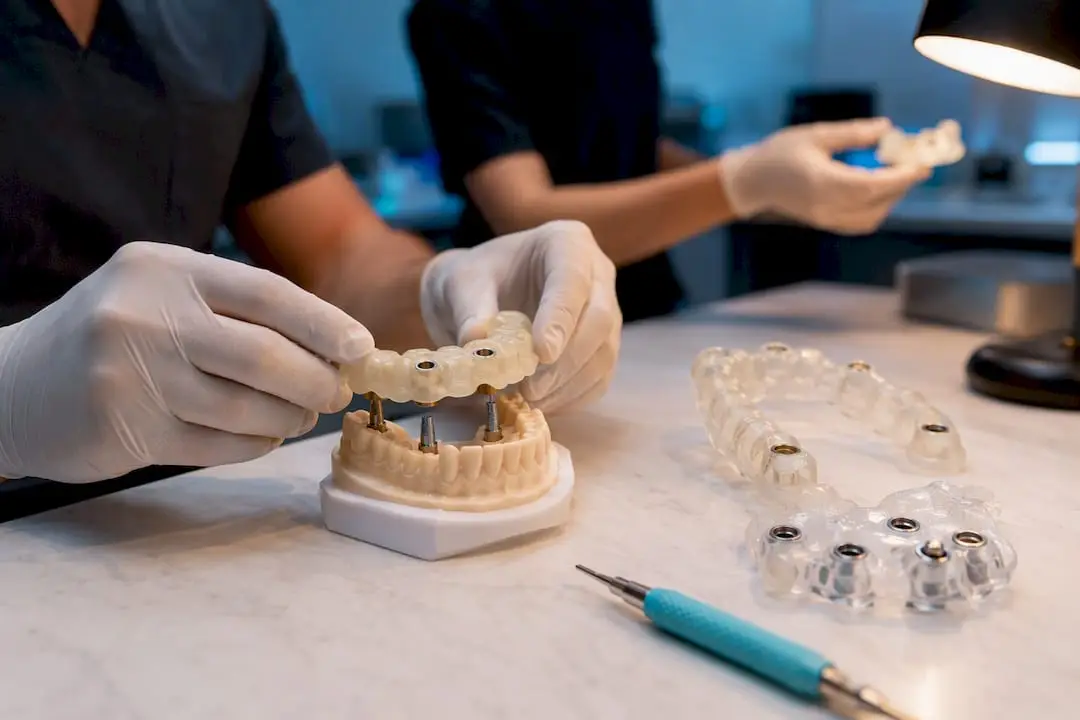
Mount the deprogrammed casts on a semi-adjustable articulator or input the data into a CAD/CAM virtual articulator. Use Digital Smile Design (DSD) to plan the optimal incisal edge position, gingival contours, and proper tooth proportions. This forms the basis for your diagnostic wax-up.
The Crucial Trial Phase: Interim/Provisional Restorations
Never move directly from a wax-up to final ceramic restorations in dual-arch cases. Translate the diagnostic wax-up into high-density PMMA or bis-acryl provisional restorations. The patient must wear these provisionals for 3 to 6 months. This trial phase confirms that the patient can comfortably tolerate the new VDO.
Phonetic and Functional Verification
During the provisional phase, test the patient’s speech. If the VDO is too high, the provisional teeth will click together when the patient speaks. Have them count from 60 to 69; the anterior teeth should come close but not touch during sibilant sounds.
Final Material Selection and Cross-Arch Stabilization
Once the patient adapts to the provisional phase, transition to final materials. Use segmented preparation techniques to maintain your vertical stops. For final restorations, use high-strength materials like monolithic zirconia or lithium disilicate, ensuring a balanced, mutually protected occlusal scheme.
Advanced Treatment Approaches and Modalities
Minimally Invasive and Ultraconservative Restorative Approaches
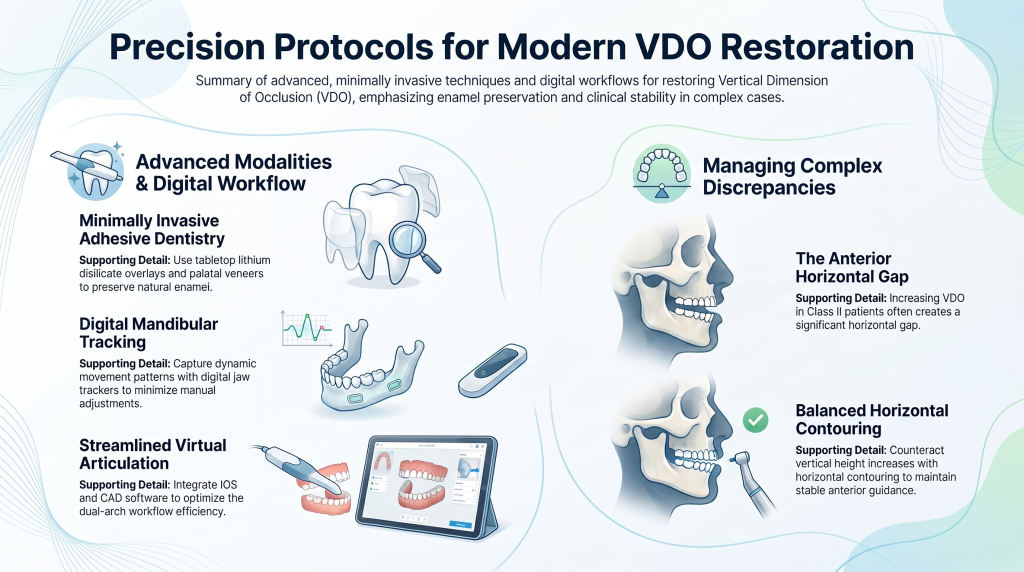
Modern adhesive dentistry reduces the need for aggressive full-coverage tooth preparation. By utilizing ultra-thin tabletop lithium disilicate overlays and palatal veneers, you can restore lost tooth structure and increase VDO while preserving maximum natural enamel.
Digital Workflows: Using IOS and Virtual Articulators for Dual-Arch VDO
Intraoral scanners (IOS) and virtual articulators streamline the dual-arch workflow. By capturing the patient’s mandibular movement patterns with digital jaw trackers, you can import precise dynamic records into CAD software. This minimizes manual adjustment time when delivering the final prostheses.
Patients with a skeletal Class II relationship or deep overbites require careful management. Increasing the VDO in these patients often creates a significant anterior horizontal gap. You must balance the increased vertical height with appropriate horizontal contouring to maintain a stable anterior guidance pattern.
Clinical Complications and Troubleshooting
Managing TMJ Discomfort or Muscle Fatigue Post-Treatment
If a patient develops transient muscle soreness or TMJ discomfort during the provisional phase, assess the occlusal contacts immediately. Heavy posterior balancing interferences are often the cause. If the discomfort persists despite an optimal occlusal design, drop the VDO by 1 mm to 1.5 mm to relieve strain on the system.
Material Fracture and Ceramic Chipping: Signs of an Incorrect VDO
Frequent fractures of temporary or permanent restorations often point to an incorrect VDO or poorly calibrated anterior guidance. If the VDO is increased too much, the patient will struggle to clear their posterior teeth during lateral movements. This creates destructive interferences that damage restorative materials.
Advanced Continuing Education with One World Dental
Mastering full-mouth rehabilitations and dual-arch VDO alterations requires hands-on training and expert guidance. For clinicians looking to elevate their restorative skills, One World Dental provides comprehensive, evidence-based postgraduate programs. Their advanced courses offer deep insights into complex occlusal management, digital workflows, and predictable full-arch rehabilitation protocols.
People Also Ask (FAQ)
How much can you safely increase the VDO in a single treatment phase?
A safe, well-tolerated increase in VDO is typically between 3 mm and 5 mm at the incisors, provided the adjustment is verified using a provisional trial phase lasting at least 3 months.
What happens if the freeway space is completely eliminated?
Eliminating the freeway space causes constant muscle contraction, leading to severe facial pain, TMJ strain, speech clicking, accelerated tooth wear, or fracture of the dental restorations.
Is centric relation mandatory when changing VDO in dual-arch cases?
Yes. Because you are changing the vertical dimension and losing existing intercuspation references, Centric Relation provides a reproducible, clinically neutral position to rebuild the occlusion.
How long should a patient wear provisional restorations before moving to final ceramics?
Patients should wear dual-arch provisionals for a minimum of 12 to 24 weeks to ensure complete neuromuscular adaptation, stable phonetics, and a lack of joint discomfort.
Can digital virtual articulators completely replace mechanical articulators for VDO design?
Yes, high-end digital workflows that integrate intraoral scans with dynamic jaw registration devices can accurately replicate mandibular movements, reducing the need for traditional physical models.
Which arch should be prepped and temporized first in a dual-arch case?
It is usually best to prep and temporize the mandibular arch first. This allows you to establish a stable mandibular incisal edge position and occlusal plane before finishing the maxillary design.
Conclusion and Clinical Action Plan
Managing the vertical dimension of occlusion in dual-arch cases requires a systematic, measured approach. By utilizing a careful trial phase with provisional restorations, you can safely rehabilitate complex, worn dentitions while avoiding costly structural failures.
To refine your practical skills and master these full-mouth restorative protocols, contact the education team at One World Dental today. Visit One World Dental to view upcoming advanced clinical training schedules and secure your registration.
Educational disclaimer: Content is provided for professional education and is not a substitute for a clinician's independent judgment, applicable standards, manufacturer instructions, or relevant laws and regulations.
Prosthetic first digital workflow for clinicians: plan full arch implants, enable same day provisionals, target a 6 week definitive, and validate guides...