The Power of PRF: Using Biologics to Fast-Track Healing
Master the science of Platelet-Rich Fibrin (PRF). Explore centrifugation protocols, fibrin matrix rheology, and advanced surgical techniques.
Publisher
Published by One World Dental
Published
Published May 22, 2026
Reading time
7 min read
On this page
The clinical landscape of regenerative medicine has been transformed by the emergence of Platelet-Rich Fibrin (PRF). This second-generation autologous blood concentrate leverages the power of PRF to fast-track healing by providing a sustained release of essential growth factors.
At One World Dental, we integrate these biological innovations into our advanced surgical protocols to ensure superior patient outcomes and predictable tissue regeneration.
What is Platelet-Rich Fibrin (PRF)?
The Evolution of Platelet Concentrates: From PRP to PRF
For decades, Platelet-Rich Plasma (PRP) was the standard in biologics. However, PRP requires the use of bovine thrombin or anticoagulants to prevent clotting, which can interfere with the natural healing cascade. PRF represents a breakthrough as a 100% natural, autologous concentrate that requires no additives. By eliminating chemical interference, PRF allows the body’s innate regenerative potential to function at its highest level.
Understanding the “Slow-Release” Fibrin Matrix
Unlike the liquid state of PRP, PRF forms a dense, three-dimensional fibrin matrix. This structure acts as a natural reservoir. While PRP releases its growth factors in a massive “burst” within the first hour, the fibrin architecture in PRF allows for a steady, slow release of cytokines over 7 to 14 days. This extended presence is critical for supporting the various phases of wound healing.
PRF vs. PRP: Why the Difference Matters for Healing
The absence of anticoagulants in PRF is the primary clinical differentiator. Without these chemicals, a natural fibrin clot forms. This clot traps white blood cells (leukocytes) and circulating stem cells, which are often lost in the PRP process. For the clinician, this means better infection control and a more robust biological “scaffold” for new tissue to grow upon.
The Bio-Components: Platelets, Leukocytes, and Stem Cells
PRF is more than just platelets. It is a “living” biomaterial containing:
Platelets: The primary source of growth factors.
Leukocytes: Essential for immune regulation and fighting post-operative infection.
CD34+ Stem Cells: Potent cells that drive the formation of new blood vessels and bone.
The Science of Accelerated Healing
How PRF Acts as a Natural Scaffold for Tissue Growth
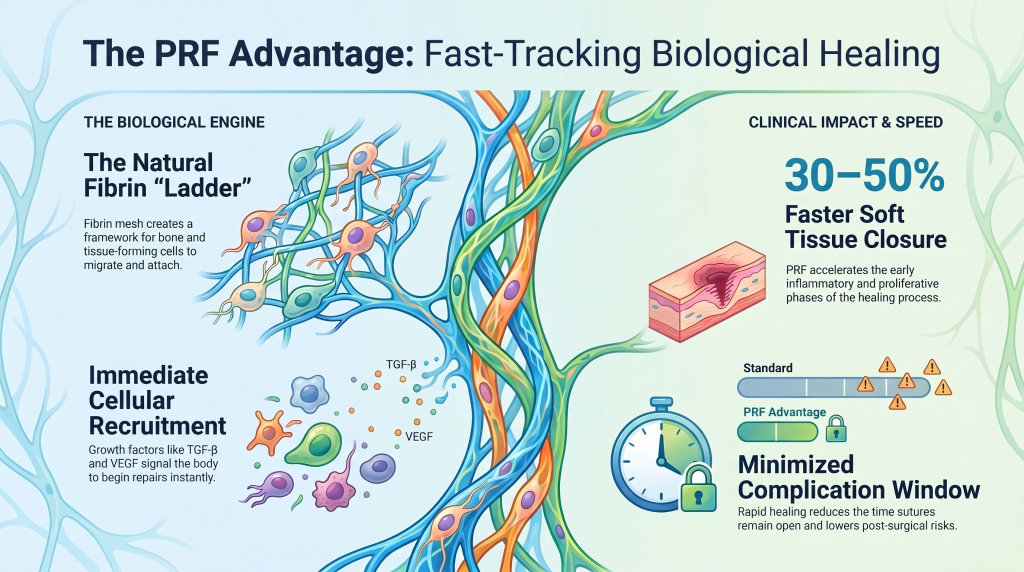
In any surgical site, the body needs a “ladder” for cells to climb as they repair the gap. The fibrin mesh in PRF serves as this ladder. It stabilizes the wound, protects the blood clot, and provides a framework where osteoblasts (bone-forming cells) and fibroblasts (tissue-forming cells) can migrate and attach.
The Role of Cytokines and Growth Factors in Recovery
PRF is rich in Transforming Growth Factor-beta (TGF-β), Platelet-Derived Growth Factor (PDGF), and Vascular Endothelial Growth Factor (VEGF). These cytokines signal the body to begin the repair process immediately. They essentially “recruit” the necessary cells to the surgical site, ensuring that the healing process starts the moment the PRF is applied.
The Clinical Timeline: How Much Faster is “Fast-Track”?
When we talk about “fast-tracking,” we are referring to the acceleration of the early inflammatory and proliferative phases of healing. In standard healing, significant collagen deposition might take weeks. With PRF, studies show that soft tissue closure can occur 30–50% faster than traditional methods. For the patient, this means less time with open sutures and a significantly reduced window for post-surgical complications.
Advanced PRF Protocols and Classifications
L-PRF (Leukocyte-Platelet Rich Fibrin)
The most common form used in oral surgery, L-PRF results in a strong, handleable membrane. It is ideal for covering extraction sockets and protecting bone grafts.
A-PRF (Advanced Platelet Rich Fibrin)
A-PRF uses a lower centrifugation speed to keep more white blood cells and growth factors trapped within the upper layers of the clot. This version is specifically optimized for soft tissue regeneration and faster “re-epithelialization” (skin/gum growth).
i-PRF (Injectable PRF) for Non-Surgical Applications
By adjusting the “spin” parameters further, we can produce i-PRF—a liquid form that remains injectable for about 15 minutes before clotting. At One World Dental, we use i-PRF to hydrate bone graft materials or to inject directly into areas like the TMJ (jaw joint) to reduce inflammation and promote joint repair.
Clinical Applications: Where PRF Makes an Impact
PRF in Periodontics and Oral Surgery
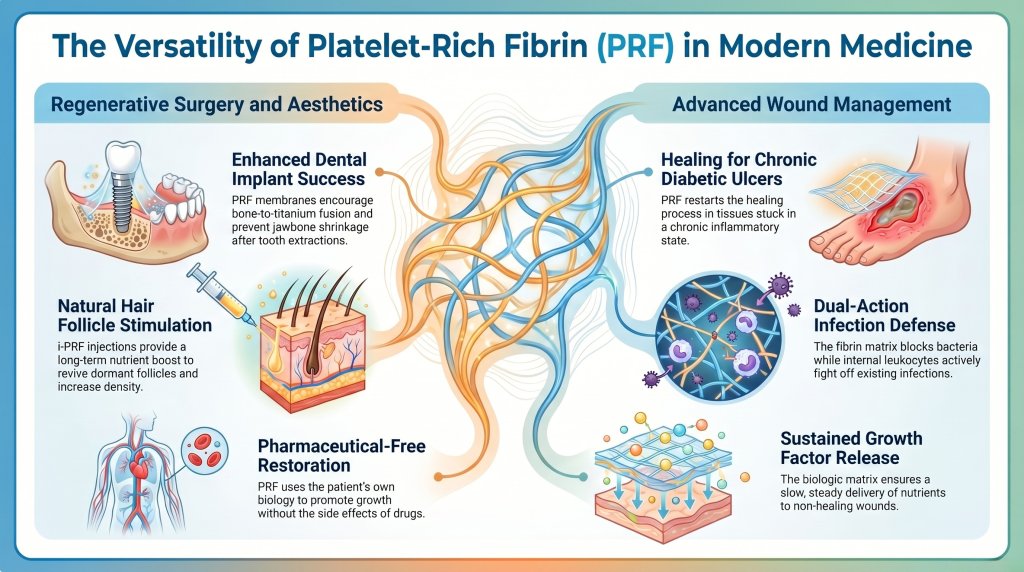
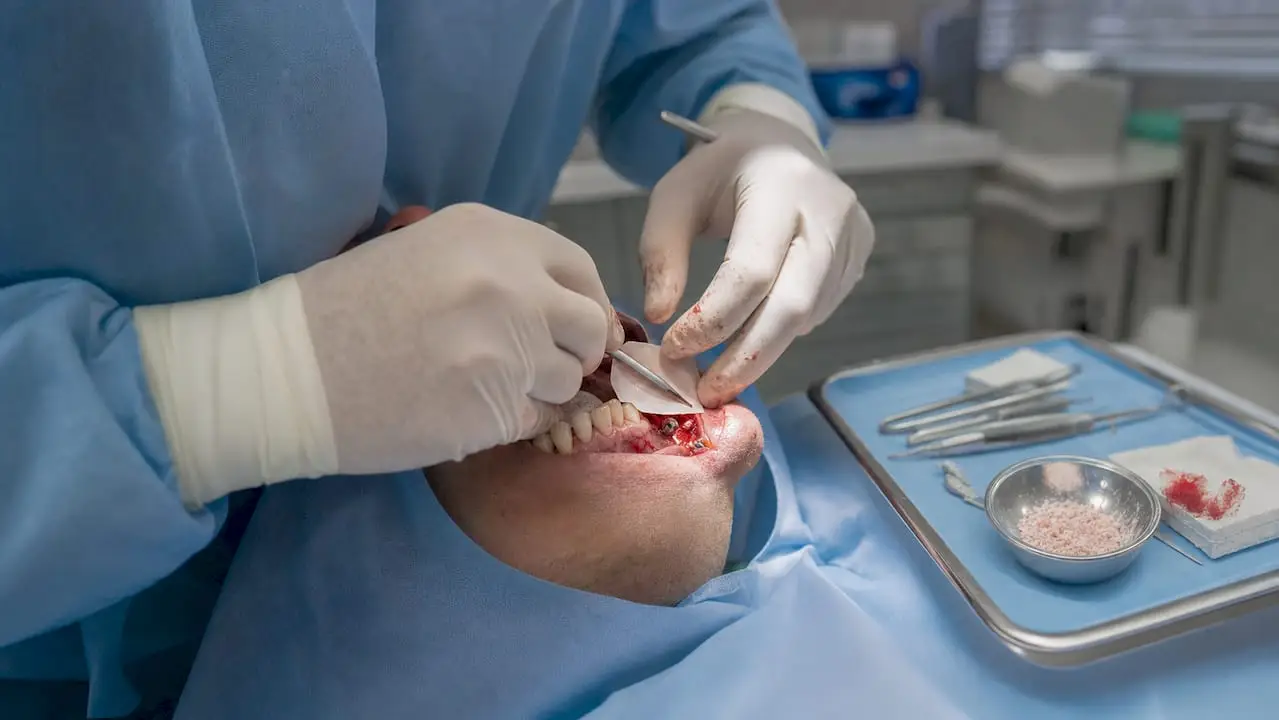
In dental implantology, PRF is a game-changer. We use PRF membranes to wrap implants, which encourages the bone to fuse with the titanium (osseointegration) much more reliably. It is also used in “socket preservation” to prevent the jawbone from shrinking after an extraction.
Hair Restoration: Using PRF to Combat Thinning Naturally
Beyond the dental chair, PRF is gaining traction in hair restoration. By injecting i-PRF into the scalp, the concentrated growth factors stimulate dormant hair follicles. Because it is a slow-release biologic, it provides the scalp with a long-term “nutrient boost,” leading to increased hair density without the side effects of pharmaceutical drugs.
One of the most powerful uses of PRF is in treating chronic wounds that refuse to heal, such as diabetic foot ulcers. The fibrin matrix provides a protective barrier against bacteria while the leukocytes inside fight infection. The sustained growth factor release restarts the healing process in tissues that have become “stuck” in a chronic inflammatory state.
What to Expect During a PRF Procedure
The Blood Draw and Centrifugation Process
The process is simple and performed right in our office. We draw a small amount of your blood (similar to a routine lab test). This blood is placed into a specialized centrifuge. Because we follow the latest clinical research, we use “low-speed” centrifugation to ensure we don’t damage the delicate living cells.
Patient Preparation: How to Optimize Your Blood Quality
Since PRF is made entirely from your own blood, your “internal chemistry” dictates the quality of the result. To get the best PRF, we recommend:
Hydration: Drink plenty of water 24 hours before your visit.
Nutrition: A diet rich in leafy greens and lean proteins supports healthy platelet counts.
Rest: Being well-rested helps maintain a stable inflammatory profile in your blood.
Safety and Patient Considerations
Why PRF is the Safest Biologic (100% Autologous)
Because PRF is “autologous” (meaning it comes from you), there is zero risk of an allergic reaction or disease transmission. You are simply using your own concentrated healing power to fix yourself.
Contraindications: Who Should Avoid PRF?
While PRF is safe for most, it may not be effective for everyone. Patients with severe platelet disorders, active systemic infections, or those undergoing certain types of chemotherapy may not be ideal candidates. During your consultation at One World Dental, we review your medical history to ensure biologics are the right path for you.
Cost vs. Value: Is the Investment Worth It?
While adding PRF to a procedure involves an additional cost, the “value” is found in what you avoid. Faster healing means fewer follow-up visits, less time off work, and a lower risk of “graft failure” or infection. For many, the peace of mind knowing they are using the best technology available is well worth the investment.
Frequently Asked Questions (People Also Ask)
Is PRF safe? Yes. PRF is 100% natural. It is made from your own blood with no added chemicals or animal products, making it one of the safest treatments in modern medicine.
How many sessions are required? For surgical applications (like an implant), usually only one application is needed at the time of surgery. For aesthetic or hair treatments, a series of 3–5 sessions may be recommended for best results.
Does PRF treatment hurt? The only “pinch” you feel is the initial blood draw. The application of the PRF at the surgical site is done while you are already numb, so it adds no additional discomfort to your visit.
How long does the PRF stay in my body? The fibrin matrix naturally dissolves over about 10–14 days. During this time, it is constantly releasing growth factors. Once its job is done, your body simply resorbs it.
Can PRF be used if I’m on blood thinners? In many cases, yes. However, we will coordinate with your primary care physician to ensure your blood can still form the necessary clot for the PRF process to work.
Experience the Future of Healing at One World Dental
Don’t leave your recovery to chance. At One World Dental, we are committed to using the latest biological innovations to make your dental experience faster, safer, and more comfortable.
Ready to fast-track your healing? Browse the One World Dentalacademic suite.
Educational disclaimer: Content is provided for professional education and is not a substitute for a clinician's independent judgment, applicable standards, manufacturer instructions, or relevant laws and regulations.
For clinicians: a defect-based ridge augmentation guide that matches technique to anatomy, explains mesh and CAD/CAM workflows, plans 4–6 month staging,...